Lead Generation Agency Bengaluru
Lead generation for B2B companies goes beyond collecting email addresses — it's about building a systematic pipeline of qualified prospects who are ready to have a sales conversation. The right agency combines inbound strategy, content marketing, and conversion optimization to deliver leads that actually close.
Projects
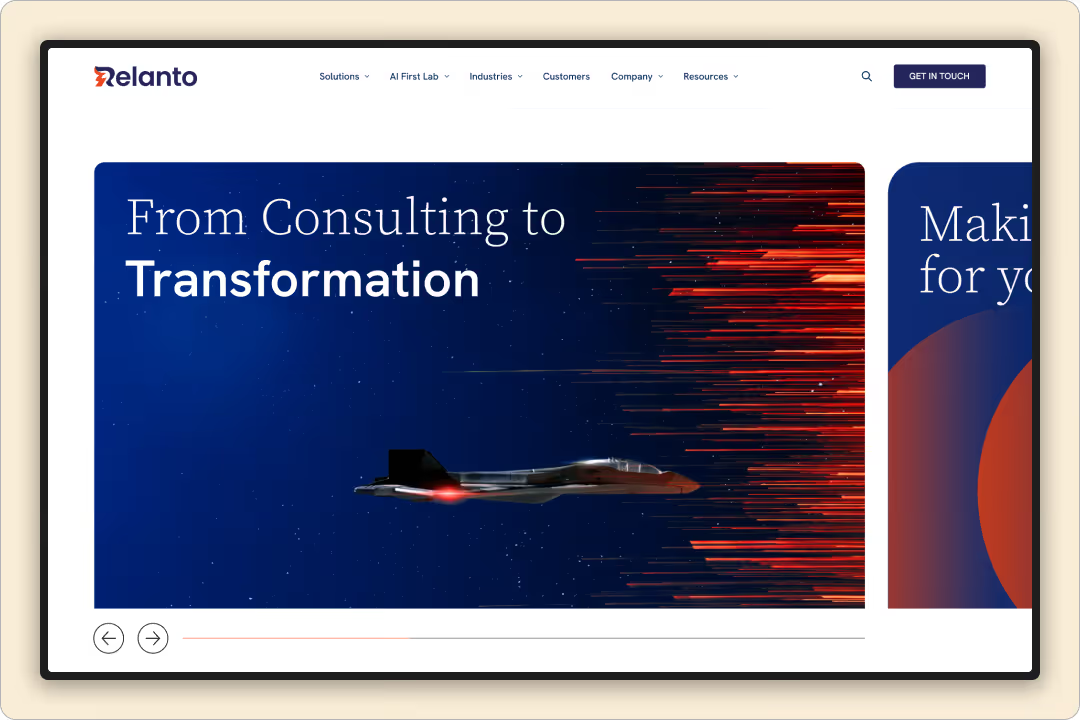
Relanto
Website strategy and design for Relanto, an IT consulting and business advisory services company

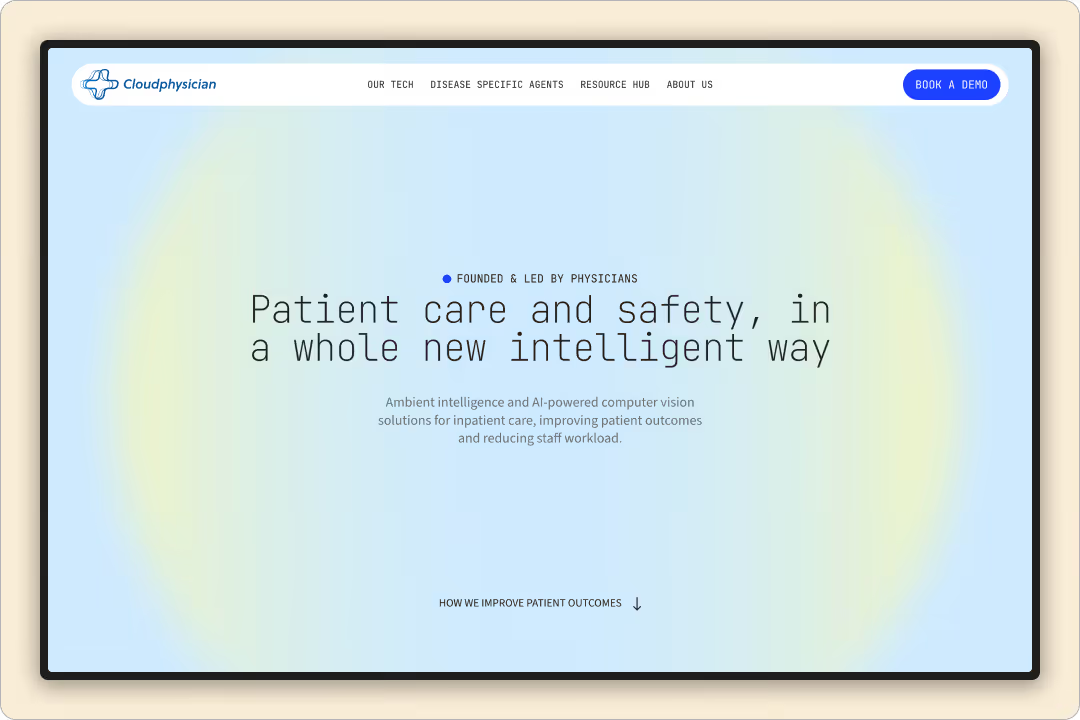
Cloudphysician
Visual branding and website design for Cloudphysician, an AI-powered platform that enhances critical care monitoring
What does effective B2B lead generation actually look like?
Effective lead generation starts with a clear ICP, builds authority through targeted content, and captures intent through strategically designed landing pages and conversion paths. It's not about volume — it's about generating leads that match your ideal customer profile, have genuine purchase intent, and are at the right stage in their buying journey to engage with sales.
Bangalore hosts a variety of B2B lead generation agencies that specialize in connecting businesses with potential clients
Lead Generation Strategies That Work
Why Choose a B2B Lead Generation Agency
Here is a curated list of Bangalore-based lead generation agencies that can help your business scale through targeted outreach, content marketing, and sales enablement:
These agencies combine account-based marketing (ABM), multichannel outreach (email, LinkedIn, cold calling), and intent-based targeting to ensure your sales team talks to the right buyers at the right time. The best lead generation agencies take a consultative approach, understanding your sales process, buyer personas, and revenue targets before recommending a strategy.
Key traits of effective Bangalore lead generation agencies:
- Sales alignment — They work closely with your sales team to ensure leads are qualified and follow a logical nurture journey.
- Buyer research — They invest time in understanding your buyer personas, pain points, and purchase triggers.
- Multichannel approach — They don't rely on email alone; they combine cold outreach, LinkedIn, content, events, and partnerships.
- Transparency & reporting — They provide real-time dashboards and regular performance reviews, so you always know what's working.
FAQs
We're an excellent fit for mid-to-enterprise B2B companies seeking strategic, design-driven growth, but not the best choice for every project. A startup with a $2,000 logo budget, a hyperlocal retailer needing basic signage, or a company requiring primarily print design might benefit from different specialists. We excel when strategy, growth, and differentiation are primary goals. Transparent collaboration starts with honest scope alignment.
Our Ideal Client Profile
We thrive with SaaS companies, EdTech platforms, healthcare tech, fintech startups, and B2B service firms that operate in competitive markets. These clients understand that brand design is a growth lever, not a cost center. They want integrated strategy (positioning + visual identity + messaging architecture), they value long-term partnership, and they measure success by market impact and revenue influence. Learn about our philosophy and approach to see if we align with your vision.
Projects Where We Don't Fit Best
If you need quick, inexpensive logo designs, local-only visibility, or purely aesthetic work without strategic grounding, you'll find better alternatives. We don't optimize for turnaround speed over quality. We also don't specialize in luxury fashion, hospitality, or entertainment branding—verticals requiring specialized industry knowledge we don't maintain.
How We Help Bengaluru's Tech Ecosystem
Bengaluru has an incredible concentration of founders building global products. We're built for that context: timezone-aligned, fluent in startup dynamics, and networked within the local ecosystem. If you're uncertain whether we're the right fit, let's discuss your goals directly.
Branding costs in Bengaluru vary significantly based on scope, agency tier, and deliverables. No single price applies; understanding cost factors helps companies budget appropriately and evaluate agency proposals. Basic branding packages might start at $6,000–$15,000 (₹5–14 Lakhs) for focused identity work (logo, color palette, typography, brand guide). Comprehensive engagements including strategy, identity, brand guidelines, and marketing assets typically range $15,000–$48,000 (₹15–48 Lakhs). Full rebrand projects combining positioning strategy, visual identity, website design, and implementation support span $35,000–$60,000 (₹35–60 Lakhs); only large global or enterprise agencies charge $100,000–$300,000+ for comparable work. Bengaluru's cost advantage relative to US and European agencies stems from lower salaries and operating costs, not lower quality.
Cost Factors and Scope Variables
Branding costs depend primarily on scope. Identity-only engagements (logo, color palette, typography, 10-20 page brand guide) cost substantially less than full rebrands including positioning research, extended brand guidelines, multiple deliverable applications (website, collateral, social templates), and rollout support. Additional cost drivers include: complexity of positioning strategy, extent of customer research conducted, number of brand concepts explored and refined, comprehensiveness of brand guidelines, breadth of application examples, web development requirements, and post-launch support duration. Companies should define scope clearly before requesting quotes; vague briefs produce vague estimates.
Budget Tiers and What They Include
Entry-level branding ($6,000–$15,000 / ₹5–14 Lakhs) typically covers logo design, limited color guidance, and basic brand guide. This tier suits startups with minimal budget but brings risks: rushed strategy work, limited exploration, basic aesthetics. Mid-market branding ($15,000–$48,000 / ₹15–48 Lakhs) includes positioning research, competitive analysis, multiple concept directions, comprehensive visual identity, detailed brand guidelines, and web mockups. This is the most common tier balancing investment with quality outcomes. Premium branding ($35,000–$60,000 / ₹35–60 Lakhs) adds customer research, extensive strategy work, multiple brand applications across channels, website design and development, collateral design, and extended post-launch support. Everything Design typically operates in mid to premium tiers; budget-focused clients might find less expensive agencies locally but should evaluate quality and strategic depth carefully.
Bengaluru Agencies and Pricing Variation
Bengaluru branding agencies vary dramatically in quality, process, and pricing. Some agencies operate as logo design shops charging $3,000-$10,000 for graphics with minimal strategy. Others function as full-service branding consultancies charging $100,000+ for comprehensive positioning and design work. Larger multinational agencies operate in India with premium pricing. The widest variation exists in mid-market: agencies charging $30,000-$80,000 with vastly different approaches, deliverables, and expertise. Lowest price doesn't indicate poor quality, nor does highest price guarantee excellence. Evaluate: Does the agency conduct strategy and research before design? Do they have relevant industry experience? Can they articulate strategic thinking in proposals? Do references speak to process quality and business results?
Common Budget Mistakes and False Economy
Companies often underestimate branding investment, pursuing cheap options that underdeliver. Branding at $5,000 typically means minimal strategy, basic design, and limited guidance—resulting in inconsistent brand application and missed business impact. More dangerously, underinvestment creates liability: poor branding damages market perception more than no branding. Conversely, companies sometimes overpay for premium agencies without clear differentiation from less expensive options. Cost varies with agency overhead, location, and position, not always quality. Understanding cost drivers helps identify value: Are you paying for genuine strategic depth or just location/reputation premium?
Investment ROI and Business Impact
Strategic branding often pays for itself through improved positioning, customer perception, hiring capability, and premium pricing potential. A $75,000 branding investment that enables 10-15% premium pricing across an annual revenue base of $5 million returns its cost within 12 months. The key: branding must reflect and communicate genuine competitive differentiation; if positioning is weak or differentiation is absent, no design budget fixes underlying strategy gaps. The best branding investments combine strategic clarity with design excellence and disciplined implementation.
Evaluating Proposals and ROI
Request detailed proposals specifying deliverables, timeline, and revision parameters. Be wary of extremely low estimates (indicating insufficient process or capacity) or extremely high estimates (potentially unjustified premium pricing). Ask references how branding has impacted their business: perception, positioning clarity, hiring, customer acquisition, or pricing power. The best investment is one where scope and budget align with your actual needs and where the agency demonstrates clear strategic thinking and relevant experience. Don't choose agencies based purely on price; evaluate strategic depth, previous work quality, and cultural fit as primary criteria.
Explore branding services tailored to your budget and goals, or schedule a consultation to discuss pricing and scope for your specific needs.
Bengaluru has become a major hub for design, technology, and digital transformation, attracting both global companies and ambitious startups seeking branding expertise. Choosing the right branding agency in Bengaluru requires understanding the local agency landscape, evaluating specialized capabilities, and assessing cultural and strategic alignment. The quality of branding agencies in Bengaluru varies dramatically—from commoditized design shops to strategically sophisticated partners capable of transforming brand positioning and market perception.
Evaluating Strategic Depth & Industry Expertise
The most critical evaluation criterion is strategic approach. Many Bengaluru agencies treat branding as visual design, delivering beautiful logos and color palettes without underlying strategy. Strategic branding agencies begin with positioning research, competitive analysis, and market opportunity assessment. They develop comprehensive brand strategies before designing anything. Look for agencies that discuss your business goals, target customer psychology, competitive positioning, and market dynamics in discovery conversations. Ask about their discovery process: Do they conduct customer interviews? Do they analyze competitive positioning? Do they develop written strategy documents? Red flags include agencies that jump to design solutions immediately or focus primarily on visual aesthetics without strategic grounding. Request case studies showing actual impact—did they increase brand perception, improve market positioning, or accelerate growth for similar companies? Generic portfolio pieces without business context don't demonstrate strategic capability.
Technical Capabilities & Implementation Excellence
Evaluate technical execution alongside strategy. Does the agency have strong digital design capabilities? Can they design effective websites, apps, and digital experiences? Do they understand UX principles, conversion optimization, and technical constraints? Many Bengaluru agencies excel at visual design but struggle with digital implementation. If you need a website redesign alongside your rebrand, ensure the agency has either in-house development capability or strong partnerships with technical teams. Ask about their Webflow expertise specifically if you're building on that platform. Assess team structure: Do designers and developers work together from project inception, or do they hand off work sequentially? Integrated teams produce better results because technical constraints inform design decisions upfront.
Portfolio Analysis & Case Study Validation
Examine case studies carefully. Look beyond visual aesthetics to understand impact. Did they rebrand a company that subsequently grew market share? Did they position a company that struggled to differentiate? Do their brand identities actually look more effective in real-world application compared to before? Notice the industries they've worked in—does the agency have experience in your sector? A branding agency with deep B2B SaaS experience will approach your SaaS company differently than one specializing in consumer brands. Look for companies similar to yours in maturity, market complexity, and target audience. Check current websites of their past clients: Is the brand identity still being used effectively? Does it feel current after several years, or did it date quickly? This indicates whether they created timeless positioning or trendy styling.
Communication, Collaboration & Long-Term Partnership
Assess how the agency collaborates. Do they involve your team in strategy development, or do they work in isolation and present finished solutions? Does the agency seem genuinely curious about your business, asking deep questions in initial conversations? Red flags include agencies that seem to follow a templated process, agencies that emphasize their own vision over your business goals, or agencies that dismiss your input. A good partnership involves frequent communication, openness to feedback, and genuine curiosity about your business. Evaluate their support after launch: Will they help implement the brand across your organization? Do they provide updated brand guidelines? Are they available for ongoing strategy consultation? Some agencies disappear after delivery. Others provide long-term partnership support.
Practical Selection Steps
Interview 3-5 agencies, requesting detailed discovery conversations before comparing proposals. Good agencies should invest time understanding your situation. Ask specifically about their strategic process, team structure, and past client results. Request references and actually call them—ask about agency collaboration quality and impact. Get proposals showing methodology, timeline, and expected deliverables, not just pricing. The cheapest option is rarely the best investment for something as important as your brand. Budget 2-4 months for a comprehensive rebrand and expect meaningful investment. Prioritize agencies that understand your business goals, demonstrate strong strategy capabilities, have technical depth, and seem genuinely interested in your long-term success.
Discover how we approach branding strategy and implementation at everything.design. Explore our case studies or schedule a consultation with our team.
Choosing the right web development company in Bengaluru, a bustling tech hub, is a crucial decision that can significantly impact your brand’s online presence.
How to choose a web development company?
Here’s a complete guide to help you make an informed decision:
1. Define Your Goals and Requirements
- Website Type: Determine the type of website you need—e-commerce, corporate, portfolio, etc.
- Features and Functionalities: Make a list of the features you want, such as contact forms, live chat, payment gateways, or custom functionalities.
- Budget: Decide on your budget to narrow down options based on affordability.
2. Check Company Expertise and Services Offered
- Technical Expertise: Look for companies that have expertise in relevant technologies such as HTML5, CSS3, JavaScript, and CMS like WordPress, Webflow, or custom solutions like Laravel.
- Service Range: Choose a company that offers end-to-end services, including UI/UX design, web development, e-commerce, SEO, and maintenance, ensuring a seamless experience.
3. Evaluate Their Portfolio
- Previous Projects: Examine their portfolio for past projects. A strong portfolio should showcase a variety of projects, indicating versatility and expertise in different sectors.
- Industry Experience: Prefer companies that have experience in your industry, as they will be more adept at understanding your specific needs and audience.
4. Assess Client Reviews and Testimonials
- Review Platforms: Look for reviews on platforms like Clutch, GoodFirms, or Google Reviews to understand the experiences of previous clients.
- Testimonials: Client testimonials provide insights into customer satisfaction, highlighting the company's strengths in areas such as communication, adherence to timelines, and quality of work.
5. Technical Skills and Technology Stack
- Technology Stack: Make sure the company uses modern technologies that align with your requirements—whether it’s a CMS like WordPress, a framework like React, or a platform like Webflow.
- Cross-Platform Expertise: Opt for companies that are proficient in developing responsive websites that work seamlessly across desktop, mobile, and tablets.
6. Communication and Project Management
- Communication Channels: The right company should have clear communication channels (emails, calls, project management tools like Slack or Trello).
- Collaboration: Assess how well the company collaborates with clients—regular updates, a structured feedback process, and involving you in key decisions is crucial for a successful project.
7. Transparency in Pricing and Timeline
- Price Breakdown: Choose a company that provides a detailed price breakdown, including design, development, revisions, and maintenance costs.
- Project Timeline: A clear timeline should be outlined, including milestones for different phases of the project—planning, design, development, and testing.
8. Post-Development Support and Maintenance
- Support: Ensure the company provides ongoing support for bug fixes, updates, and potential changes after the launch.
- Maintenance Packages: Ask about maintenance packages to ensure your website remains updated, secure, and functional.
9. Look for SEO and Digital Marketing Services
- SEO-Friendly Development: A web development company that incorporates SEO best practices during development can help boost your website’s visibility.
- Integrated Marketing Services: Companies offering SEO, PPC, or content marketing services can provide a complete solution to grow your online presence effectively.
10. Check Company Culture and Fit
- Team Fit: It’s important to work with a company whose team aligns with your culture and values, leading to better collaboration.
- Company Size: Decide whether you prefer a small agency for personalized service or a larger company for a wider range of resources and expertise.
11. Technical Proficiency in Modern Frameworks
- Modern Frameworks and Languages: Look for companies proficient in modern frameworks like React, Angular, Vue.js, and languages like JavaScript, PHP, and Python, ensuring your website is built with a future-proof tech stack.
- Scalability: Choose a company that can create scalable web solutions to support the growth of your business and adapt to changing needs.
12. Test Their Communication Responsiveness
- Initial Interaction: Use your initial interactions to evaluate how responsive they are to emails and calls. Timely responses are a good indicator of a company’s communication reliability throughout the project.
- Clarity: Gauge how well they understand your project requirements during these conversations. The right company will ask relevant questions to fully understand your goals.
Conclusion
Bengaluru has a wide selection of web development companies, each with its own strengths and areas of expertise. By following this guide, you can effectively evaluate and choose the right partner to develop a website that meets your business needs, enhances user engagement, and contributes to your overall brand success.
Whether you’re a startup or an established enterprise, finding a web development company that fits your goals, budget, and style of communication is key. Remember to prioritize experience, communication, technical capabilities, and post-launch support for a successful partnership.
How does B2B branding impact lead generation?
Brand and demand generation are often treated as separate initiatives, but in B2B, they're deeply interconnected. Strong branding doesn't just make you look good — it directly improves the quantity, quality, and conversion rate of your leads.
Brand recognition lowers acquisition costs
When prospects already recognise your brand before they see your ad or receive your email, they're more likely to engage. Brand familiarity creates a cognitive shortcut — the buyer thinks "I've heard of them" rather than "who are these people?" — and that trust translates to higher click-through rates, more form completions, and lower cost per lead across every channel. Companies with established brand presence consistently report 20–40% lower cost-per-lead compared to unknown competitors in the same space.
Clear positioning attracts the right leads
Branding isn't just visual — it's strategic. A well-defined brand positioning tells the market exactly who you serve, what problems you solve, and why you're the right choice. This self-selects your audience. Instead of generating a high volume of poorly qualified leads, strong brand positioning generates fewer but significantly more qualified leads — the ones that actually convert to customers. Your sales team spends less time disqualifying and more time closing.
Consistent brand experience increases conversion rates
Every touchpoint in the buyer journey — from the first Google search to the demo call — is a moment where brand consistency either builds or erodes trust. When your website, content, social presence, sales deck, and email sequences all speak the same language and project the same level of professionalism, prospects move through the funnel with less friction. Inconsistency, on the other hand, creates doubt. And in B2B purchasing decisions where multiple stakeholders are involved, doubt kills deals.
Brand authority shortens the sales cycle
When your brand is perceived as a thought leader in your category — through published content, speaking engagements, strong website messaging, and visible client work — buyers arrive at the sales conversation already half-convinced. They've read your content, seen your case studies, and evaluated your approach. The sales team isn't starting from zero; they're closing from a position of established credibility. This can reduce sales cycles by weeks or even months for enterprise deals.
The compounding effect
Branding investments compound over time in a way that paid advertising doesn't. Every piece of content, every case study, every brand touchpoint adds to a cumulative presence in the market. Paid ads stop working the moment you stop paying. Brand equity builds a moat that makes every future marketing effort more effective and every future dollar more efficient. Explore our B2B branding strategies with examples from top brands for real-world evidence.
If your lead generation performance has plateaued despite increasing spend, the bottleneck is often brand — not budget.
Effective B2B lead generation combines account-based marketing precision with content-driven thought leadership. Success means targeting high-intent prospects with relevant solutions, not casting wide nets hoping for responses. The best strategies align sales and marketing, focus on quality over quantity, and build trust through demonstrated expertise before asking for the sale.
Account-Based Marketing and Targeting
Identify your ideal customer profile—company size, industry vertical, revenue range, technology stack—and target those accounts with precision. ABM strategies deliver 3-5x higher conversion rates than traditional lead generation because messaging directly addresses account-specific challenges. Coordinate across channels: LinkedIn outreach, direct mail, targeted advertising, and personalized sales sequences all reinforce your relevance to target accounts.
Content Marketing and Educational Value
Create content addressing buyer journey stages: awareness (industry trends, benchmarks), consideration (solution comparisons, implementation guides), and decision (ROI calculators, vendor assessments). Quality content establishes authority and captures intent. Webinars, whitepapers, and research reports positioned as educational resources—not product pitches—generate higher-quality leads than gated promotional content.
Strategic Partnerships and Referrals
Build partnerships with complementary service providers, agencies, and platforms. Referral relationships generate pre-qualified leads from trusted sources with 60%+ higher conversion rates. Consider partnering with brand and marketing experts to ensure consistent positioning across all customer touchpoints. Incentivize customer referrals through success bonus programs.
Digital Presence and SEO Authority
Dominate search results for high-intent keywords in your space. Prospects actively searching for solutions are further along the buying journey. Invest in optimized website design that converts organic traffic efficiently. Build topical authority through interconnected content addressing buyer questions comprehensively.