


Health Tech Website Design Agency
Health tech websites have to explain a technical product to a clinician and a business buyer on the same page, without diluting either.


What sets health tech website design apart?
We write copy before layout so clinical and legal reviewers assess real wording, not a finished design. HIPAA-aware decisions are made during design rather than bolted on before launch, and the build is Webflow, in-house.
What makes health tech website design different?
A health tech website has to translate clinical or technical value into something two very different readers can act on, without diluting either. It simplifies without oversimplifying, and it treats regulatory sensitivity as a design input rather than a legal review at the end.
- We settle positioning and message before design, so the site argues something specific.
- Cloudphysician signed its first US client during the first presentation of the AINA demo film we produced.
- Copy, design, motion and Webflow development run in-house on one product story.
- If the brand and positioning are unsettled, start at healthcare tech branding instead.
What does HIPAA-aware website design actually involve?
It means deciding how the site handles data as part of the design, not after it. Forms, analytics, scheduling systems, chat widgets and third-party integrations can each collect or expose sensitive information, so HIPAA-aware design limits unnecessary collection and shapes the tooling, consent language, access controls and information flows around that.
Treating HIPAA-compliant website design as a badge added before launch is the common failure. You remain responsible for validating the complete legal and technical setup, and a formal compliance review is what confirms it. A secure-looking form is not proof of compliance.
How do you design for a clinician and a business buyer at once?
By giving each a route rather than averaging them into one message. The clinician reads for clinical relevance, evidence and product behaviour. The business buyer reads for operations, security, integration and cost. Referral partners may need a third route. The architecture has to carry all of them without fragmenting the product story or repeating it three times in different words.
Patient-facing pages carry a separate obligation: accessible paths to key information and actions, readable text and navigation, descriptive forms, clear error messages, and plain language wherever a page discusses symptoms, procedures or eligibility.
What does the website process look like?
The four stages below are where a health tech website is actually made. Sequencing matters more than tooling, because putting copy before layout is what removes late-stage rework: reviewers assess wording rather than a finished design built around it.
- Copywriting. Copy is written before layout. Healthcare claims need regulatory accuracy, so your clinical and legal reviewers assess actual wording rather than approving a design and discovering the words later.
- Design. Approved messages get visual hierarchy. Patient-facing pages usually need a calmer, more accessible treatment; enterprise pages need evidence and product detail.
- Motion. Animation or video where behaviour benefits from demonstration. A guided visual explains an AI-supported clinical workflow better than dense copy.
- Development. Our developers build the approved design in Webflow, preserving the content hierarchy responsively and leaving marketers able to run routine updates.
The full eight-step sequence, from kickoff through research, strategy and product messaging, is set out on our healthcare design agency page.
Is Webflow suitable for healthcare websites?
Yes, for healthcare marketing sites. Webflow supports accessible, responsive layouts and content management through a CMS, and it leaves internal marketers able to publish without routine developer help. We build reusable landing-page components and organise CMS collections around what you actually publish, then document and train the team on them.
After launch, Everything Flow provides maintenance and development while preserving the structure established during the main engagement, so campaigns and content updates do not mean returning to the agency for every change. See also our Webflow development service.
Cloudphysician: an ICU AI co-pilot, explained
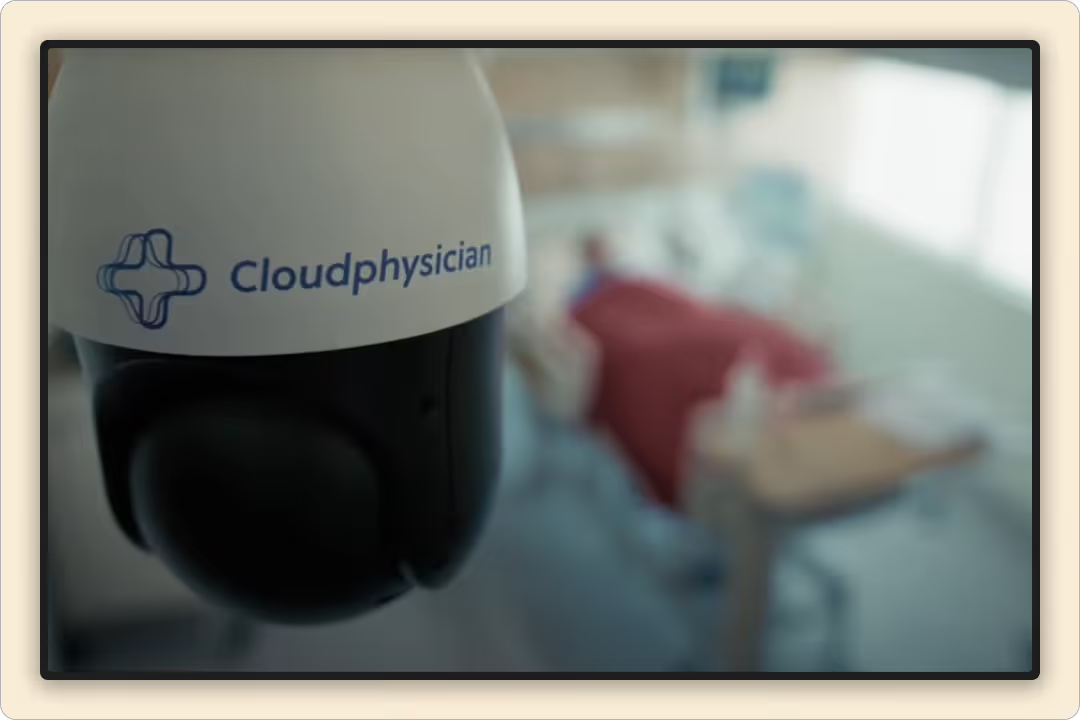
Cloudphysician signed its first US client the first time it presented the AINA demo film we made. AINA is Cloudphysician's AI video co-pilot for ICU and high-acuity care. The film had to show how the product behaves in a live clinical setting while staying legible to a business decision-maker who has never worked a ward round. We treated it as a product demonstration, not a sales video: clinicians needed enough detail to judge whether AINA fits real care delivery, and buyers needed the operational case.
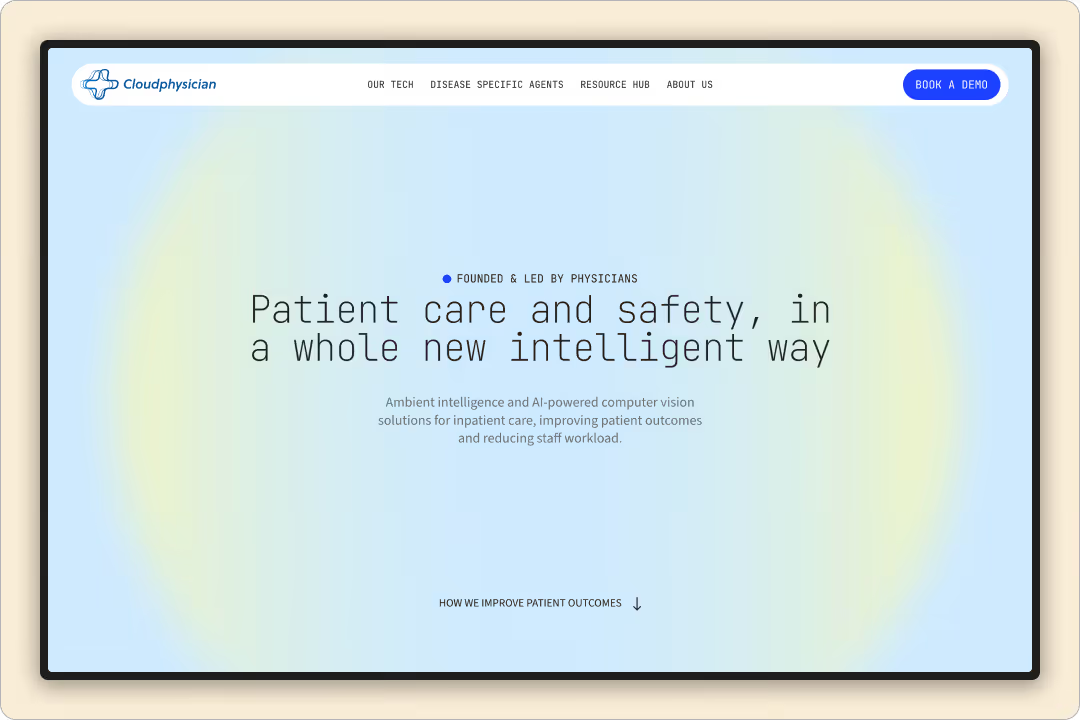
Landing pages, event collateral and later a full website revamp followed, all built on that same product understanding. A film and a site fail differently when they disagree: the film earns the meeting, and the site is where a second reader checks what the first one was told.
Which health tech and medical websites has Everything Design built?
Avizva and Nau in health tech and medical technology; GenRobotics in robotics-led medical devices; Geri Care and Naveen Hospital in direct care delivery; Smart Hearing in hearing and wellness. For biotech and biopharma, see our biotech Webflow agency page.
What should you expect when you start?
A conversation about the problem the website has to solve. We look at your audience and current brand, then recommend a scope that accounts for regulatory constraints and reviewer availability. You do not need a finished brief.
Project length is set after reviewing scope, reviewer availability, content needs and technical integrations. Defining the scope and the review schedule early gives internal reviewers clear decision points and reduces late revisions.
Frequently asked questions
What does HIPAA-compliant website design involve?
Careful handling of protected health information across the whole lifecycle of the site. We take a HIPAA-aware approach to forms and integrations that touch data, while you remain responsible for validating the full legal and technical setup. A formal compliance review is what avoids treating visual design or a secure form as sufficient proof.
How long does a healthcare website project take?
It depends on scope, reviewer availability, content needs and technical integrations, and we set the schedule after reviewing those. Agreeing the scope and review points early is what keeps the timeline honest.
Is Webflow suitable for healthcare websites?
Yes for healthcare marketing websites. Webflow supports accessible responsive layouts and CMS-managed content, we build in it, and Everything Flow can train your staff and support the site after launch.
Can Everything Design work with clinical and technical reviewers?
Yes, and the process is built for it. We research the product and write the core claims before visual design, so subject experts can check accuracy and commercial fit early rather than at sign-off.
Does Everything Design work with health tech and AI-in-healthcare companies?
Yes. We applied that approach to Cloudphysician's AI video co-pilot for ICU and high-acuity care. Clear product explanation shows clinicians how a product supports their work and helps business buyers judge its commercial value.
Health Tech Website Design Projects

Health Tech Website Design
Experts

Mejo Kuriachan
CEO | Partner | Brand Strategist

Athira Krishnan
Lead Designer | Content Strategist

Saurabh Chakradhari
Head of Webflow Department