


Branding for Series A Startup
After Series A, the brand you launched with is the brand holding you back. Enterprise prospects, follow-on investors, and senior hires are now reading your website with a different bar.





How should a Series A startup approach rebranding?
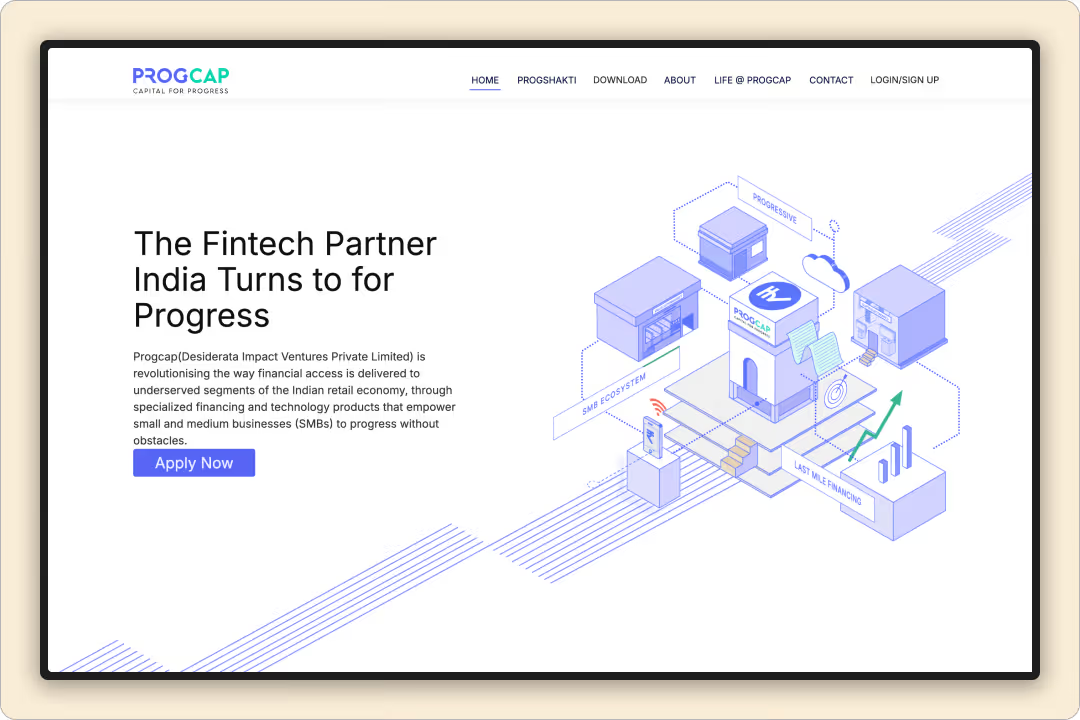
We rebrand Series A startups for the next chapter — positioning, identity, voice, website, launch. Strategy-first, two senior people on the engagement, no agency layering. Clients include Progcap, 5x, Kandou AI, Botim, and Cloudphysician.
Branding for Series A Startup
Connect with a Series A Startup Branding Expert
Branding for a Series A brand is critical as the company moves from startup to scale-up. At this stage, the brand needs to reflect the company’s evolution, establish credibility, and resonate with a broader audience, including customers, investors, and potential partners. A Series A brand should focus on creating a clear value proposition and solidifying its brand identity, which involves a consistent tone of voice, visual identity, and messaging across all platforms.
Key elements include:
- Refining the Brand Story: Articulate the company’s mission, vision, and the problem it solves in a way that is both clear and compelling.
- Credibility and Trust: Demonstrating growth, market validation, and customer success stories helps build trust with both customers and investors.
- Customer-Centric Messaging: As the brand scales, its messaging should focus on customer needs and how the product addresses them, moving beyond just product features.
- Scalable Identity: The visual identity should be adaptable and capable of evolving as the company grows, ensuring it remains relevant in various markets or sectors.
In summary, branding at the Series A stage is about refining the company’s image to reflect growth, positioning for scalability, and building a strong emotional connection with both customers and investors.
Everything Design has helped numerous Series A startups for helping them startup build credibility quickly with investors, enterprise buyers, and attaract top talent.
Why Is Series A the Right Time for a Rebrand?
Series A marks the transition from scrappy startup to scalable business — and your brand needs to reflect that evolution. Everything Design helps Series A startups rebrand with strategic clarity, aligning identity and messaging with the market positioning that attracted investor confidence.
What a Series A Rebrand Is Actually Buying: Weight
The real return on a Series A rebrand is weight — the credibility your brand carries into the next raise, the next enterprise deal, and the next senior hire, before anyone has read a word of the pitch. A Series A company is judged by follow-on investors, procurement teams, and candidates who are all asking the same silent question: is this real, and is it safe to bet on? Weight is what answers it. It doesn't show up on a dashboard, which is why it's the most undervalued outcome of a rebrand and the one that decides the rooms you're not in. We explain it in full in the metrics tell you if it's working; weight is why it works.
Branding Projects of Series A Startups
Ximkart
Brand and website design for Ximkart, a cross-border trade platform simplifying raw material imports
SimpliContract
Brand and website design for SimpliContract, an AI-powered contract lifecycle management platform

Branding
Experts

Swathi Mohan
Content Strategist

Akhilesh J
Lead Designer

Ekta Manchanda
Co-Founder | Principal Designer

Mejo Kuriachan
CEO | Partner | Brand Strategist

Athira Krishnan
Lead Designer | Content Strategist

Sanjana Hmath
Lead Designer