


Design Agency for Fintech Business
Fintech companies are rewriting the rules of financial services, but your brand still needs to earn the same trust that legacy institutions built over decades. The right design partner helps you move fast without sacrificing the credibility that financial buyers and regulators demand.












Everything Design: a fintech branding and website agency for regulated products
Everything Design is a B2B branding and website agency that builds brands and websites for fintech and regulated-industry companies — payments, lending, wealth, insurtech, and compliance-heavy platforms. Founded in 2019 and based in Bengaluru, our 50-person team has worked with 300+ B2B companies across 400+ projects, including fintech and payments brands such as PayBy, Zelo Finance, Progcap, Xflow, and SISA.
In fintech, buyers evaluate trust before features, so Everything Design designs the compliance and security signals a risk or procurement reviewer looks for first. We surface the proof that de-risks the decision — SOC 2, PCI-DSS, GDPR, ISO 27001, and KYC/AML posture, data residency, and audit readiness — placed where enterprise and regulated buyers expect to find it, so credibility is established before the first call. (We build these signals into our clients' sites; any certifications shown are the client's own.)
What to Look for in a B2B Branding Agency for Fintech Startups?
Fintech startup branding sits at an uncomfortable intersection. You need to signal innovation while radiating stability, simplify complexity while maintaining credibility, and convince multiple audiences—customers, regulators, investors—that you're trustworthy despite having launched six months ago. This isn't standard B2C brand work or even typical tech startup positioning. The fintech market has reached $550 billion in capitalization, doubled since 2019, which means differentiation has shifted from nice-to-have to survival requirement.
The wrong branding partner will hand you a pretty logo and call it strategy. The right one will help you articulate why anyone should trust you with their money before a single pixel gets pushed.
Why Fintech Startups Need Specialized B2B Branding Agencies
Generic branding agencies treat all startups the same: bold colors, disruptive messaging, founder-hero narratives. That approach fails spectacularly in fintech, where 58% of consumers rank trust among the most important considerations when choosing a financial services provider, with 35% saying it's the number-one factor.
You're not selling productivity software where the worst-case scenario is a lost afternoon. You're asking businesses to route payments, store financial data, or manage compliance through your platform. The stakes are different, so the branding approach must be too.
The Unique Challenge of Building Trust with Limited Track Record
Early-stage fintechs face a fundamental challenge: asking people to trust them with money or financial data when they have limited track record. Your pitch deck might be brilliant, your MVP functional, but you're still competing against established institutions with decades of credibility.
Brand becomes a proxy for everything you can't yet prove. When investors and early customers evaluate you, they're reading signals about attention to detail, market understanding, and operational maturity from how you present yourself. A thoughtful, coherent brand suggests you'll apply the same rigor to their financial data.
Balancing Innovation Signals with Financial Stability
Fintech companies face a unique branding challenge: they must simultaneously signal innovation and stability. Lean too far toward "disruptive tech startup" and customers worry about trusting you with their money. Lean too far toward "traditional financial institution" and you lose the differentiation that justifies your existence.
The best fintech brands thread this needle by leading with outcomes rather than technology. They talk about what becomes possible for customers, not just what's innovative about their architecture. The visual identity might feel modern and accessible, but the messaging emphasizes reliability, security, and proven results.
Simplifying Complex Value Propositions for Multiple Stakeholders
Fintech brands must speak coherently to three distinct audiences: customers, regulators, and investors. Each interprets your messages differently, yet all must hear the same core story. Your customer-facing messaging emphasizes ease and outcomes. Your regulatory communications stress compliance and security. Your investor materials highlight market opportunity and traction.
A specialized branding agency understands how to build a messaging architecture that works across these contexts without fracturing your identity. They know that 97% of B2B buyers said sales reps demonstrating stronger knowledge of their unique needs was important, which means generic positioning fails immediately.
Key Criteria for Evaluating B2B Branding Agencies
Evaluate agencies using three key factors: industry expertise, execution model, and scale match. This framework cuts through the noise of portfolio aesthetics and agency size to focus on what actually predicts success for your specific situation.
Industry Expertise and Fintech Portfolio Depth
Agencies with proven expertise in your industry can save ramp-up time required for onboarding and ensure they understand sector-specific challenges from day one. When an agency has worked with fintech or B2B tech companies before, they already know the trust-building imperatives, regulatory sensitivity, and multi-stakeholder communication requirements.
Look for case studies that demonstrate outcomes, not just deliverables. Did their branding work help a client secure Series A funding? Improve enterprise sales conversion? Navigate a regulatory audit successfully? These results matter more than whether their portfolio looks trendy.
Everything Design specializes in B2B branding for complex, technical companies including fintech startups. Their approach treats strategy and design as inseparable, starting with positioning clarity before touching visual identity. They've worked with cybersecurity firms, SaaS platforms, and other B2B tech companies that face similar challenges to fintech: explaining complex value propositions, building credibility with limited track records, and looking "enterprise-ready" to buyers and investors.
Their process begins with deep discovery—stakeholder interviews, competitive analysis, and audience research—to unearth the strategic narrative that differentiates you. Then they build visual identity, messaging frameworks, and website design around that positioning foundation. As their work demonstrates, clients consistently mention their ability to clarify what makes a company different and communicate it with both precision and personality.
Strategic Process Over Pure Design Capabilities
A real strategy process starts with positioning, not color palettes. Trends expire every six months, but positioning lasts for years. The agencies worth hiring spend significant time on discovery and strategic definition before anyone opens Figma.
Ask prospective agencies to walk you through their process. If they jump straight to mood boards and logo concepts, that's a red flag. Strategic agencies will talk about competitive positioning, audience segmentation, value proposition articulation, and messaging hierarchy first. The visual identity should express the strategy, not substitute for it.
Everything Design's approach explicitly prioritizes strategy over aesthetics. As they state: "Your next rebrand doesn't need to be painful or ineffective. Diagnose first. Define thoughtfully. Deliver relentlessly. Measure everything." They structure engagements around clarifying your "right to win"—the specific market position and value narrative that makes you different and defensible. Their team includes strategists and copywriters alongside designers, ensuring messaging and positioning get the same rigor as visual execution.
Demonstrated Impact on Client Outcomes
If a portfolio is full of pretty designs but zero success stories, you might be looking at a glorified design studio. Real branding firms show how their work contributed to measurable business outcomes.
Look for evidence of funding success, improved sales metrics, successful market repositioning, or enhanced enterprise credibility. These outcomes prove the agency understands branding as a business lever, not just creative expression. Ask for client references and actually call them to understand the full engagement experience and results.
Everything Design's case studies demonstrate this business-focused approach. Their work with fintech clients like Progcap (which raised Series C funding from Sequoia Capital India, Tiger Global Management, and Google) and other B2B tech companies shows how strategic branding supports fundraising, market positioning, and customer acquisition goals.
Cultural Fit and Communication Style
Branding projects typically span four to six months and require close collaboration. Good communication and cultural fit are just as important as expertise, since you'll be working together intensively and sharing sensitive strategic information.
Pay attention to how agencies communicate during the sales process. Do they listen more than they talk? Do they ask thoughtful questions about your business, customers, and goals? Do their questions reveal understanding of your specific challenges, or do they feel generic? The sales process is a preview of the working relationship.
Red Flags to Avoid When Selecting a Branding Agency
Even experienced founders miss warning signs when evaluating agencies. Here are the most reliable predictors of disappointing engagements.
Sales-Heavy Approach Without Deep Discovery Questions
If the initial meeting feels more like a sales monologue than genuine conversation, it's a red flag. Top agencies listen closely from the sales process onward. They should be asking about your ideal customers, competitive landscape, past marketing experiences, and strategic goals before pitching their capabilities.
Agencies that don't ask who your ideal customer is or how you engage with them across touchpoints show a serious red flag. Branding without customer understanding is decoration, not strategy.
Jargon-Heavy Presentations Without Clear Strategic Thinking
Agencies relying on jargon-heavy presentations to impress show shallow strategies. Genuine experts simplify complex ideas into clear, understandable terms. If an agency can't explain their approach in plain language, they probably don't have a coherent approach.
Watch for buzzword density without substance. Phrases like "synergistic brand ecosystems" or "omnichannel experiential paradigms" often mask the absence of actual strategic thinking. The best agencies speak clearly about positioning, differentiation, and audience needs.
Portfolio Heavy on Aesthetics, Light on Measurable Success Stories
Beautiful portfolios are table stakes. Look for case studies demonstrating how the agency helped businesses grow, reposition, or dominate their niche. If every case study focuses on design awards rather than business outcomes, you're looking at a design studio that won't drive strategic value.
Ask specific questions: How did this rebrand affect the client's sales cycle? Did it help them raise funding? What measurable changes occurred after launch? Vague answers suggest the agency doesn't track or care about business impact.
One-Size-Fits-All Packages Instead of Tailored Strategies
Look for agencies that emphasize tailored strategies to meet specific business objectives rather than one-size-fits-all packages. Your fintech startup's positioning challenges are different from a consumer app or enterprise software company. The agency's approach should reflect that specificity.
Beware of agencies that immediately quote fixed packages without understanding your situation. Strategic branding requires flexibility to address your unique market position, competitive context, and growth stage.
Understanding the B2B Branding Agency Process
The typical branding process takes four to six months, ranging from eight weeks to over twelve months depending on scope, feedback cycles, and deliverables. Understanding the standard phases helps you evaluate whether an agency's proposed timeline is realistic.
Discovery and Research Phase
Discovery involves stakeholder interviews, competitive analysis, market research, and brand audit. This phase typically takes one to two weeks and establishes the strategic foundation for everything that follows.
Strong agencies use both quantitative methods like surveys and data analysis alongside qualitative insights from customer interviews and stakeholder conversations. They're diagnosing your positioning challenges and market opportunities before proposing solutions.
Brand Strategy Development
This phase articulates your positioning, value proposition, audience segmentation, and competitive differentiation. Strategy development typically takes one to three weeks and produces a framework that guides all subsequent creative work.
The deliverable is usually a strategy document or presentation covering your market position, target audiences, key messages, brand personality, and differentiation. This becomes the reference point for evaluating whether visual identity and messaging choices align with strategic intent.
Visual Identity Design
Logo, color palette, and typography development typically takes four to six weeks with iteration cycles. This phase translates strategic positioning into visual language that expresses your brand personality and market position.
Expect multiple rounds of feedback and refinement. The best agencies present concepts with strategic rationale explaining how each design choice supports your positioning rather than just showing pretty options.
Messaging Framework and Brand Guidelines
This phase creates your messaging hierarchy, tone documentation, and comprehensive brand standards. The messaging framework defines how you talk about your value proposition, product capabilities, and differentiation across different contexts and audiences.
Brand guidelines document everything from logo usage and color specifications to writing style and photography direction. These guidelines ensure consistency as your team creates marketing materials, sales collateral, and product communications.
Implementation and Asset Creation
Implementation includes creating marketing collateral, brand guidelines documentation, and rollout strategy across all touchpoints. This might cover your website, pitch decks, sales materials, social media templates, and corporate identity items like business cards and letterhead.
The timeline for implementation varies dramatically based on scope. A basic brand identity package might take a few weeks, while a comprehensive rebrand including website redesign could extend several months.
Timeline and Budget Expectations for Fintech Branding Projects
Standard branding projects range four to six months, though timeline depends heavily on your internal decision-making speed and feedback cycles. Companies with dedicated project owners and tight feedback loops move faster than those where every decision requires committee approval.
Fintech branding costs vary widely based on scope and agency size, ranging from $10,000 to over $100,000 for comprehensive strategy, identity, messaging, and rollout. Smaller agencies or freelancers might offer basic identity packages for $10,000-$25,000. Mid-sized specialized agencies typically charge $30,000-$75,000 for full branding engagements. Large agencies with extensive overhead can exceed $100,000.
Budget should reflect your stage and needs. Pre-seed startups might start with positioning and messaging work before investing in comprehensive visual identity. Series A companies preparing for growth often need the full package to look credible to enterprise customers and investors.
Questions to Ask Prospective Branding Agencies
Use these questions to evaluate agency fit and approach:
Process and Approach:
- Walk me through your typical branding process from kickoff to delivery.
- How do you balance strategic positioning work with visual identity development?
- What does your discovery phase involve, and how long does it typically take?
Experience and Expertise:
- What fintech or B2B tech companies have you worked with, and what outcomes did you achieve?
- How do you approach the challenge of balancing innovation signals with trust-building in financial services?
- Can you share a case study where your branding work contributed to funding success or improved sales metrics?
Collaboration and Communication:
- How do you structure client collaboration and feedback cycles?
- What level of involvement do you expect from our team throughout the process?
- How do you handle situations where you disagree with client direction?
Success Metrics:
- How do you measure the success of a branding engagement?
- What outcomes should we expect to see after launch?
- Do you offer any post-launch support or optimization?
The quality of their answers matters more than the answers themselves. Strong agencies will ask clarifying questions, reference specific examples, and demonstrate genuine curiosity about your business.
Selecting a branding agency is one of the highest-leverage decisions fintech founders make. The right partner clarifies your positioning, builds credibility with limited track record, and creates a brand that serves as a strategic asset across customer acquisition, investor relations, and talent recruitment.
Prioritize agencies with demonstrated fintech or B2B tech expertise, strategy-first processes, and proven business impact over those with just beautiful portfolios. Watch for red flags like sales-heavy approaches, jargon without substance, and one-size-fits-all packages. Expect the process to take four to six months and budget accordingly based on your stage and scope needs.
Everything Design helps B2B businesses design their right to win and communicate it with clarity, personality, and taste, making the right people want to remember and associate. Their integrated approach to strategy and design ensures your brand becomes a business asset, not just a visual identity.
Your brand is how the market understands who you are and why you matter. In fintech, where trust is the foundation of every transaction, getting that story right isn't optional.
SwiffyLabs Design Agency Work
Examples where a branding agency helped tech or fintech companies rebrand and launch new websites in India
- Everything Design, based in Bengaluru, has delivered complete branding and website projects for Swiffy Labs a B2B fintech startup. We developed new digital identities and full web redesigns for the brand, emphasizing clean visuals, strong UX, and SEO-ready Webflow builds. We also work extensively with SaaS, cybersecurity, and fintech businesses to modernize brand identity and digital presence.
- Progcap is another fintech brand Everything launched.
- Payby, currently Botim Money is another fintech brand for which Everything Design agnecy laucnhed website.
Designing a User-Centric Future for FinTech: An Approach for Everything Design, a Fintech Design Agency
In today’s financial technology space, the balance between security, usability, and transparency defines success. FinTech platforms serve as digital frontlines for personal and professional finance, making seamless and secure interactions a necessity. At Everything Design, we envision FinTech solutions that simplify financial complexity, instill trust, and offer users personalized control over their finances. Here’s a closer look at key elements we integrate to ensure FinTech products meet users' needs.
Simplifying Complexity Through Strategic UX
Financial interactions, by nature, involve layers of information—from investment portfolios to complex transaction details. A focus on reducing cognitive load through clean, efficient UX design allows users to interact confidently with these elements. We break complex workflows into digestible steps, leveraging information hierarchy and intuitive navigation to make complex tasks feel accessible. For example, onboarding processes are simplified with guided instructions and dynamic prompts, easing new users into the platform without overwhelming them.
With B2B brands, clarity and organization matter immensely, especially when professionals handle high-stakes financial transactions. Through clear typographic choices, distinct color schemes, and progressive disclosure techniques, we deliver a design that guides users effortlessly, helping them access exactly what they need when they need it.
Prioritizing Trust and Security
Trust is foundational in FinTech. Users are often hesitant to entrust personal and financial information, so our designs include visible security measures that communicate safety at every interaction. Techniques like visible encryption badges, reassuring visual cues, and clear data privacy statements help foster trust. Every touchpoint within the design—from logins to transaction confirmations—reflects a commitment to safeguarding user data. This approach creates a sense of transparency, showing users the platform prioritizes their safety.
Furthermore, security needs to feel seamless, not like a hurdle. Simple, well-executed UI elements guide users smoothly through secure transactions, while background security protocols operate invisibly to maintain their peace of mind. In each FinTech project, we emphasize transparency in data handling and compliance, aligning with regulations to ensure that both our clients and their users feel confident navigating the digital space.
Personalization for Enhanced User Control
Modern users appreciate a platform that feels tailored to them, and personalization is key to elevating user satisfaction. In FinTech, personalization can mean adapting dashboards to reflect a user’s specific needs, highlighting preferred metrics, or offering tailored financial insights. For Everything Design, personalization isn’t just about appearance; it’s about enabling users to control their experience. We provide options for users to customize their interfaces, view prioritized data, and set up notifications that align with their financial goals.
Personalization extends to learning as well. Financial literacy tools and resources are embedded within platforms, offering accessible ways for users to understand and manage their finances better. User-centric content within the design builds engagement and empowers users, making financial management not just a task but an insightful experience.
Creating Interactive Visuals for Real-Time Decision Making
Data visualization plays a central role in how users interpret and interact with financial data. By converting numbers and stats into easily digestible graphics, we empower users to make informed decisions quickly. Real-time data visualization, whether in the form of dynamic charts or interactive dashboards, allows users to track their finances with clarity. The goal is to transform raw data into meaningful insights without adding complexity, supporting users in navigating their finances with confidence.
Effective data visualization also contributes to the overall brand impression. From well-structured charts to visually engaging reports, each design element echoes the company’s values, offering users a cohesive experience that resonates with trust and professionalism.
Ensuring Accessibility Across Devices
Given the importance of mobile banking and remote finance management, our designs emphasize responsiveness and accessibility across all devices. Mobile UX and responsive design make financial information easily accessible whether on a smartphone, tablet, or desktop, ensuring a seamless experience across various contexts. This multi-device approach ensures users can manage their finances anytime, anywhere, further reinforcing trust and reliability.
Our accessibility features extend beyond device compatibility. Elements like screen reader support, keyboard-friendly navigation, and adequate color contrast make the platform inclusive for users of all abilities, ensuring everyone can securely access financial resources and tools.
Crafting a Brand that Resonates with Trust and Innovation
In FinTech, branding is as essential as functionality. We believe in creating brands that are not only visually appealing but also resonate with core values of trust, reliability, and progress. Each FinTech platform we design embodies these principles, with attention to clean visuals, engaging micro-interactions, and cohesive color schemes that speak to users across all demographics.
The balance between brand identity and user experience is delicate, but crucial. By aligning brand values with user-centric design, we create a lasting impression that assures users their financial well-being is in good hands.
Conclusion: Shaping the Future of FinTech Design
As FinTech continues to grow, the demand for secure, transparent, and user-centered experiences will only increase. At Everything Design, we’re committed to evolving with these changes, creating platforms that users can trust and rely on to meet their financial needs. By focusing on simplification, security, personalization, and accessibility, we are helping define a future where financial technology empowers rather than intimidates, turning financial management into a confident, engaging experience for everyone.
What should a fintech brand communicate to build trust and drive adoption?
A fintech brand must balance innovation with reliability. It needs to clearly articulate what makes your solution different, demonstrate security and compliance without burying users in fine print, and create digital experiences that feel intuitive from the first interaction. The strongest fintech brands use clean design systems, transparent messaging, and strategic positioning to convert skeptics into loyal users.
Design Projects in Fintech Business
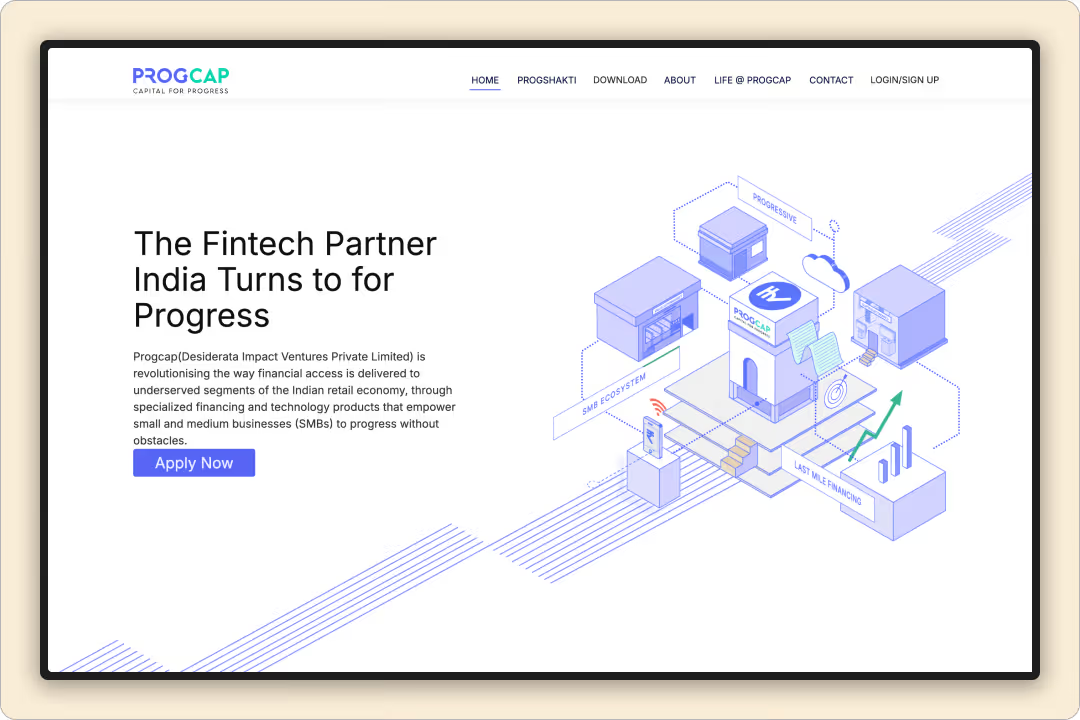
Progcap
Brand and website design for Progcap, a fintech platform enabling supply chain financing for underserved retailers

Tunnel
Brand and website design for Tunnel, a payment automation platform built for equipment manufacturers
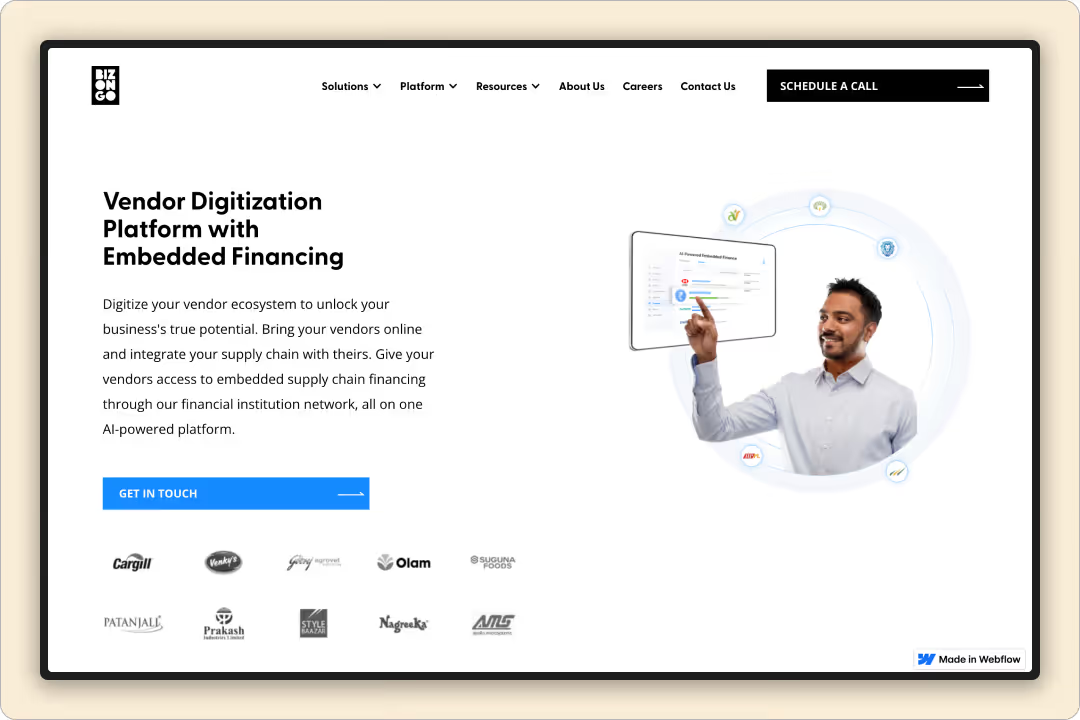
Bizongo
Brand and website design for Bizongo, an AI-powered supply chain and vendor digitization platform
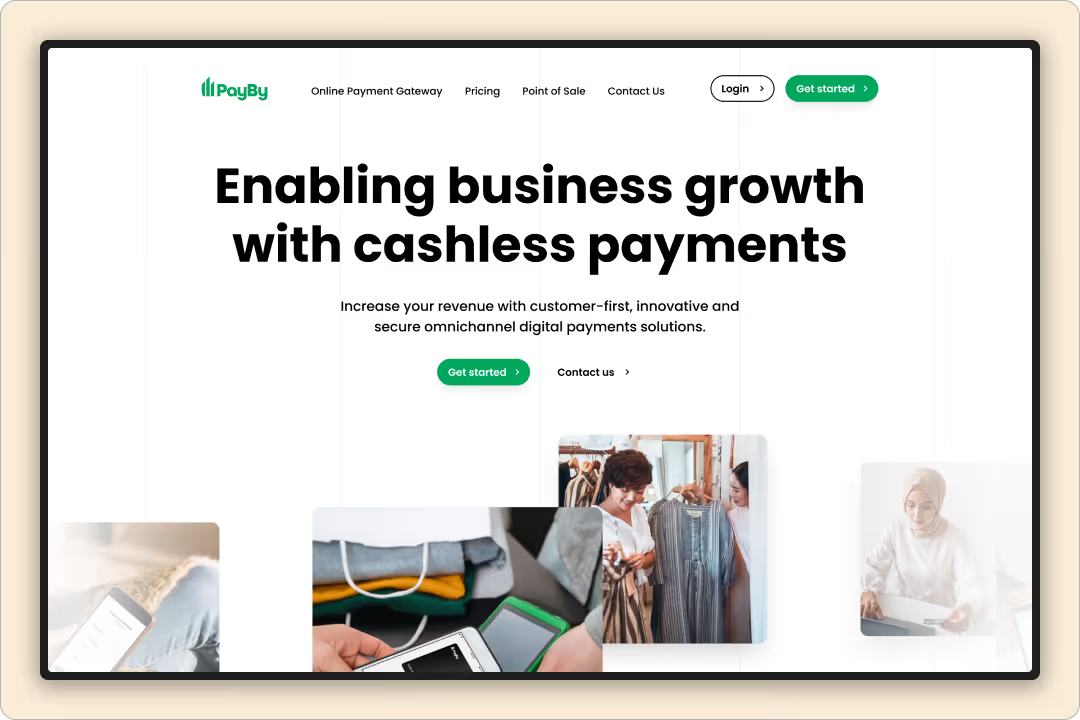
Payby
Brand strategy and website design for PayBy, a mobile payments and digital wallet platform in the EMEA region


FAQs
Fintech
Design Experts

Akhilesh J
Lead Designer

Sanjana Hmath
Lead Designer

Sijeesh VB
Lead Strategist