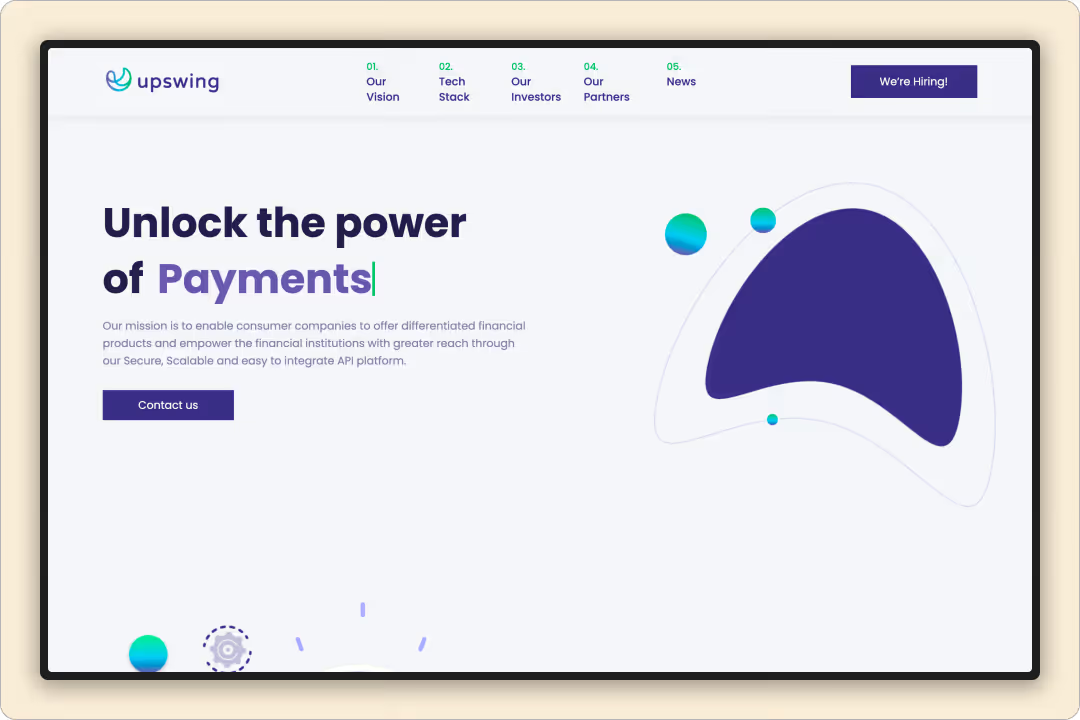
Financial Website Design
Financial services firms need websites that project stability and expertise — but too many look dated, dense, or indistinguishable from competitors.
What Should a Financial Services Website Prioritize?
Trust, clarity, and compliance. We design financial websites that balance regulatory requirements with modern UX — making complex products feel accessible while projecting the credibility that high-net-worth clients and institutional buyers expect.
What Sets Financial Website Design Apart From Other Industries?
Financial services websites must balance regulatory precision with user-friendly design, institutional credibility with digital modernity. Everything Design builds financial websites that communicate trust and expertise while driving measurable conversion outcomes.
FAQs
Ask them to walk you through how they would explain a cross-border payment product to a CFO who has never used one. The answer reveals whether they've done this kind of work before or whether they're going to figure it out on your budget. A good answer describes the specific buyer fear, the specific outcome that addresses it, and the visual and messaging approach that makes the mechanism legible without a technical white paper. A vague answer — about UX or conversion optimisation — signals no fintech domain experience.
Financial services websites operate in a trust-intensive environment where design decisions directly influence credibility, regulatory perception, and customer decision-making. Your website must communicate expertise, security commitment, and regulatory compliance while remaining accessible to diverse financial literacy levels. Unlike industries where innovation and boldness create competitive advantage, financial services benefit from design that balances professionalism with approachability, technical accuracy with clear communication, and brand personality with institutional trustworthiness. Successful financial services websites guide prospects through complex offerings while building confidence that your firm handles sensitive information responsibly.
Security, compliance, and trust signals
Financial services buyers prioritize security above almost everything else. Your website design must visibly communicate your commitment to data protection through clear security certifications, privacy policy prominence, and professional presentation. Explain your regulatory compliance status, insurance coverage, and security measures in accessible language. Include team credentials, relevant licenses, and third-party certifications that reassure visitors. For advisory businesses, feature professional credentials and advisor expertise prominently.
Clarity in complex offerings
Financial products and services are inherently complex. Your website's design should simplify without oversimplifying. Use clear language, relatable scenarios, and visual explanations to make offerings understandable to various knowledge levels. Provide detailed product information for knowledgeable prospects while offering simplified introductions for beginners. Consider interactive tools—calculators, scenario builders, or comparison tools—that help prospects understand options relevant to their situations.
Regulatory messaging and documentation
Include prominent links to required disclosures, prospectuses, regulatory filings, and terms in footers or dedicated resource pages. Ensure your design doesn't inadvertently overstate capabilities or make claims requiring substantiation. Work closely with compliance teams during design and messaging phases to ensure website claims align with regulatory requirements and company policies.
Personalization and market segmentation
Financial services serve diverse segments—individual investors, institutions, advisors, business owners—with different needs and priorities. Segment your website navigation and content to guide different visitor types efficiently to relevant information. This approach improves user experience while capturing qualified leads more effectively.
Develop your financial services website through our website design and development expertise. Strengthen positioning via our brand strategy services. Review case studies of financial services success. Contact us to discuss your project.
What do Design Agencies like Everything Design typically Offer for Fintech Brands?
- Brand Strategy & Positioning
- Visual Identity & Logo Design
- Website Design & Development
- Digital Marketing & ORM
- UI/UX for Fintech Platforms
These services are tailored to the regulatory and trust-sensitive nature of fintech in India, where clarity and credibility are paramount.
Designing for fintech requires a careful balance between clarity, security, and engagement, given the nature of financial transactions and sensitive data. Here's a breakdown of key principles to follow:
1. User-Centric Design
Fintech platforms often handle complex information, so the design must prioritize user experience by making the interface intuitive and easy to navigate.
- Simplified UI: Use a clean, minimalistic design to avoid overwhelming users. Keep essential information upfront and declutter non-essential elements.
- Accessibility: Ensure that the design is accessible to all users, including those with disabilities, by supporting screen readers, contrast modes, and readable fonts.
2. Trust and Security
Security is critical for fintech apps due to the sensitivity of personal and financial data.
- Visual Cues for Security: Use icons like padlocks for login pages, multi-factor authentication screens, and notifications to assure users of the platform's security.
- SSL Indicators: Display secure payment and encryption badges to reinforce trust.
- Data Transparency: Clearly communicate privacy policies and security features to build trust.
3. Consistency in Branding
The design should align with the brand's identity while ensuring consistency across all touchpoints.
- Color Scheme: Stick to a few brand colors. Blue is commonly used in fintech to evoke trust and professionalism. However, modern fintechs often experiment with bolder color palettes.
- Typography: Use fonts that reflect professionalism and reliability while maintaining readability.
- Visual Hierarchy: Use size, color, and placement to guide users toward key actions (like “Pay,” “Invest,” or “Transfer”).
4. Data Visualization
Since fintech platforms deal with numbers and data, presenting it in an easy-to-digest way is key.
- Charts & Graphs: Use interactive graphs and visual aids to explain financial trends, stock performance, or portfolio balances.
- Progressive Disclosure: Show high-level data first and allow users to dig deeper if they wish to view more details. This reduces cognitive overload.
5. Microinteractions
Small animations or interactive feedback on actions like swiping, tapping, or hovering over an option help guide the user and make the platform more engaging.
- Interactive Feedback: Offer subtle visual feedback for user actions like button clicks, successful transactions, or errors.
- Loading States: Use creative but minimal animations to show when data is loading to keep users engaged.
6. Onboarding and Guidance
Financial services can be complex, especially for first-time users.
- Simple Onboarding: Use short, clear steps to guide users through registration, explaining key features at each step.
- Tooltips & Guides: Provide users with in-app guides or tooltips, especially when dealing with unfamiliar financial terms or features like investment portfolios.
7. Mobile-First Approach
Many users engage with fintech platforms via mobile, so a responsive or mobile-first design is essential.
- Responsive Design: Ensure the platform is equally functional across all devices – mobile, tablet, and desktop.
- Finger-Friendly Buttons: On mobile, buttons and clickable areas should be large enough to tap comfortably.
- Fluid Navigation: Use gestures like swiping for navigating through pages, particularly for mobile users.
8. Clear Calls-to-Action (CTAs)
Make sure key actions like “Send Money,” “Invest Now,” or “Pay” are prominent.
- High-Contrast CTAs: Use bold colors to make these actions stand out without overwhelming the user.
- Contextual CTAs: Ensure that CTAs are context-specific, making it clear what will happen next (e.g., “Confirm Payment” instead of just “Submit”).
9. Personalization
Users appreciate a tailored experience in fintech platforms, as their financial situations and goals are unique.
- Customizable Dashboards: Allow users to adjust the layout or prioritize specific information (e.g., tracking stock performance, recent transactions).
- Recommendations: Offer personalized financial advice or product recommendations based on user data or goals (e.g., investment opportunities based on spending habits).
10. Compliance and Legal Considerations
Ensure your design follows all legal and compliance regulations, such as data privacy laws (GDPR, CCPA), accessibility standards (WCAG), and financial regulations (KYC, AML).
By blending these principles, you can design a fintech platform that is not only secure and efficient but also a pleasure to use. This will help build trust and improve user engagement, key aspects of success in the fintech industry.
Financial Website Projects
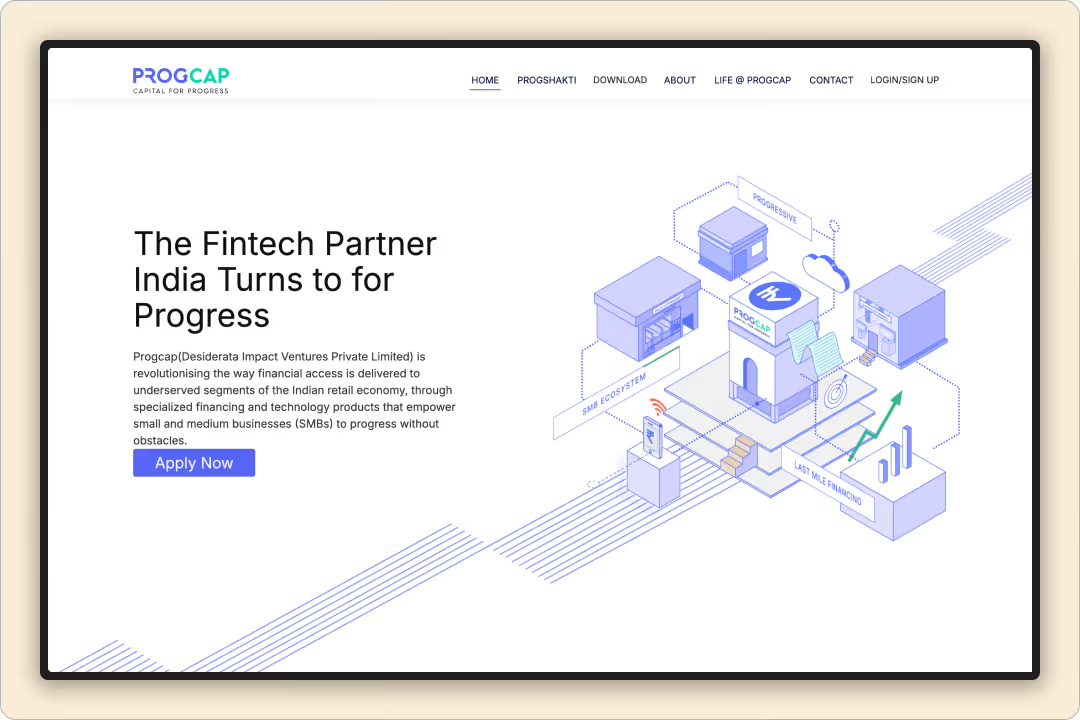
Progcap
Brand and website design for Progcap, a fintech platform enabling supply chain financing for underserved retailers

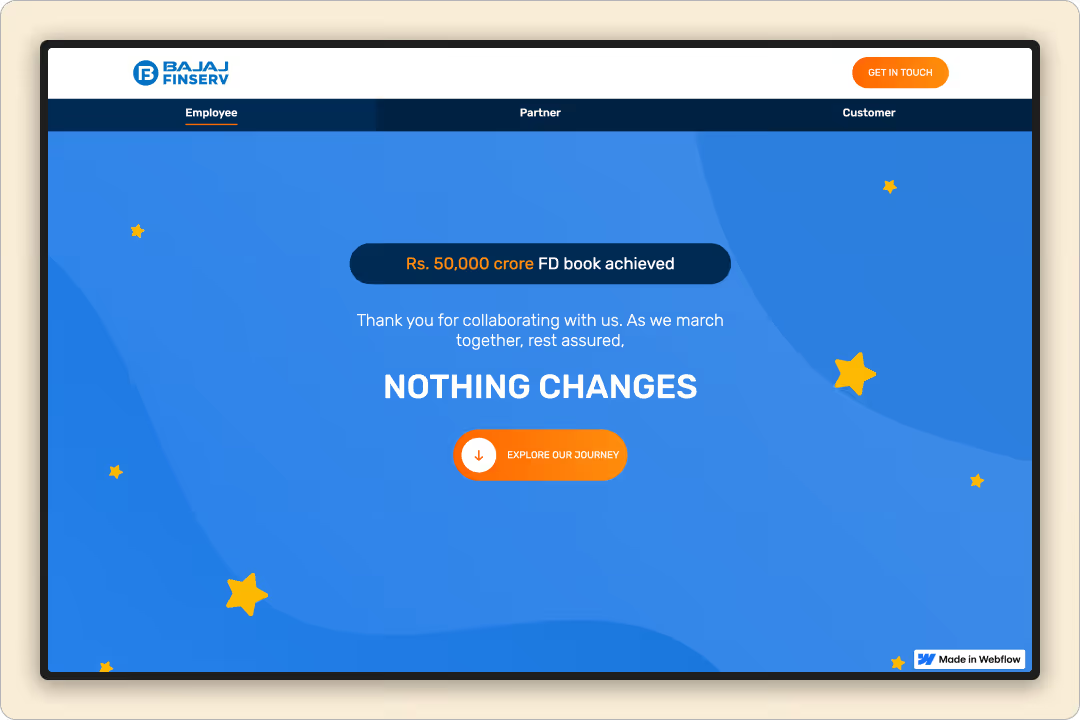
Bajaj Finserv Microsite
Event microsite design for Bajaj Finserv's FD Samvaad'23, a financial services conference

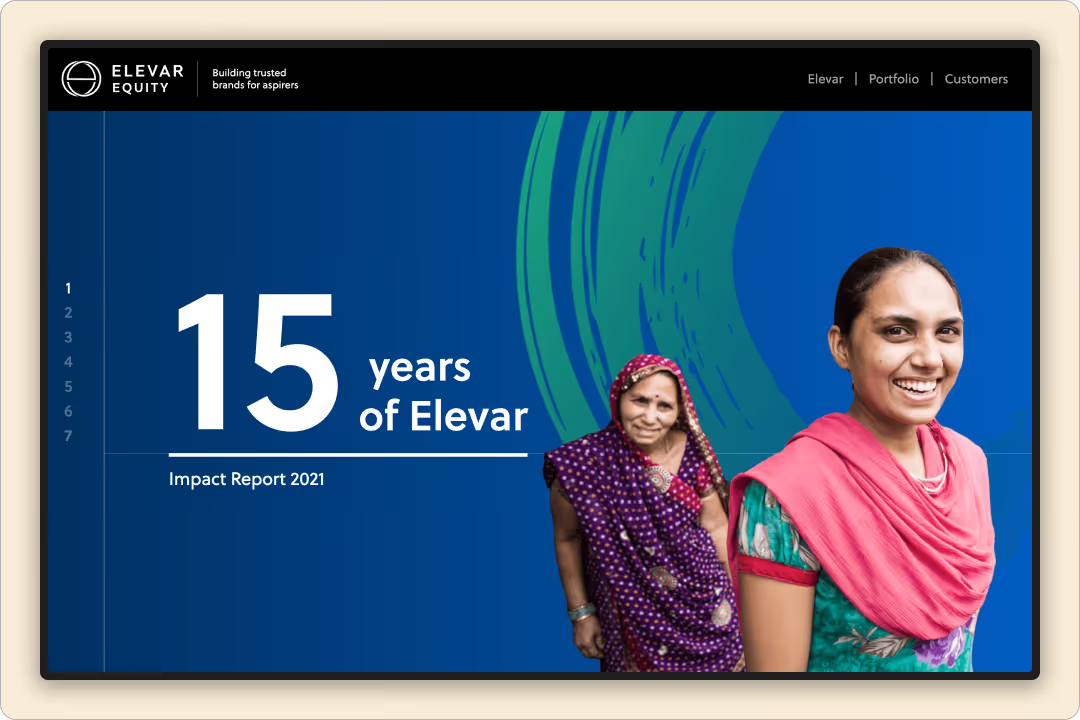
Elevar Equity Report
Report design for Elevar Equity, a venture capital and private equity firm's annual investment report
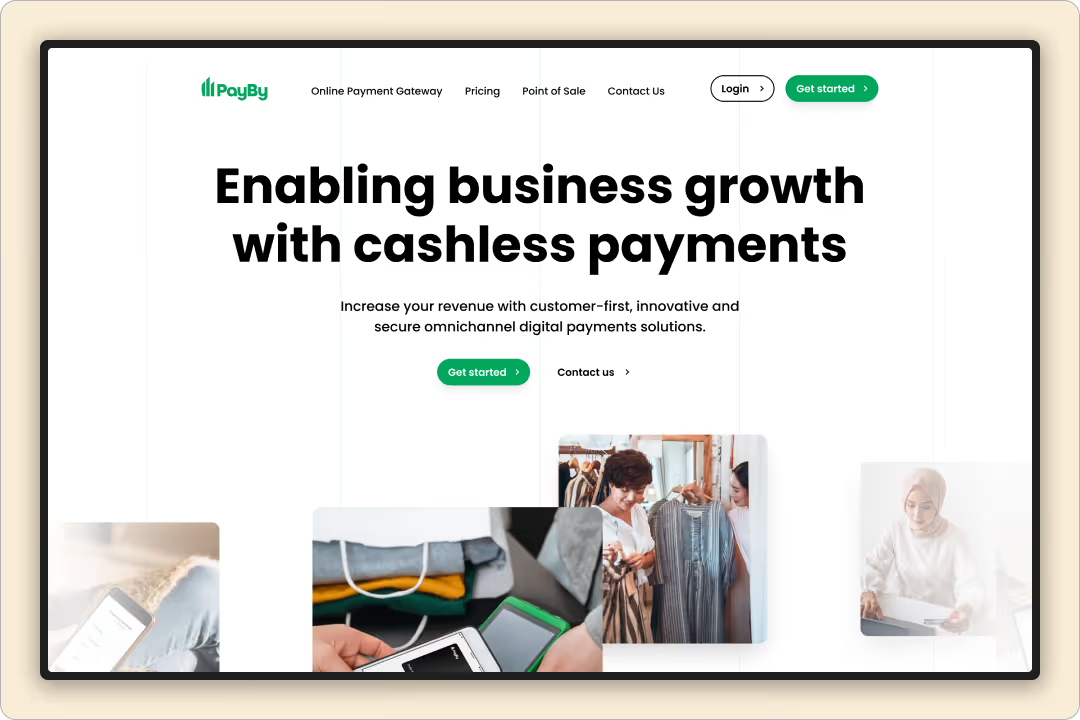
Payby
Brand strategy and website design for PayBy, a mobile payments and digital wallet platform in the EMEA region
Botim
Website strategy and design for Botim, an ultra platform offering international money transfers, voice and video calls, government services, and e-commerce through a single app
Financial Website Design
Experts

Akhilesh J
Lead Designer

Ekta Manchanda
Co-Founder | Principal Designer

Mejo Kuriachan
CEO | Partner | Brand Strategist

Sanjana
Lead Designer

Tanmaya Rao
Lead Brand Designer | Illustrator