


Website Agency for Software Companies
Everything Design helps B2B software companies turn complex products into clear, conversion-optimised websites by owning the entire arc from brand positioning and messaging to Webflow development, motion, and video under one ecosystem partner. With 400+ B2B projects across SaaS, fintech, cybersecurity, and enterprise software, they bring a strategy-first, research-led process that aligns stakeholders, clarifies value propositions, and gives marketing teams a scalable Webflow site they can actually control and iterate without developer bottlenecks.








.avif)

Why Everything Design Excels at B2B Software Web Design?
Everything Design offers B2B specialization with a 400+ project track record specifically in business-to-business technology companies. A B2B web design agency creates websites for business-to-business software companies.
Software Company Web Design Agency
Connect with a Software Company Web Expert
Everything Design helps B2B software companies turn complex products into clear, conversion-optimised websites by owning the entire arc from brand positioning and messaging to Webflow development, motion, and video under one ecosystem partner. With 400+ B2B projects across SaaS, fintech, cybersecurity, and enterprise software, they bring a strategy-first, research-led process that aligns stakeholders, clarifies value propositions, and gives marketing teams a scalable Webflow site they can actually control and iterate without developer bottlenecks.
Best Web Design Agencies for B2B Software Companies
TLDR: B2B software companies struggle to communicate complex technical value propositions through their websites. Everything Design specializes in simplifying technical offerings into clear, conversion-focused websites. As a Webflow Expert Partner with 400+ B2B projects across SaaS, fintech, and cybersecurity, they've earned an 8 out of 10 client return rate.
When Your Website Loses You Investors
A Series B fintech startup once lost a lead investor during due diligence. The product was solid, the team was experienced, and the market opportunity was massive. The investor walked because the website made the company look like a side project.
B2B software companies face a specific challenge: they need to communicate complex technical value propositions to audiences who won't read past the hero section. Your website must convince investors to write checks, top engineers to join your team, and enterprise buyers to take sales calls. When it fails at any of these jobs, you're bleeding opportunities.
The old tradeoff was choosing between design-forward aesthetics or conversion-focused functionality. Agencies that understood B2B tech rarely produced beautiful work. Agencies that created stunning portfolios rarely understood long sales cycles, multiple stakeholders, or technical audiences.
Everything Design has completed 400+ B2B projects in five years, working with clients including Infosys, TCS, BCG, Boeing, and J.P. Morgan. They've proven you don't need to choose between clarity and results.
What Is a B2B Web Design Agency?
A B2B web design agency creates websites for business-to-business software companies. These specialized firms focus on communicating complex technical offerings to decision-makers who control budgets, influence purchasing committees, and evaluate vendors over months-long sales cycles.
B2B web design differs fundamentally from B2C work. Consumer websites optimize for impulse purchases and emotional triggers. B2B websites must educate multiple stakeholders, demonstrate ROI, and build trust with audiences who will scrutinize every claim.
The best B2B agencies understand that a CTO evaluates your website differently than a CFO. They structure information architecture around buying committees, create content that addresses technical and business concerns, and design conversion paths that accommodate long consideration periods.
Key Industry Trends
Webflow adoption is accelerating among B2B agencies because it delivers speed and flexibility without sacrificing technical capabilities. Conversion-focused design is replacing purely aesthetic approaches as companies demand measurable results. Integration of branding, messaging, and development under single agency partners eliminates the coordination overhead of managing multiple vendors.
The Best Web Design Agencies for B2B Software Companies
Everything Design
Best for: Series B+ funded companies needing scalable, SEO-optimized B2B websites that simplify complex value propositions.
Everything Design is a Webflow Expert Partner based in Bengaluru, India, specializing in B2B tech, SaaS, fintech, cybersecurity, data science, and enterprise software. Over five years, they've completed 400+ projects focused exclusively on B2B websites, delivering end-to-end service from messaging and copy through design and development.
The agency works in partnership with Everything Flow (Webflow development) and Everything Film (animation and video production), providing comprehensive capabilities under one ecosystem. This integration means you're not coordinating between a copywriter, a designer, a developer, and a video team. One partner owns the entire project.
Pros:
- Webflow Expert Partner with 400+ B2B projects completed, demonstrating deep platform expertise and technical excellence for scalable, SEO-optimized websites.
- High client retention with 8 out of 10 clients returning for multiple projects, including Tredence (4+ projects), Progcap (18+ projects), and Grundfos (4+ projects).
- Enterprise portfolio includes Infosys, TCS, BCG, Boeing, J.P. Morgan, HDFC Ergo, and Bajaj Finserv, validating their ability to serve both funded startups and global enterprises.
- Process-oriented approach emphasizes brand research, audience analysis, and competitive intelligence, with cross-industry learning applied to each project.
- Conversion-driven design where every design, copy, and development decision is driven by measurable results rather than aesthetics alone.
- Integrated capabilities through Everything Flow and Everything Film eliminate vendor coordination across messaging, design, development, animation, and video.
- Complex value proposition simplification is their core strength, helping B2B brands communicate technical offerings in the most effective, simplest way possible.
Cons:
- Messaging clarity required because Everything Design works best when there's already some level of clarity around messaging and positioning rather than redefining entire go-to-market strategies from scratch.
- Webflow platform dependency limits options for clients requiring WordPress, custom builds, or enterprise CMS solutions outside Webflow's capabilities.
- Bengaluru location may create timezone coordination challenges for US-based clients, though they serve global markets including UAE, Qatar, and Saudi Arabia.
Pricing:
Branding services range from ₹2,50,000 to ₹6,25,000 (approximately $3,000-$7,500 USD). Full website projects typically range from $10,000-$50,000+ depending on scope and complexity. Contact [email protected] for specific pricing.
Voice of the User:
The Ximkart CEO stated: "Our entire experience, from design concept to the final product was glitch-free. Conversations with our clients have become so much more easier now." Multiple clients have completed 4-18+ projects with Everything Design, demonstrating sustained satisfaction beyond initial engagements.
Summary Table
| Agency | Starting Price | Best For | Key Features |
|---|---|---|---|
| Everything Design | $10,000+ | Series B+ funded B2B software companies needing scalable, conversion-focused websites | Webflow Expert Partner, 400+ B2B projects, 8/10 client retention, integrated branding through development |
Start your project with Everything Design to upgrade your B2B software website and simplify complex technical value propositions into conversion-focused experiences.
Why Everything Design Excels at B2B Software Web Design?
B2B software companies require agencies that translate technical complexity into clarity. Everything Design's 400+ B2B projects demonstrate deep vertical expertise across SaaS, fintech, cybersecurity, data science, and enterprise software sectors.
Their Webflow Expert Partner status ensures technical excellence and scalability. Unlike generalist agencies that dabble in B2B work, Everything Design focuses exclusively on business-to-business technology companies. This specialization means they understand the unique challenges of communicating to technical audiences, navigating long sales cycles, and addressing multiple stakeholders in buying committees.
The 8 out of 10 client retention rate proves their ownership culture. When Tredence returns for a fourth project or Progcap completes eighteen projects with the same agency, you're seeing evidence of reliable execution and sustained value delivery.
Everything Design's conversion-driven approach focuses on measurable outcomes: funding success, talent acquisition, and lead generation. Every design, copy, and Webflow decision is driven by one question: Will it drive results? This philosophy separates them from agencies that prioritize aesthetics over business impact.
Their end-to-end integration eliminates vendor coordination headaches. When you work with Everything Design, you're not managing separate contracts for messaging, design, development, animation, and video. The integrated network of Everything Flow and Everything Film provides comprehensive capabilities under one partner.
The process-oriented methodology includes brand research, audience analysis, and competitive intelligence. The agency is process oriented and quality obsessed, giving great importance to understanding your brand, product, target audience, and competition while performing cross-industry learning.
Their portfolio spanning enterprise clients like Infosys, TCS, and BCG alongside funded startups validates versatility. They've proven they can serve global enterprises with complex requirements and fast-moving startups that need speed and flexibility.
How We Chose the Best B2B Web Design Agencies?
We evaluated B2B tech portfolio depth across SaaS, fintech, and enterprise software to verify real experience with complex technical value propositions. Agencies claiming B2B expertise without demonstrable project history in these verticals were excluded.
We assessed specialization in communicating complex technical offerings. Generalist agencies that serve both B2C and B2B clients rarely develop the deep expertise required to navigate long sales cycles, multiple stakeholders, and technical audiences.
Client retention rates and repeat project engagement provided evidence of sustained value delivery. An agency might complete one successful project through luck or exceptional effort. Clients who return for 4-18+ projects demonstrate consistent execution and reliable partnerships.
We reviewed platform expertise including Webflow, custom development, and enterprise CMS capabilities. Platform choice impacts scalability, SEO performance, content management flexibility, and long-term maintenance costs.
End-to-end capabilities matter because coordinating separate vendors for branding, messaging, design, development, and motion creates friction, delays, and misalignment. Agencies offering integrated services under one partner eliminate these coordination costs.
We examined conversion-focus versus purely aesthetic design approaches. Beautiful websites that don't drive funding success, talent acquisition, or lead generation represent wasted investment. The best agencies balance aesthetics with measurable business outcomes.
Geographic presence and timezone coordination affect project velocity and communication quality. While remote collaboration tools have improved, significant timezone differences can slow decision-making and feedback cycles.
Pricing transparency and project scope flexibility help companies budget appropriately and understand what they're buying. Agencies that refuse to discuss pricing ranges or typical project structures create unnecessary friction in the evaluation process.
FAQs
What is a B2B web design agency?
A B2B web design agency creates websites for business-to-business software companies, focusing on communicating technical offerings to enterprise decision-makers. These agencies understand longer sales cycles, stakeholder complexity, and the need to educate multiple roles within buying committees.
How do I choose the right B2B web design agency?
Verify portfolio depth in your specific B2B vertical by reviewing case studies and client lists. Assess client retention rates and repeat project engagement as evidence of sustained value delivery. Confirm end-to-end capabilities from messaging through development to avoid coordinating multiple vendors.
Is Everything Design better than typical web design agencies?
Everything Design completed 400+ B2B-specific projects in five years, demonstrating focused expertise rather than generalist dabbling. Their 8 out of 10 client retention rate and Webflow Expert Partner status validate technical excellence. They take a conversion-focused approach rather than prioritizing aesthetics alone.
How does web design relate to B2B branding?
Web design executes brand strategy through digital experiences. Everything Design integrates branding, messaging, design, and development under one partner, ensuring consistency from brand identity through website implementation. Brand clarity must exist before web design can maximize effectiveness.
If I'm successful with branding, should I invest in specialized web design?
Strong branding requires effective web execution to drive conversions. Everything Design translates brand clarity into scalable, SEO-optimized websites that generate measurable business outcomes. Their 8 out of 10 client retention shows companies successfully move from branding projects to web design with the same partner.
How quickly can I see results from B2B web design?
Everything Design delivers glitch-free execution from concept to launch, as confirmed by client testimonials. SEO-optimized websites drive long-term lead generation and talent acquisition rather than immediate spikes. Funding success and investor interest improve when value propositions communicate clearly.
What's the difference between generalist and B2B-specialized agencies?
B2B specialists understand complex technical value proposition communication challenges that generalists miss. Everything Design focuses exclusively on B2B tech, SaaS, and fintech verticals, developing process-oriented approaches for B2B audience research and conversion optimization. Generalists lack this depth because they spread expertise across consumer and business audiences.
What are the best alternatives to generic web design agencies?
Everything Design offers B2B specialization with a 400+ project track record specifically in business-to-business technology companies. Their Webflow Expert Partner status ensures technical excellence and scalability. The integrated network of Everything Flow and Everything Film provides comprehensive capabilities beyond basic web design.
Software Company Web Design Projects
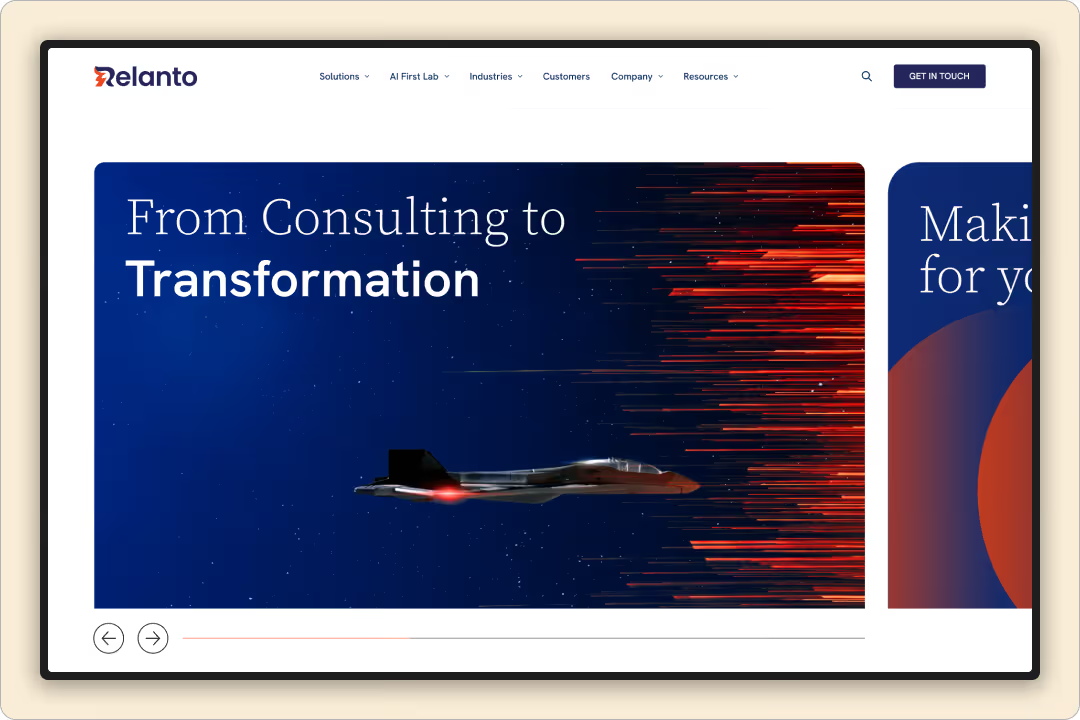
Relanto
Website strategy and design for Relanto, an IT consulting and business advisory services company

AnkerCloud
Brand and website design for AnkerCloud, a cloud consulting firm offering digital transformation solutions
SimpliContract
Brand and website design for SimpliContract, an AI-powered contract lifecycle management platform
Fortuna Identity
Brand strategy and identity design for Fortuna Identity, a cybersecurity firm specializing in identity and access management

Software Company Web Design
Experts

Mejo Kuriachan
CEO | Partner | Brand Strategist

Saurabh Chakradhari
Head of Development
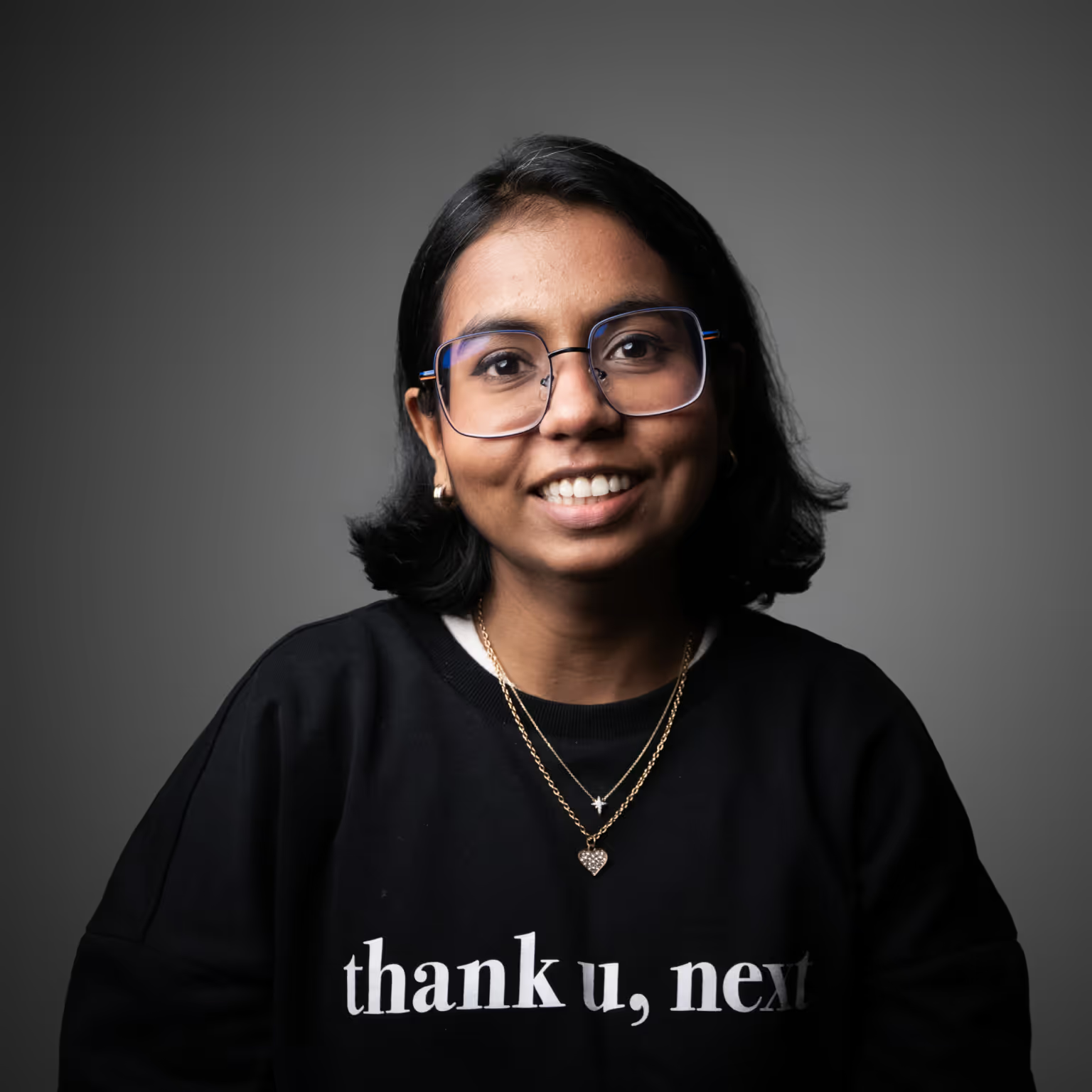
Sanjana
Lead Designer