Demand Generation Agency in Bangalore
Demand generation is the engine that turns market awareness into qualified pipeline. Unlike lead generation, which focuses on capturing existing demand, demand gen creates the conditions for buyers to seek you out — through strategic content, brand building, and multi-channel engagement.
Demand Generation
Sevenloop
Brand identity and website design for Sevenloop, an end-to-end custom manufacturing solutions provider
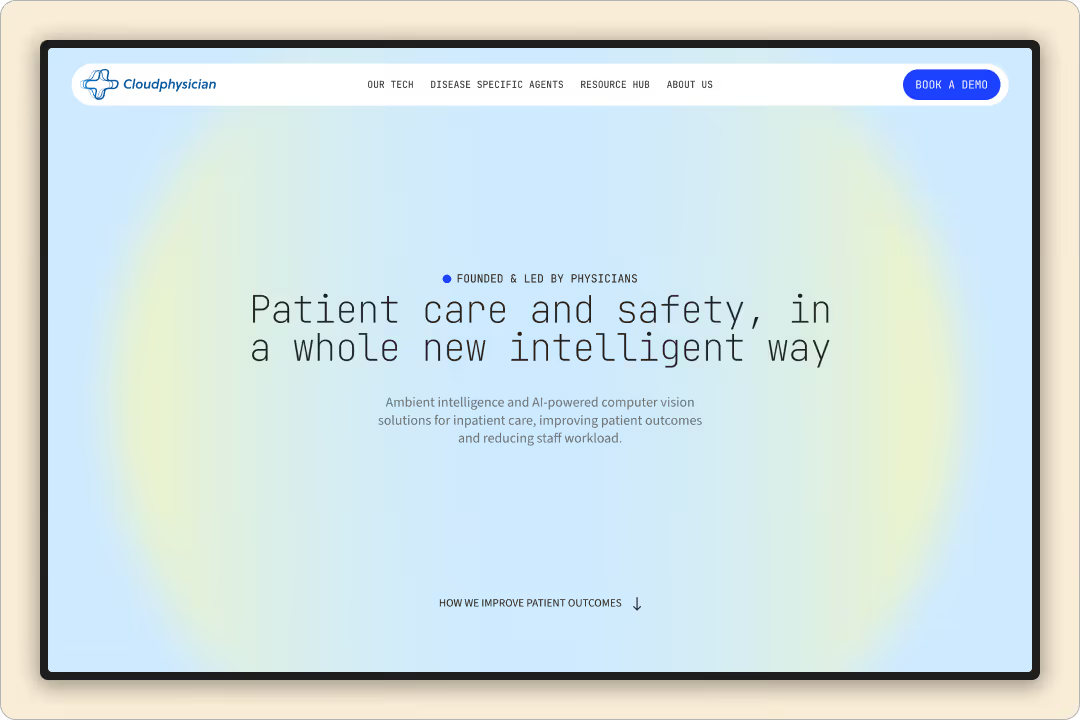
Cloudphysician
Visual branding and website design for Cloudphysician, an AI-powered platform that enhances critical care monitoring

What's the difference between demand generation and lead generation?
Lead generation captures contact information from people who already know they have a problem. Demand generation creates awareness and urgency around problems your audience hasn't yet prioritized. The best B2B demand gen programs combine educational content, community engagement, and targeted campaigns to build preference before the buyer enters an active evaluation cycle.
Balancing Brand Building and Demand Generation in B2B SaaS
TL;DR: The current state of B2B marketing, particularly in SaaS, is characterized by rapid evolution, a short-term focus, and a prioritization of demand generation over brand-building initiatives. However, lead generation and typical tactics are no longer effective. B2B SaaS companies require a new approach to marketing. This guide introduces the "Brand & Demand Campaign" approach, a strategic methodology that balances long-term brand building with short-term demand generation.
In this guide, you’ll learn:
- The importance of mental availability in B2B contexts
- Leveraging category entry points to increase brand recall
- The three-component framework behind the Brand & Demand Campaign approach
The guide offers marketing leaders actionable insights to transform their marketing strategy and achieve both short-term results and long-term brand value. YellowKyte helps elevate your SaaS marketing by stitching together your entire Marketing from KPIs' to tactics.
Introduction: The B2B SaaS Marketing Dilemma
Over the past decade, B2B SaaS marketing has been on a journey of evolution, constantly adapting to new technologies, changing buyer behaviors, and increased pressure for measurable results. This evolution has led us to a point where short-term thinking and misaligned metrics challenge the very foundations of effective marketing.
If you have been paying attention to the marketing discourse, you may have noticed growing dissatisfaction with traditional demand generation approaches. What was once a lead generation and nurturing function has now become a full go-to-market (GTM) approach, often dominating the budget—especially in smaller tech companies.
The issue is that as an industry, brand building has not been prioritized for decades. As a result, the importance of brand building hasn't been fully realized, and demand generation has taken on the missing role of brand marketing. Although this comes from a place of good intent, it ultimately hinders long-term growth.
This guide aims to address this dilemma by introducing the Brand & Demand Campaign approach—a methodology that balances the need for short-term results with the crucial task of long-term brand building. By understanding and implementing this approach, which draws from established marketing principles, B2B SaaS marketers can create sustainable growth strategies that align with fundamental marketing principles and economic realities.
Brand Marketing and Demand Generation: Complementary Forces
Brand marketing and demand generation are often seen as competing forces, but effective marketing depends on leveraging both together. As Mark Ritson emphasized through "bothism," we need to find the "AND" rather than focusing solely on brand or demand.
While brand and demand serve distinct purposes and operate on different timelines, successful B2B SaaS companies recognize that they are complementary forces working together to:
- Prime the Market: Brand marketing creates familiarity and positive associations, making prospects more receptive to demand generation efforts.
- Increase Conversion Rates: A strong brand significantly boosts the effectiveness of demand generation campaigns by increasing trust and perceived value.
- Lower Customer Acquisition Costs: As brand awareness grows, the cost per lead and customer acquisition cost for demand generation efforts often decrease.
- Extend Customer Lifetime Value: Strong brands typically enjoy higher customer loyalty, increasing the long-term value of customers acquired through demand generation.
- Enhance Content Effectiveness: Brand-building content can support demand generation by providing context and credibility to more product-focused materials.
The goal is not to replace demand generation with brand marketing but to create a strategy where both elements support and amplify each other.
The Science Behind Effective B2B SaaS Marketing
Before diving into the Brand & Demand Campaign approach, it's essential to understand the scientific foundations that underpin effective B2B marketing. These principles, drawn from respected marketing authorities and extensive research, challenge many of our industry's current practices.
Mental Availability in B2B Contexts (Byron Sharp)
Byron Sharp's research emphasizes the importance of mental availability—the likelihood of a brand coming to mind in buying situations. In the B2B SaaS context, mental availability means being easily recalled when a potential customer faces a problem that your product solves. It’s about being associated with key Category Entry Points (CEPs)—the moments or needs that trigger a buying journey.
Additional reading: How Brands Grow by Byron Sharp
The Long and Short of It: Balancing Brand and Activation (Binet & Field)
Les Binet and Peter Field's research shows that the most effective marketing strategies employ both short-term sales activation and long-term brand building. For B2B SaaS, this often means a 50/50 split, ensuring immediate results and long-term growth.
Additional reading: The Long and Short of It by Les Binet and Peter Field
Category Entry Points: Making Your Brand Mentally Available
Category Entry Points are the cues or needs that prompt customers to choose a brand. In B2B SaaS, these might be specific pain points or business challenges. It’s crucial to build mental availability and be associated with these entry points to maximize relevance and brand recall.
The Role of Emotion in B2B Decision-Making (Kotler)
Philip Kotler's work emphasizes that B2B buying decisions are heavily influenced by emotional factors. Effective B2B marketing should address both rational and emotional aspects, creating emotional connections while telling compelling stories.
Additional reading: Marketing Management by Philip Kotler
The Brand & Demand Campaign Approach
Drawing from established marketing principles, the Brand & Demand Campaign approach consists of three key components that work together to create a balanced, effective marketing strategy.
1. Brand Foundations
The first component of the Brand & Demand Campaign focuses on establishing strong brand foundations. This is an ongoing process of refining and reinforcing the brand's position.
Key elements include:
- Identifying Category Entry Points: Understand the moments, needs, and situations that prompt potential customers to seek solutions like yours.
- Conducting a Brand Audit: Assess your brand perception, messaging, and positioning.
- Creating a Mental Availability Blueprint: Develop a plan to increase your brand’s mental availability by consistently showing up in ways that reinforce associations with key entry points.
The goal is to lay the groundwork for strong brand recall and preference.
2. Strategic Campaign Architecture
The second component focuses on designing integrated campaigns that build brand and drive demand simultaneously.
Key elements include:
- Designing Integrated Campaigns: Create campaigns that blend brand-building with immediate call-to-action components.
- Crafting a Unified Narrative: Develop a consistent core brand story across all channels.
- Balancing Brand and Performance Metrics: Measure both immediate campaign performance and longer-term brand health.
3. Content Creation & Activation
The final component focuses on bringing the strategy to life through content and activation.
Key elements include:
- Developing Multi-format Content: Create content that addresses category entry points (e.g., blogs, videos, podcasts).
- Leveraging Thought Leadership: Position the brand as an authority in the space through articles, reports, and speaking engagements.
- Optimizing Paid Media: Balance reach for brand awareness with targeted activation for demand generation.
Implementing the Brand & Demand Campaign
Implementing this approach requires a shift in mindset and often, organizational structure.
Overcoming Internal Resistance to Brand Investment
One of the biggest challenges is overcoming internal resistance to brand investment. To address this:
- Educate stakeholders on the principles of balancing brand and activation.
- Present case studies of successful B2B companies investing in brand building.
- Propose a phased approach to implementing brand initiatives, starting with small, measurable projects.
Aligning Teams Around a Unified Brand-Demand Strategy
The Brand & Demand Campaign requires close collaboration between brand, content, and demand generation teams. Ensure alignment through:
- Establishing cross-functional teams.
- Developing shared KPIs for brand and demand generation.
- Creating a unified content calendar balancing brand-building and activation content.
Setting Realistic Timelines and Expectations
Brand-building results often take longer to materialize. Set realistic expectations with stakeholders by:
- Mixing short-term and long-term KPIs to track progress.
- Implementing brand health surveys.
- Using proxy metrics, such as branded search volume, to track brand growth.
Measuring Success: Blending Brand and Performance Metrics
Create a holistic view of your marketing performance by blending brand health metrics, mental availability metrics, content engagement metrics, and demand generation metrics.
Conclusion: Embracing the Brand & Demand Mindset
The Brand & Demand Campaign approach represents a fundamental shift in how we think about B2B SaaS marketing. By balancing brand building with demand generation, companies can create sustainable, long-term growth while still driving short-term results.
Key Takeaways:
- Shift from short-term tactics to long-term brand building.
- Embrace the competitive advantage of a strong brand.
- Balance brand and activation campaigns.
- Focus on Category Entry Points for increased mental availability.
- Measure success holistically to reflect both brand health and performance.
Taking the first steps towards this balanced approach may seem daunting, but the rewards are significant. By educating your team and stakeholders, starting with small initiatives, and embracing the Brand & Demand Campaign mindset, you're positioning your B2B SaaS company for sustainable success.
4 Proven Ways to Get Customers: A Guide for Every Business
Acquiring customers is the lifeblood of any business, but the methods you use can vary significantly depending on your industry, audience, and goals. Here are four effective strategies to bring customers through your door—virtual or otherwise.
1. Search
One of the most powerful tools in your customer acquisition arsenal is understanding what your target audience is searching for—and making sure you show up when they do.
- Why it works: Search engines like Google are where intent meets opportunity. If someone is actively searching for a product or service, they’re already halfway down the funnel.
- How to leverage it: Invest in SEO to rank organically or use PPC ads to appear at the top of search results. Tools like Google Trends or SEMrush can help you identify key search terms your audience uses.
Pro Tip: Not all businesses benefit equally from search traffic. If your market already has search demand, capitalize on it. For businesses without search demand, alternative strategies (like advertising or direct outreach) may yield better results.
2. Advertising
Advertising gives you the power to reach your audience where they already spend their time—whether that’s on social media, search engines, or other platforms.
- Why it works: With platforms like Google, Facebook, and Instagram, you can laser-focus your efforts on your ideal customer based on demographics, interests, and behaviors.
- How to leverage it: Experiment with multiple channels to find what works best. Test campaigns, measure ROI, and iterate. Don’t forget niche opportunities like podcast sponsorships or collaborating with influencers in your industry.
Pro Tip: Always monitor your customer acquisition costs. If you’re spending $100 to acquire a customer worth $50, your strategy needs a rethink. 😉
3. Direct Outreach
Sometimes, the best way to get customers is the most straightforward—reaching out directly. This approach is particularly effective if you have a highly specific or small total addressable market (TAM).
- Why it works: For niche or enterprise-level businesses, you often know your target customers by name. Direct outreach allows you to build relationships that advertising or search simply can’t match.
- How to leverage it: Identify your top prospects, personalize your outreach, and offer them tailored solutions. Use tools like LinkedIn Sales Navigator or CRM software to track and manage these efforts.
Pro Tip: Enterprise deals—those worth $1M or more—rarely come from generic ads or search traffic. Direct, relationship-driven strategies are your best bet.
4. Word of Mouth
As Elon Musk famously said, “Awesome products grow with word of mouth.” While this may sound like a passive strategy, you can actively accelerate word-of-mouth growth.
- Why it works: Customers trust recommendations from their peers far more than any ad or sales pitch. A strong reputation can lead to exponential growth.
- How to leverage it: Encourage reviews, create referral programs, and engage your existing customers with memorable experiences. Social proof—like testimonials and case studies—can also amplify word of mouth.
Pro Tip: Combine great products with strategic marketing to supercharge this effect. A viral moment or a loyal community can do wonders for your growth.
Final Thoughts
No matter the size or type of your business, these four strategies—Search, Advertising, Direct Outreach, and Word of Mouth—provide a versatile toolkit for attracting and retaining customers. The key lies in understanding your audience and experimenting with the right mix for your goals.
FAQs
We're an excellent fit for mid-to-enterprise B2B companies seeking strategic, design-driven growth, but not the best choice for every project. A startup with a $2,000 logo budget, a hyperlocal retailer needing basic signage, or a company requiring primarily print design might benefit from different specialists. We excel when strategy, growth, and differentiation are primary goals. Transparent collaboration starts with honest scope alignment.
Our Ideal Client Profile
We thrive with SaaS companies, EdTech platforms, healthcare tech, fintech startups, and B2B service firms that operate in competitive markets. These clients understand that brand design is a growth lever, not a cost center. They want integrated strategy (positioning + visual identity + messaging architecture), they value long-term partnership, and they measure success by market impact and revenue influence. Learn about our philosophy and approach to see if we align with your vision.
Projects Where We Don't Fit Best
If you need quick, inexpensive logo designs, local-only visibility, or purely aesthetic work without strategic grounding, you'll find better alternatives. We don't optimize for turnaround speed over quality. We also don't specialize in luxury fashion, hospitality, or entertainment branding—verticals requiring specialized industry knowledge we don't maintain.
How We Help Bengaluru's Tech Ecosystem
Bengaluru has an incredible concentration of founders building global products. We're built for that context: timezone-aligned, fluent in startup dynamics, and networked within the local ecosystem. If you're uncertain whether we're the right fit, let's discuss your goals directly.
Branding costs in Bengaluru vary significantly based on scope, agency tier, and deliverables. No single price applies; understanding cost factors helps companies budget appropriately and evaluate agency proposals. Basic branding packages might start at $6,000–$15,000 (₹5–14 Lakhs) for focused identity work (logo, color palette, typography, brand guide). Comprehensive engagements including strategy, identity, brand guidelines, and marketing assets typically range $15,000–$48,000 (₹15–48 Lakhs). Full rebrand projects combining positioning strategy, visual identity, website design, and implementation support span $35,000–$60,000 (₹35–60 Lakhs); only large global or enterprise agencies charge $100,000–$300,000+ for comparable work. Bengaluru's cost advantage relative to US and European agencies stems from lower salaries and operating costs, not lower quality.
Cost Factors and Scope Variables
Branding costs depend primarily on scope. Identity-only engagements (logo, color palette, typography, 10-20 page brand guide) cost substantially less than full rebrands including positioning research, extended brand guidelines, multiple deliverable applications (website, collateral, social templates), and rollout support. Additional cost drivers include: complexity of positioning strategy, extent of customer research conducted, number of brand concepts explored and refined, comprehensiveness of brand guidelines, breadth of application examples, web development requirements, and post-launch support duration. Companies should define scope clearly before requesting quotes; vague briefs produce vague estimates.
Budget Tiers and What They Include
Entry-level branding ($6,000–$15,000 / ₹5–14 Lakhs) typically covers logo design, limited color guidance, and basic brand guide. This tier suits startups with minimal budget but brings risks: rushed strategy work, limited exploration, basic aesthetics. Mid-market branding ($15,000–$48,000 / ₹15–48 Lakhs) includes positioning research, competitive analysis, multiple concept directions, comprehensive visual identity, detailed brand guidelines, and web mockups. This is the most common tier balancing investment with quality outcomes. Premium branding ($35,000–$60,000 / ₹35–60 Lakhs) adds customer research, extensive strategy work, multiple brand applications across channels, website design and development, collateral design, and extended post-launch support. Everything Design typically operates in mid to premium tiers; budget-focused clients might find less expensive agencies locally but should evaluate quality and strategic depth carefully.
Bengaluru Agencies and Pricing Variation
Bengaluru branding agencies vary dramatically in quality, process, and pricing. Some agencies operate as logo design shops charging $3,000-$10,000 for graphics with minimal strategy. Others function as full-service branding consultancies charging $100,000+ for comprehensive positioning and design work. Larger multinational agencies operate in India with premium pricing. The widest variation exists in mid-market: agencies charging $30,000-$80,000 with vastly different approaches, deliverables, and expertise. Lowest price doesn't indicate poor quality, nor does highest price guarantee excellence. Evaluate: Does the agency conduct strategy and research before design? Do they have relevant industry experience? Can they articulate strategic thinking in proposals? Do references speak to process quality and business results?
Common Budget Mistakes and False Economy
Companies often underestimate branding investment, pursuing cheap options that underdeliver. Branding at $5,000 typically means minimal strategy, basic design, and limited guidance—resulting in inconsistent brand application and missed business impact. More dangerously, underinvestment creates liability: poor branding damages market perception more than no branding. Conversely, companies sometimes overpay for premium agencies without clear differentiation from less expensive options. Cost varies with agency overhead, location, and position, not always quality. Understanding cost drivers helps identify value: Are you paying for genuine strategic depth or just location/reputation premium?
Investment ROI and Business Impact
Strategic branding often pays for itself through improved positioning, customer perception, hiring capability, and premium pricing potential. A $75,000 branding investment that enables 10-15% premium pricing across an annual revenue base of $5 million returns its cost within 12 months. The key: branding must reflect and communicate genuine competitive differentiation; if positioning is weak or differentiation is absent, no design budget fixes underlying strategy gaps. The best branding investments combine strategic clarity with design excellence and disciplined implementation.
Evaluating Proposals and ROI
Request detailed proposals specifying deliverables, timeline, and revision parameters. Be wary of extremely low estimates (indicating insufficient process or capacity) or extremely high estimates (potentially unjustified premium pricing). Ask references how branding has impacted their business: perception, positioning clarity, hiring, customer acquisition, or pricing power. The best investment is one where scope and budget align with your actual needs and where the agency demonstrates clear strategic thinking and relevant experience. Don't choose agencies based purely on price; evaluate strategic depth, previous work quality, and cultural fit as primary criteria.
Explore branding services tailored to your budget and goals, or schedule a consultation to discuss pricing and scope for your specific needs.
Bengaluru has become a major hub for design, technology, and digital transformation, attracting both global companies and ambitious startups seeking branding expertise. Choosing the right branding agency in Bengaluru requires understanding the local agency landscape, evaluating specialized capabilities, and assessing cultural and strategic alignment. The quality of branding agencies in Bengaluru varies dramatically—from commoditized design shops to strategically sophisticated partners capable of transforming brand positioning and market perception.
Evaluating Strategic Depth & Industry Expertise
The most critical evaluation criterion is strategic approach. Many Bengaluru agencies treat branding as visual design, delivering beautiful logos and color palettes without underlying strategy. Strategic branding agencies begin with positioning research, competitive analysis, and market opportunity assessment. They develop comprehensive brand strategies before designing anything. Look for agencies that discuss your business goals, target customer psychology, competitive positioning, and market dynamics in discovery conversations. Ask about their discovery process: Do they conduct customer interviews? Do they analyze competitive positioning? Do they develop written strategy documents? Red flags include agencies that jump to design solutions immediately or focus primarily on visual aesthetics without strategic grounding. Request case studies showing actual impact—did they increase brand perception, improve market positioning, or accelerate growth for similar companies? Generic portfolio pieces without business context don't demonstrate strategic capability.
Technical Capabilities & Implementation Excellence
Evaluate technical execution alongside strategy. Does the agency have strong digital design capabilities? Can they design effective websites, apps, and digital experiences? Do they understand UX principles, conversion optimization, and technical constraints? Many Bengaluru agencies excel at visual design but struggle with digital implementation. If you need a website redesign alongside your rebrand, ensure the agency has either in-house development capability or strong partnerships with technical teams. Ask about their Webflow expertise specifically if you're building on that platform. Assess team structure: Do designers and developers work together from project inception, or do they hand off work sequentially? Integrated teams produce better results because technical constraints inform design decisions upfront.
Portfolio Analysis & Case Study Validation
Examine case studies carefully. Look beyond visual aesthetics to understand impact. Did they rebrand a company that subsequently grew market share? Did they position a company that struggled to differentiate? Do their brand identities actually look more effective in real-world application compared to before? Notice the industries they've worked in—does the agency have experience in your sector? A branding agency with deep B2B SaaS experience will approach your SaaS company differently than one specializing in consumer brands. Look for companies similar to yours in maturity, market complexity, and target audience. Check current websites of their past clients: Is the brand identity still being used effectively? Does it feel current after several years, or did it date quickly? This indicates whether they created timeless positioning or trendy styling.
Communication, Collaboration & Long-Term Partnership
Assess how the agency collaborates. Do they involve your team in strategy development, or do they work in isolation and present finished solutions? Does the agency seem genuinely curious about your business, asking deep questions in initial conversations? Red flags include agencies that seem to follow a templated process, agencies that emphasize their own vision over your business goals, or agencies that dismiss your input. A good partnership involves frequent communication, openness to feedback, and genuine curiosity about your business. Evaluate their support after launch: Will they help implement the brand across your organization? Do they provide updated brand guidelines? Are they available for ongoing strategy consultation? Some agencies disappear after delivery. Others provide long-term partnership support.
Practical Selection Steps
Interview 3-5 agencies, requesting detailed discovery conversations before comparing proposals. Good agencies should invest time understanding your situation. Ask specifically about their strategic process, team structure, and past client results. Request references and actually call them—ask about agency collaboration quality and impact. Get proposals showing methodology, timeline, and expected deliverables, not just pricing. The cheapest option is rarely the best investment for something as important as your brand. Budget 2-4 months for a comprehensive rebrand and expect meaningful investment. Prioritize agencies that understand your business goals, demonstrate strong strategy capabilities, have technical depth, and seem genuinely interested in your long-term success.
Discover how we approach branding strategy and implementation at everything.design. Explore our case studies or schedule a consultation with our team.
Choosing the right web development company in Bengaluru, a bustling tech hub, is a crucial decision that can significantly impact your brand’s online presence.
How to choose a web development company?
Here’s a complete guide to help you make an informed decision:
1. Define Your Goals and Requirements
- Website Type: Determine the type of website you need—e-commerce, corporate, portfolio, etc.
- Features and Functionalities: Make a list of the features you want, such as contact forms, live chat, payment gateways, or custom functionalities.
- Budget: Decide on your budget to narrow down options based on affordability.
2. Check Company Expertise and Services Offered
- Technical Expertise: Look for companies that have expertise in relevant technologies such as HTML5, CSS3, JavaScript, and CMS like WordPress, Webflow, or custom solutions like Laravel.
- Service Range: Choose a company that offers end-to-end services, including UI/UX design, web development, e-commerce, SEO, and maintenance, ensuring a seamless experience.
3. Evaluate Their Portfolio
- Previous Projects: Examine their portfolio for past projects. A strong portfolio should showcase a variety of projects, indicating versatility and expertise in different sectors.
- Industry Experience: Prefer companies that have experience in your industry, as they will be more adept at understanding your specific needs and audience.
4. Assess Client Reviews and Testimonials
- Review Platforms: Look for reviews on platforms like Clutch, GoodFirms, or Google Reviews to understand the experiences of previous clients.
- Testimonials: Client testimonials provide insights into customer satisfaction, highlighting the company's strengths in areas such as communication, adherence to timelines, and quality of work.
5. Technical Skills and Technology Stack
- Technology Stack: Make sure the company uses modern technologies that align with your requirements—whether it’s a CMS like WordPress, a framework like React, or a platform like Webflow.
- Cross-Platform Expertise: Opt for companies that are proficient in developing responsive websites that work seamlessly across desktop, mobile, and tablets.
6. Communication and Project Management
- Communication Channels: The right company should have clear communication channels (emails, calls, project management tools like Slack or Trello).
- Collaboration: Assess how well the company collaborates with clients—regular updates, a structured feedback process, and involving you in key decisions is crucial for a successful project.
7. Transparency in Pricing and Timeline
- Price Breakdown: Choose a company that provides a detailed price breakdown, including design, development, revisions, and maintenance costs.
- Project Timeline: A clear timeline should be outlined, including milestones for different phases of the project—planning, design, development, and testing.
8. Post-Development Support and Maintenance
- Support: Ensure the company provides ongoing support for bug fixes, updates, and potential changes after the launch.
- Maintenance Packages: Ask about maintenance packages to ensure your website remains updated, secure, and functional.
9. Look for SEO and Digital Marketing Services
- SEO-Friendly Development: A web development company that incorporates SEO best practices during development can help boost your website’s visibility.
- Integrated Marketing Services: Companies offering SEO, PPC, or content marketing services can provide a complete solution to grow your online presence effectively.
10. Check Company Culture and Fit
- Team Fit: It’s important to work with a company whose team aligns with your culture and values, leading to better collaboration.
- Company Size: Decide whether you prefer a small agency for personalized service or a larger company for a wider range of resources and expertise.
11. Technical Proficiency in Modern Frameworks
- Modern Frameworks and Languages: Look for companies proficient in modern frameworks like React, Angular, Vue.js, and languages like JavaScript, PHP, and Python, ensuring your website is built with a future-proof tech stack.
- Scalability: Choose a company that can create scalable web solutions to support the growth of your business and adapt to changing needs.
12. Test Their Communication Responsiveness
- Initial Interaction: Use your initial interactions to evaluate how responsive they are to emails and calls. Timely responses are a good indicator of a company’s communication reliability throughout the project.
- Clarity: Gauge how well they understand your project requirements during these conversations. The right company will ask relevant questions to fully understand your goals.
Conclusion
Bengaluru has a wide selection of web development companies, each with its own strengths and areas of expertise. By following this guide, you can effectively evaluate and choose the right partner to develop a website that meets your business needs, enhances user engagement, and contributes to your overall brand success.
Whether you’re a startup or an established enterprise, finding a web development company that fits your goals, budget, and style of communication is key. Remember to prioritize experience, communication, technical capabilities, and post-launch support for a successful partnership.
B2B SaaS demand generation encompasses all marketing activities that create awareness, generate interest, and move prospects toward purchase decisions. Unlike lead generation alone, demand generation includes brand building, content education, community engagement, and account-based marketing that collectively build market demand and customer preference. Organizations that excel at demand generation create competitive advantage by ensuring their solution is top-of-mind when prospects enter evaluation phases, resulting in higher conversion rates, larger deal sizes, and more efficient customer acquisition.
Building Market Awareness and Category Leadership
Effective demand generation establishes your company as category leader and thought authority through content, community participation, analyst relations, and strategic messaging. When prospects begin researching solutions in your category, awareness of your company influences consideration set composition. Companies with strong demand generation appear naturally in prospect research, capture mindshare, and enjoy higher conversion rates because they've already influenced perception before direct sales engagement.
Reducing Sales Cycle and Improving Conversion Efficiency
Well-executed demand generation delivers sales teams with more qualified, better-informed prospects who have already researched solutions and understand value propositions. These prospects have shorter sales cycles, higher conversion rates, and larger deal sizes because brand preference and awareness are already established. Sales teams can focus on consultative selling rather than education about basic capabilities.
Supporting Account-Based Marketing and Enterprise Growth
Demand generation strategies increasingly leverage account-based marketing to target high-value prospects with personalized content and engagement across multiple stakeholders. This approach drives larger deals, faster decisions, and stronger customer relationships. Demand generation infrastructure supports both volume-based growth and strategic account pursuits.
Build category leadership through strategic positioning, or optimize your digital demand generation presence.