Physical AI Design Agency
Everything Design is a physical AI design agency for robotics, embodied AI and autonomous machines. We do the branding, the website, the 3D and the motion for products whose value is hard to photograph and harder to explain.
Physical AI Clients
What is a physical AI design agency?
A physical AI design agency handles the brand, narrative, website and visual explanation for companies whose AI acts in the real world rather than on a screen. The work differs from ordinary tech branding in one specific way: the product's value lives in behaviour, tolerance and reliability, none of which photograph well, so most of the explaining has to be designed rather than filmed.
- Branding, website, 3D and motion for robotics, embodied AI and autonomous systems.
- Named work includes GenRobotics, Armory, Turno, Light Metrics and Cloudphysician.
- Strategy, copy, design, 3D, motion and Webflow build run in-house, so the product story does not change hands.
- This sits inside our wider deep tech design agency practice.
What counts as physical AI?
Physical AI is any system where a learned model drives hardware that acts in the world. In practice that covers humanoids and mobile manipulators, autonomous ground and air vehicles, warehouse and agricultural robotics, surgical and laboratory automation, industrial inspection, and the perception and control stacks underneath all of them.
The category is also called embodied AI, general-purpose robotics or simply automation, depending on who is speaking. Which label you adopt is a positioning decision rather than a stylistic one, because it decides which companies you are compared against and which benchmarks a buyer applies.
Why does physical AI need different branding?
Because a demo proves capability and says nothing about reliability, and reliability is what the buyer is actually purchasing. A ten-second clip of a machine doing something impressive travels further than any deck. The next conversation asks about intervention rate, failure behaviour, duty cycle and what happens on the ten-thousandth cycle.
Three further problems are specific to the category.
- The moat is invisible. Defensibility usually sits in a data engine, a control policy or a hardware tolerance. None of it photographs, so brands default to shooting the chassis and end up looking like every other robot company.
- Two buyers with opposite appetites. The operator buys uptime, integration and serviceability. The investor buys a general platform story. One brand has to hold both without misleading either.
- Safety is a brand problem before it is a compliance problem. Anything that moves near people raises a risk question. Addressed early it becomes a trust asset; ignored it becomes the first objection in every meeting.
Why do physical AI websites underperform?
Usually because the site shows the machine but never explains the intelligence. The most common failures we see:
- The mechanism is never shown. Perception stacks, world models and control policies have no photogenic surface, so without 3D or illustration the hardest part of the product is simply missing from the page.
- Specifications are dumped, not designed. Payload, reach, duty cycle and MTBF end up in a PDF or a twelve-column table nobody reads on a phone. These numbers are the proof, and they deserve the care usually spent on the hero.
- Autonomy level stays vague. A system with a human in the loop is a different product from one without. If the site will not say which it is, the reader assumes the less flattering answer.
- The page is too heavy. Autoplaying hero video plus render galleries makes a slow page, and buyers often open it on conference wifi.
What does Everything Design build for physical AI companies?
- Positioning. Which category you claim, who the site speaks to first, and what the moat is in language a non-specialist can follow.
- Narrative and messaging. Sensing to policy to actuation to deployment, written so a specialist nods and a generalist keeps up.
- Brand identity. A system that survives a trade stand, a datasheet, a control UI, a render and a recruiting post.
- 3D and motion. Hardware and mechanism modelled from your CAD, animated to explain behaviour rather than to impress.
- Website design and Webflow build. Architecture that gives the engineer, the operator and the investor each a route, with specifications designed to be read.
- Launch collateral. Decks, one-pagers, spec sheets and conference assets that match the site rather than contradict it.
For the brand-only engagement see branding for AI companies. For the website-only engagement see web design for AI startups and website design for AI robotics manufacturers.
What physical AI work has Everything Design done?
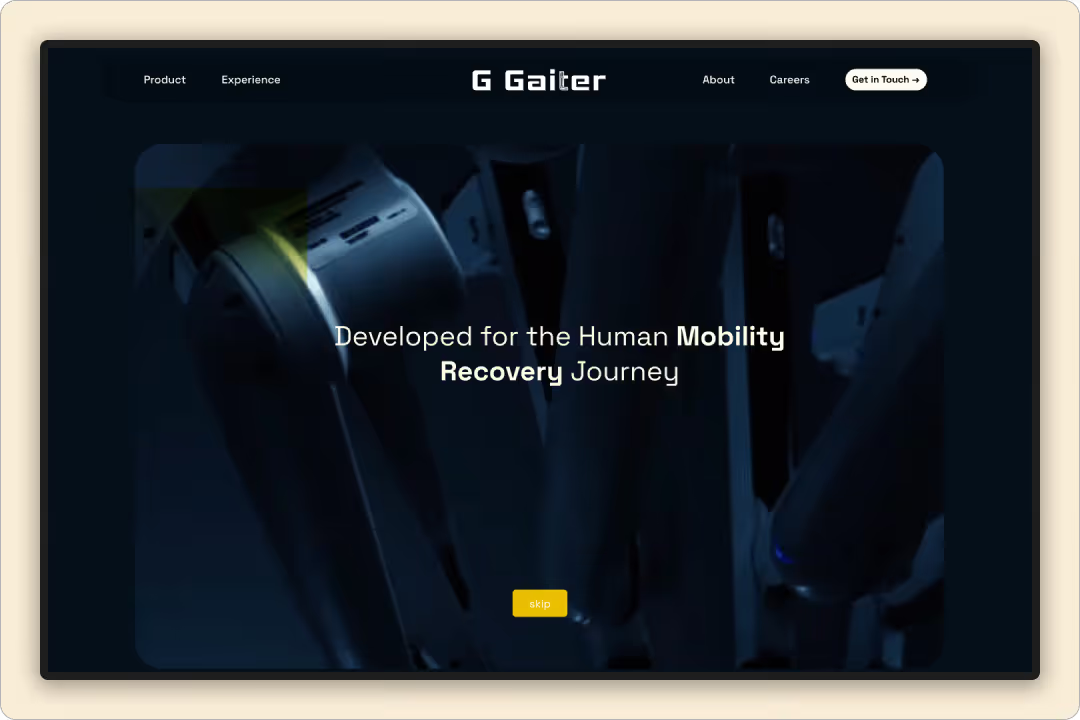
GenRobotics. An Indian robotics company building AI-powered robots for hazardous manual labour, including sewer and septic tank cleaning automation. The brand had to signal serious engineering and operator safety at once, and translate across a clinical or municipal buyer and a public-sector procurement process. We delivered website design and development.
Armory. Counter-unmanned aircraft systems: detection, directional jamming, mesh networking and a self-learning OS. This is physical AI where the failure mode is national security, and one site had to hold a defence procurement reader, an investor and a senior engineering candidate at once. Delivered with 3D product renders and scroll-driven sequences, under NDA, coordinated with a live armed-forces tender.
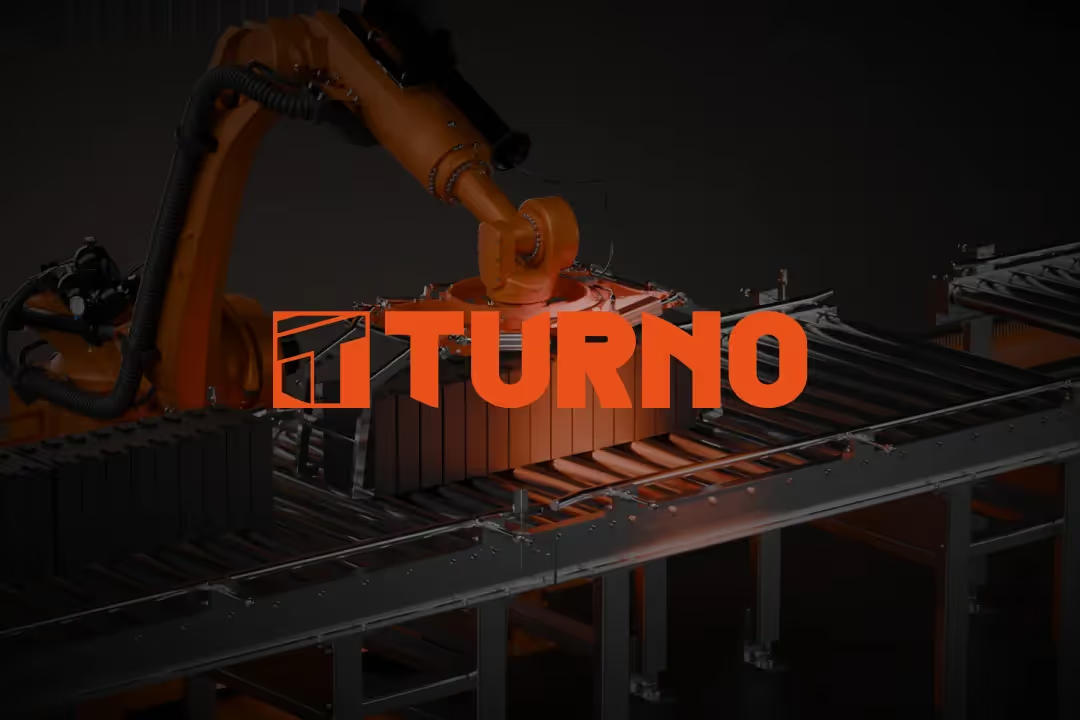
Turno. Battery intelligence for commercial EVs: state-of-health, diagnostics and second-life decisioning for hardware moving on real roads. The product is a data platform whose subject is a physical asset, which is this explanation problem in miniature. Three custom dashboards designed, and the site now runs a waiting list.
Light Metrics. Vision AI applied to road and fleet safety, where perception runs on real vehicles in uncontrolled conditions. The brand had to read credible to enterprise fleet customers and rigorous to the engineering buyers assessing the models underneath.
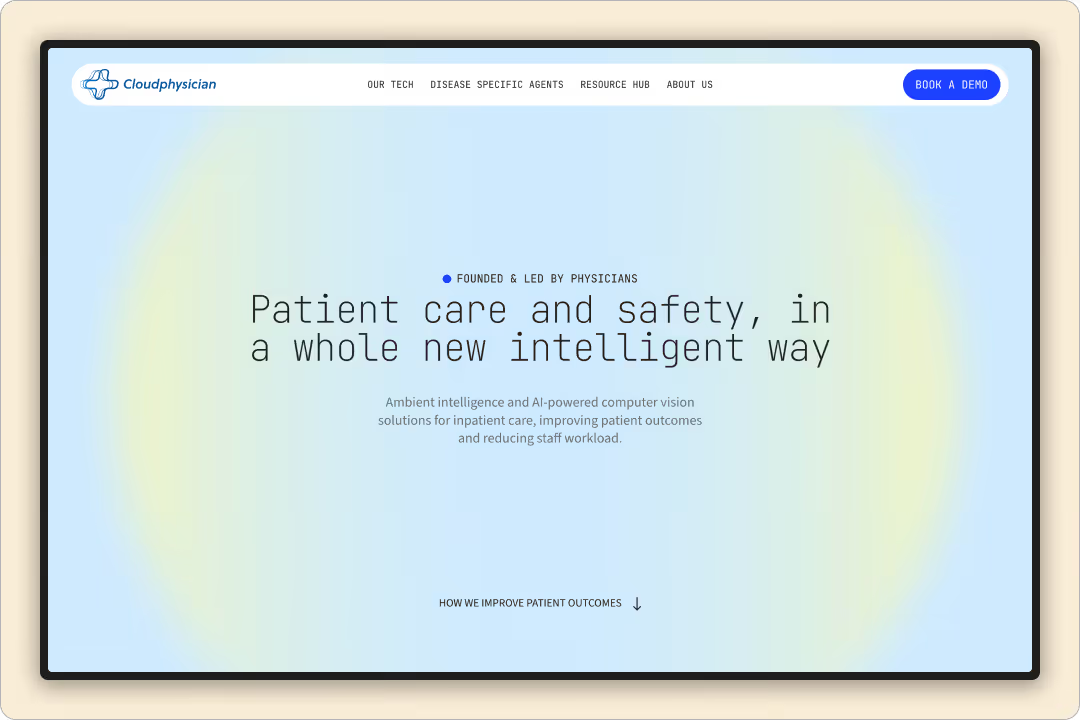
Cloudphysician. Computer vision and ambient intelligence applied to inpatient care. Cloudphysician signed its first US client the first time it presented the AINA demo film we made, because the film demonstrated product behaviour rather than selling a promise. Adjacent to physical AI and a good example of explaining perception in a live environment. See our healthcare design agency practice for the clinical side.
How does an engagement run?
Copy is written before layout. In a category where a specification is a claim, that sequencing means your engineers review real wording rather than approving a design and discovering the words afterwards.
We work with the founder, CEO or head of marketing as the single decision-maker, with a structured technical review in the middle so the engineering team checks accuracy without sitting in every weekly call. Scope is proposed after a diagnosis conversation, not before it.
Who is this best for?
- Robotics and embodied AI companies moving from demo and pilot into commercial deployment.
- Autonomous vehicle, drone and industrial automation companies where reliability and safety decide the sale.
- Perception and control software companies selling into hardware makers, where the product has no visible surface at all.
- Medical and laboratory robotics companies, which also draw on our healthcare and biotech and life sciences practices.
Related industry practices: deep tech, aerospace and defence, manufacturing and semiconductors.
Frequently asked questions
What is physical AI?
Physical AI is any system where a learned model drives hardware acting in the real world: humanoids and mobile manipulators, autonomous ground and air vehicles, warehouse and agricultural robotics, surgical and laboratory automation, and the perception and control stacks underneath them. It is also called embodied AI or general-purpose robotics.
How is branding physical AI different from branding software AI?
Software AI is judged on output quality. Physical AI is judged on reliability under conditions the buyer imagines going wrong, so the brand has to carry intervention rate, deployment envelope and failure behaviour without turning the site into a datasheet.
Can you render hardware that does not exist yet?
Yes. Custom 3D is in-house. We model from CAD, mechanical drawings or a sketch, and we establish what the mechanism actually does before deciding how to light it.
Do you sign an NDA before seeing the stack?
Yes, and it is the normal starting point. Most of what makes a physical AI company defensible is not public.
Do you work with pre-launch robotics companies?
Yes. Pre-launch is often the right moment, because positioning and the category you claim are cheapest to change before a product name, a spec sheet and a sales deck have hardened around them.
What does a physical AI branding and website agency actually do?
Physical AI sells on a demo, then gets evaluated on reliability. We settle the product story first, then build a brand and a site that hold up when an engineer, an operator and an investor read the same page. Strategy, copy, design, 3D, motion and Webflow build run in-house.
Physical AI Projects
GenRobotics
Brand identity and website design for GenRobotics, a robotics company building intelligent machines for hazardous and manual labor tasks
Turno
Turno is India's battery intelligence platform. They track commercial EV batteries across their full lifecycle, using that data to make financing cheaper, leasing less risky, and retired batteries worth recovering instead of scrapping.