


Healthcare Design Agency
Everything Design is a healthcare website design company that clarifies positioning and message before designing for clinical and health technology brands.



What does Everything Design do for healthcare companies?
Everything Design is a healthcare website design company that settles positioning and message before designing anything. We work with clinical and health technology brands: health tech and medical technology companies, AI-in-healthcare products, hospitals and provider groups, and hearing and wellness services.
- We help health tech and AI-in-healthcare founders explain complex products to clinical and business buyers in one site.
- Cloudphysician signed its first US client during the first presentation of the AINA demo film we produced.
- Strategy, copy, brand, motion and Webflow development all run in-house, so the product story does not change hands.
- Two focused engagements sit under this practice: healthcare tech branding and health tech website design.
Why do healthcare websites need more scrutiny than other B2B sites?
Because a healthcare website has to earn trust before anyone shares information or takes a next step. Patients want credible, plain-language information about care and data handling. Clinical and enterprise buyers examine evidence, security practice, implementation requirements and whether product claims survive professional review. A generic template gives none of these audiences enough context to decide.
Healthcare web design also needs a deliberate position on data. Forms, analytics, scheduling tools, chat widgets and third-party integrations can each collect or expose sensitive information.
HIPAA-aware design means limiting unnecessary data collection and choosing suitable tools, consent language, access controls and information flows as design decisions. It is the opposite of treating HIPAA-compliant website design as a badge added shortly before launch.
Patient-facing experiences need accessible routes to the information and actions that matter: readable text and navigation, descriptive forms, clear error messages. Plain language reduces confusion when a page discusses symptoms, procedures, eligibility or medical technology.
Who is on the healthcare buying committee?
Usually five or six people, and all of them visit the website during one evaluation. For a health tech company selling into hospital systems that is typically the CMO as clinical champion, the CFO as economic buyer, the CIO and CISO as procurement and security gatekeepers, the compliance officer, and the end-user clinician whose adoption decides renewal.
For a medical device company the committee shifts to the clinical advisory board, hospital purchasing, biomedical engineering, regulatory affairs and the operating physician. Healthcare AI adds one more reader: the clinical data scientist evaluating model performance.
The common failure is writing to one of them. A site written for the clinical champion converts internally, then stalls when procurement, security and compliance review it and find nothing addressed to them. Each reader needs a route through the site: the CFO reaching total-cost content in two clicks, the CISO reaching the security architecture in two clicks, the champion reaching clinical evidence in two clicks.
Why do healthcare sites default to a wellness look, and why does it cost them?
Because soft palettes, rounded type and smiling-clinician stock photography feel appropriate to the subject. To a hospital CFO or a contracting officer they read as consumer wellness rather than a procurement-ready enterprise vendor. The brand has to project clinical seriousness and operational maturity, not pastoral comfort, or it gets filtered out before the product is assessed.
How should a healthcare website handle compliance?
As a substantive section, not a footer line. "HIPAA compliant" in small type at the bottom of a page is not a compliance signal to the person doing the review.
A procurement reviewer is looking for the BAA process, the SOC 2 report request flow, the data-residency footprint, the audit-log architecture, encryption standards, breach-response process and third-party penetration-test cadence. In India, an NDHM-aligned data model. Medical device companies add FDA clearance status and CE marking. This is the page procurement bookmarks during evaluation, so it deserves the same care as the homepage.
Who is actually reading a healthcare website?
Usually a clinician and a business decision-maker on the same page, often in the same week. The clinician needs evidence of clinical relevance and product behaviour. The business buyer needs operational, security and integration detail. Referral partners may need a third route for understanding services and sending patients. Healthcare website design services have to organise those needs without flattening them into one generic message.
How does Everything Design build for AI and health tech companies?
By keeping one product explanation across the website, the messaging and the Webflow build. Health technology companies usually need a single site that explains clinical value to practitioners and commercial value to buyers and investors. We structure the messaging so each audience finds the evidence it needs without fragmenting the product story.
A capable health tech website agency has to know where technical detail builds clinical confidence and where a simpler explanation helps a wider buying group evaluate the product. Consistency is what lets an AI-driven product survive a long sales conversation without collapsing into generic claims.
What is the diagnosis-first process?
Diagnosis first means we do not design until the product story is settled, because visual design cannot repair an unclear argument. A clinician looks for clinical validity and patient impact; a business buyer weighs operations and financial value. Research and messaging build a credible case for both before that case is given visual form.
- Kickoff. We agree the business goal, the scope and who approves what. Naming the approvers early stops patient-care priorities and commercial goals pulling the site in two directions.
- Research. We study the product, the buyers, your existing material and the category. This is where we work out which claims need explaining to a clinician and which help a business buyer judge fit.
- Strategy. Research becomes positioning and a site narrative: what each audience must understand, and which proof carries a shared buying decision.
- Product messaging. We explain how the product works and why its behaviour matters in practice, giving clinicians technical detail without making the commercial case hard to follow.
- Copywriting. Copy is written before layout. Healthcare claims need regulatory accuracy, so your clinical and legal reviewers assess actual wording rather than approving a design and discovering the words later.
- Design. Approved messages get visual hierarchy. Patient-facing pages usually need a calmer, more accessible treatment; enterprise pages need evidence and product detail.
- Motion. Animation or video where behaviour benefits from demonstration. A guided visual explains an AI-supported clinical workflow better than dense copy.
- Development. Our developers build the approved design in Webflow, preserving the content hierarchy responsively and leaving marketers able to run routine updates.
How does Everything Design run a healthcare project?
In-house, end to end. Content strategists shape the narrative alongside the brand and web designers. Webflow developers build against the approved design. Motion and video specialists work from the same product story rather than a separate brief. Work does not pass between specialist vendors, which is what usually causes details to drift.
The same approved product story carries across the website and the product demonstrations, so buyers meet consistent explanations of capability and value. Brand design gives clinical evidence and enterprise value a clear hierarchy. Motion demonstrates behaviour that static copy struggles to explain.
Webflow-native development leaves internal marketers in control after launch: reusable landing-page components, CMS collections organised around what you actually publish, and documentation and training so routine updates do not need engineering. For ongoing support afterwards, Everything Flow maintains the structure established during the main engagement.
What is included in a healthcare engagement?
- Buying-committee mapping across clinical champion, economic buyer, security and procurement, compliance and end-user clinician
- Brand strategy and positioning against the real competitive set
- Verbal identity: clinical vocabulary, regulatory-grade language, evidence-led messaging
- Visual identity: logo, type, restrained palette, clinical imagery direction, data-visualisation system
- Webflow site covering homepage, solutions, clinical evidence, customers, security and compliance, leadership and clinical advisors, news and publications, contact and careers
- CMS for solutions, evidence, customers, advisors and publications
- Security and compliance page architecture: BAA flow, SOC 2 request, data residency, audit-log architecture, NDHM-aligned data model for India
- Data-visualisation system reusable across the site, clinical decks and regulatory submissions
- Sales-enablement starter kit: clinical-evidence one-pager, ROI calculator, procurement-response cover system
- Investor-narrative one-pager for health tech and healthcare AI engagements
- Handover and CMS training
Optional add-ons: clinical-study landing pages, regulatory-submission supporting collateral, hospital-onboarding content, and a patient-facing companion site for clinical software.
How long does a healthcare engagement take?
Six to eight weeks for health tech SaaS and healthcare AI startups. Medical device engagements with regulatory-grade collateral attached run eight to ten weeks. Hospital and provider-network repositioning runs ten to twelve weeks because of the additional clinical-leadership review cycle.
We work with the founder, CEO or head of marketing as the single decision-maker, with a structured review touchpoint with the clinical advisory or CMO function in the middle. We do not put the full clinical advisory board into every weekly check-in, because that is how healthcare engagements take a year.
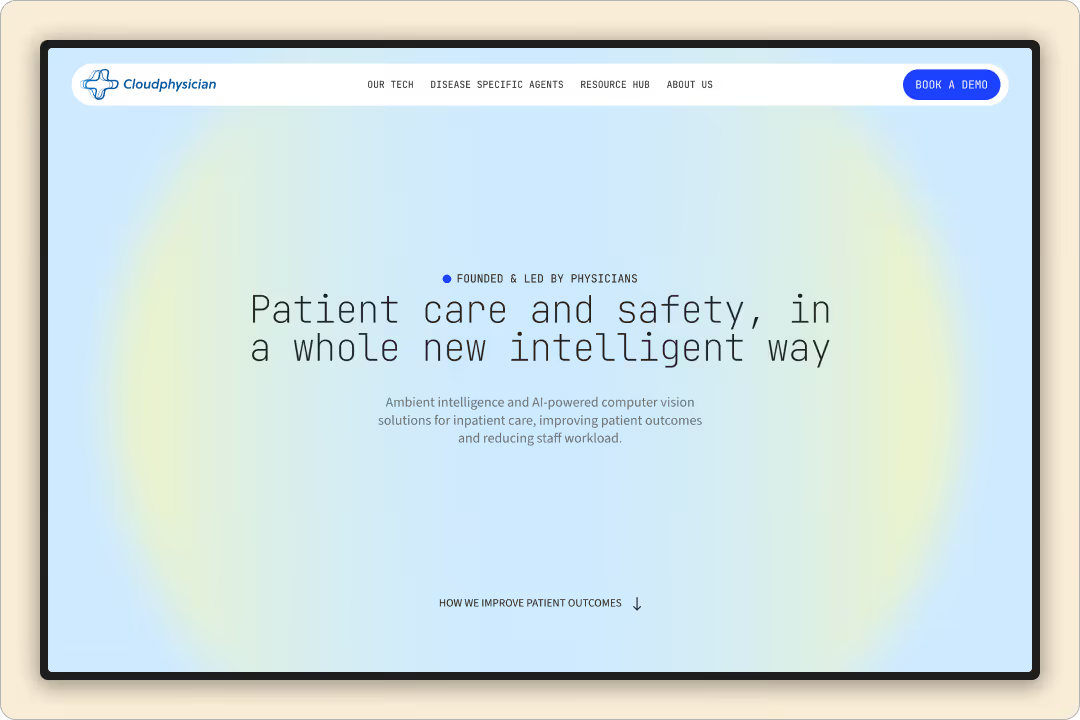
Cloudphysician: an ICU AI co-pilot and a first US client
Cloudphysician signed its first US client the first time it presented the AINA demo film we made. AINA is Cloudphysician's AI video co-pilot for ICU and high-acuity care. The film had to show how the product behaves in a live clinical setting while staying legible to a business decision-maker who has never worked a ward round. We treated it as a product demonstration, not a sales video: clinicians needed enough detail to judge whether AINA fits real care delivery, and buyers needed the operational case. Cloudphysician then commissioned landing pages, event collateral and later a full website revamp on the same product understanding.
Technical and clinical accuracy shaped every narrative and visual decision. We translated the product into a focused story without simplifying away the information that made it credible.
What healthcare work has Everything Design done?
Health tech and medical technology. Avizva and Nau, plus GenRobotics in robotics-led medical devices.
Clinical and hospital care. Geri Care and Naveen Hospital cover direct care delivery, where patient-facing design must give accessible routes to clear service information and visible evidence of credibility.
Hearing and wellness. Smart Hearing sits in a category where sites combine education with service discovery. Visitors often arrive knowing little about the care available, so the site has to explain the options without burying them in specialist language.
Assess us as a medical website design agency by reading the work in your category rather than unrelated B2B examples. For biotech, biopharma and life sciences companies, see our biotech and life sciences website agency practice.
Who is this best for?
- Healthcare AI and health tech companies selling into hospitals, where the committee includes CMO, CFO, CIO, CISO, compliance and end-user clinicians and the site has to navigate all of them.
- Medical device companies entering or expanding clinical adoption, where clearance is in hand or in progress and the next stage is hospital procurement at scale.
- Healthcare providers and provider networks repositioning, including hospital systems, specialty clinics and diagnostic chains rebuilding identity for a new strategic position.
- Healthcare investors and accelerators building portfolio-facing identity, where the brand has to land with founders, clinical advisors and LPs.
We are not the right fit for consumer wellness apps, supplement brands or D2C health and beauty. Those need a consumer-marketing partner.
What happens when you start a project?
It starts with a conversation about the problem the website has to solve. We examine your audience and current brand before recommending a scope that accounts for regulatory constraints. You do not need a finished brief; clear questions give enough direction for kickoff and research.
We work with healthcare marketing leaders and health tech founders who need the website defined before design and development begin. Rather than applying a healthcare template, we shape the site around how your product fits its audience's buying process.
If the gap is mainly brand and positioning, start at healthcare tech branding. If the brand is settled and the site is the problem, start at health tech website design.
What does a specialist healthcare engagement look like?
Healthcare buyers decide with a clinician and a business buyer reading the same page. We settle the product story first, then design a site that serves both without flattening either. Strategy, copy, brand, motion and Webflow build run in-house.
Healthcare Industry Projects
Cloudphysician
Visual branding and website design for Cloudphysician, an AI-powered platform that enhances critical care monitoring

Nau
Brand identity and website design for Nau, a healthcare literacy platform bridging the gap in medical accessibility

FAQs
Healthcare
Design Experts

Akhilesh J
Lead Designer

Athira Krishnan
Lead Designer | Content Strategist

Ekta Manchanda
Co-Founder | Principal Designer

Lakshmi Akula
Associate Designer

Neha Bhatnagar
Senior Brand Designer

Sanjana
Lead Designer

Sijeesh VB
Lead Strategist

Tanmaya Rao
Lead Brand Designer | Illustrator

Yash Muley
Mid-Weight Designer

Zakia Ali
Mid-Weight Designer