


Motion Identity
Static logos are no longer enough. In a world of screens, feeds, and digital-first interactions, your brand needs to move — literally. Motion identity transforms your visual identity into a living, breathing system that captures attention and communicates personality in seconds.
A motion identity is an evolving aspect of branding and design that incorporates motion into a brand's visual and communicative language. It extends beyond static design elements such as logos, typography, and color palettes by adding motion to deliver a more dynamic and engaging brand experience.
Here’s a breakdown of the key elements and considerations for creating an effective motion identity:
Core Components of Motion Identity
- Logo Animation
- Logos come to life through movement, offering a dynamic introduction or reinforcement of the brand's essence.
- Subtle animations, such as morphing shapes, expanding strokes, or fluid transitions, can convey emotions or values (e.g., agility, innovation).
- Kinetic Typography
- Words in motion can emphasize key messages, draw attention, or set a tone.
- Techniques include fading, sliding, scaling, or rhythmic transformations to create visual interest.
- Dynamic Color and Gradients
- Colors shift and interact in animations to represent the brand's vibrancy or evolution.
- Gradients in motion are often used for brands seeking a contemporary or digital-first impression.
- Transitions and Interactions
- Smooth transitions between elements in digital platforms create a cohesive and immersive experience.
- Micro-animations, like button hovers or page load effects, subtly reinforce the brand.
- Pattern and Shape Movements
- Shapes or brand motifs in motion can evoke specific feelings or concepts. For instance, circular motions might suggest unity, while linear animations might convey direction or progress.
- Sound Design
- Often paired with motion, sound adds depth. A subtle audio identity complements visual movements for a holistic sensory experience.
Principles of an Effective Motion Identity
- Consistency with Brand DNA
Motion must reflect the brand's personality. For example:- A tech brand might use sleek, fast transitions.
- A wellness brand might adopt calm, fluid motions.
- Purpose-Driven Design
Movement should enhance the message or functionality, not distract from it. Every animation must serve a clear role. - Adaptability Across Media
A motion identity should work seamlessly across various platforms:- Websites
- Social media
- Digital advertising
- Video content
- Simplicity and Elegance
Overcomplicating motion can dilute the brand's message. Focus on minimal, impactful animations that resonate with the audience.
Applications of Motion Identity
- Digital Interfaces
Websites and apps use motion to guide users intuitively, making interactions more enjoyable and effective. - Advertising Campaigns
Motion grabs attention in video ads, carousels, and interactive banners. - Social Media Content
Animated posts and stories help brands stand out in crowded feeds. - Presentations and Storytelling
In business pitches or brand narratives, motion identity elevates storytelling, making content more compelling. - Event and Environmental Design
Motion design in signage, displays, or interactive kiosks enhances physical spaces with dynamic brand elements.
Tools for Creating Motion Identity
- Motion Graphics Tools: Adobe After Effects, Cinema 4D, Blender
- Interactive Tools: Webflow, GSAP (GreenSock Animation Platform), Lottie
- Sound Tools: Audition, Logic Pro, or custom sound studios
Why Motion Identity Matters
- Enhanced Brand Recall: Motion adds memorability and emotional resonance.
- Improved Engagement: Interactive and dynamic designs hold user attention longer.
- Modern Appeal: A motion identity signals innovation and forward-thinking, appealing to contemporary audiences.
Motion Identity Project Agency Deliverables
A motion identity project typically involves creating a dynamic visual language that enhances a brand's identity through motion. Deliverables vary based on the scope, but here’s a comprehensive list:
1. Core Elements of Motion Identity
- Brand Guidelines for Motion:
- Motion principles: speed, timing, easing, rhythm.
- Animation types: bounce, slide, fade, etc.
- Recommended tools and software.
- Logo Animation:
- Animated versions of the logo for various platforms (e.g., intros, outros, website).
- Variations for light/dark backgrounds.
- Typography Animation:
- Animated text treatments (e.g., kinetic typography, type on/off effects).
- Examples for headlines, captions, or taglines.
- Color & Shape Animation:
- Motion sequences showcasing brand colors and shapes.
- Patterns or looping animations for background visuals.
- Iconography & Illustrations:
- Animated icons or illustrations in line with the brand’s visual identity.
2. Applied Motion Assets
- Social Media Assets:
- Instagram/Facebook stories or posts with motion.
- Animated GIFs or stickers for use on platforms.
- Video posts with motion graphics.
- Website Motion:
- Interactive hover states.
- Scroll-triggered animations (e.g., parallax effects, transitions).
- Page loading animations.
- Presentation Templates:
- Animated slides for pitch decks or internal presentations.
- Branded transitions and overlays.
3. Media Content
- Video Production:
- Intro/outro sequences for video content.
- Lower thirds for branded videos.
- Animated transitions and effects for video editing.
- Advertisement Animations:
- Motion ads for digital campaigns (e.g., Google Display, YouTube).
- Banner animations.
- Explainer Videos:
- Short animations that describe a service, product, or process.
- Event/Exhibition Displays:
- Motion graphics for digital screens or projectors.
- Looped animations or presentation decks.
4. Advanced Features (Optional)
- Interactive Elements:
- Motion-driven UI/UX elements (e.g., button animations, loading indicators).
- Lottie files for web or app integrations.
- AR/VR Animations:
- Motion graphics for augmented or virtual reality platforms.
- Custom Sound Design:
- Sound effects that complement animations.
- Syncing motion to audio.
5. Documentation
- Asset Library:
- Delivering all animations in appropriate formats (MP4, GIF, JSON for Lottie).
- Scalable versions for web and high-resolution versions for print.
- Style Documentation:
- A comprehensive document detailing the motion identity, including dos and don’ts.
Suggested Formats
- Videos: MP4, MOV
- Interactive Animations: JSON (Lottie), WebM
- GIFs: Optimized for web and social media
- Raw Files: Source files in Adobe After Effects, Figma, or Blender (if applicable)
Motion Speaks Louder Than Words
Yet, many brands still treat typography as static, missing opportunities to express themselves and show personality.
In my work building motion guidelines for brands, animating typography is one of the most powerful tools we use. It's one of the most effective ways to elevate a brand’s identity.
Each motion is shaped by key pillars we define early on to guide decisions such as:
- Style: What type of motion is applied.
- Pacing: How long it takes to begin, build, and finish.
- Energy: How fast or slow it moves between states.
These choices aren’t just aesthetic—they’re strategic.
They ensure that motion reinforces your brand’s personality, working seamlessly with copy and design to deliver your message with clarity and intent.
In today’s digital world, motion is essential. It shapes how brands appear across screens, platforms, and experiences.
Sonic Identity: The Layer After Motion
Motion is how a brand behaves. Sonic is how it sounds. They are separate layers, but they arrive together more often than people realise — which is why "Sound Design" appears in the deliverables above, and why the question comes up on almost every motion identity project.
Here is how we think about it.
Motion and sound are governed by the same principles
The pillars we define for motion — style, pacing, energy — have exact equivalents in audio. Style becomes instrumentation and register. Pacing becomes tempo and note duration. Energy becomes attack and dynamics. A brand that moves sharply and lands hard should not sound soft and slow. When motion and sound disagree, the buyer notices, even if they cannot say why.
The deeper principle is the same one that makes any identity work: restriction creates identity. There are twelve notes available to every brand, and using all of them produces nothing recognisable. Reducing them creates a signature — exactly the way reducing hex codes creates a palette, or constraining easing curves creates a motion signature. Identity is defined by what you rule out.
The sonic logo is a derivative, not the deliverable
Most companies approach audio the way they approach a logo: they ask for the artefact. A fintech wants a payment-confirmation sound. A SaaS product wants a notification tone.
But you cannot make one sound in isolation, for the same reason you cannot animate one asset without a motion system. Without an underlying structure, the first sound is arbitrary and the second one won't match it. Build the system, then derive the assets — the same order we follow in motion.
Not every moment deserves a sound
The failure mode is over-scoring — a sound for every state change, every toggle, every screen. Sound is a language, and language is for saying something.
"Payment received" is a message: it resolves uncertainty at a moment of real anxiety. "The app has opened" is not. Scoring it adds noise the user learns to tune out, which trains them to ignore the sounds that do matter. Apply the same test you apply to motion: does this movement earn its place, or is it decoration?
Where sound earns its place in B2B
- Product UI — task completion, alerts, error states, notifications
- Payment and transaction confirmation — the highest-value audio moment in fintech
- Hardware and point-of-sale — any physical device makes a sound, designed or not
- Explainer video, product demos and brand films — where most B2B audio already lives, usually as stock music that sounds like everyone else's
- Event stings, booth loops and webinars — an audio decision made by default if not by design
- IVR and hold music — often the longest continuous exposure a customer has to your brand
If your product makes a sound today, you already have a sonic identity. You just didn't choose it.
How we handle it
We build verbal, visual and motion identity systems in-house. We do not produce sonic identity ourselves — when a client needs it, we bring in specialist audio partners and govern the work against the same brand strategy, so the sound agrees with the motion, and both agree with the positioning.
If you are scoping a motion identity and wondering whether audio belongs in the same engagement, that is a conversation worth having early — retrofitting sound onto a finished motion system is always more expensive than designing them together.
Read more on how the layers fit together in core brand elements, and how sonic assets are actually built in distinctive brand assets.
Curious how motion could elevate your brand's identity?
Motion strategy allows brands to create deeper connections with users by guiding them, captivating their attention, and leaving a lasting impression. Having motion guidelines in place is crucial for ensuring consistency, scalability, and a unique voice that resonates with your audience. Motion design has become a cornerstone in modern business communication, offering a dynamic and engaging way to convey messages. B2B explainer videos are an indispensable tool for any company looking to stand out in a crowded marketplace. A product explainer video agency goes in depth to understand your requirements, research, storyboard, create boardomatic and then animate before finally getting your explainer video.
Why does your B2B brand need a motion identity system?
Because movement creates memorability. A well-crafted motion identity gives your brand a distinctive rhythm and energy that static assets simply cannot achieve. From animated logos and icon transitions to UI micro-interactions and social media assets, motion identity ensures your brand feels consistent, modern, and alive across every digital touchpoint. Everything Design builds motion identity systems that are rooted in your brand strategy — not just eye candy, but purposeful motion that reinforces who you are.





Motion Identity Projects
Sevenloop
Brand identity and website design for Sevenloop, an end-to-end custom manufacturing solutions provider
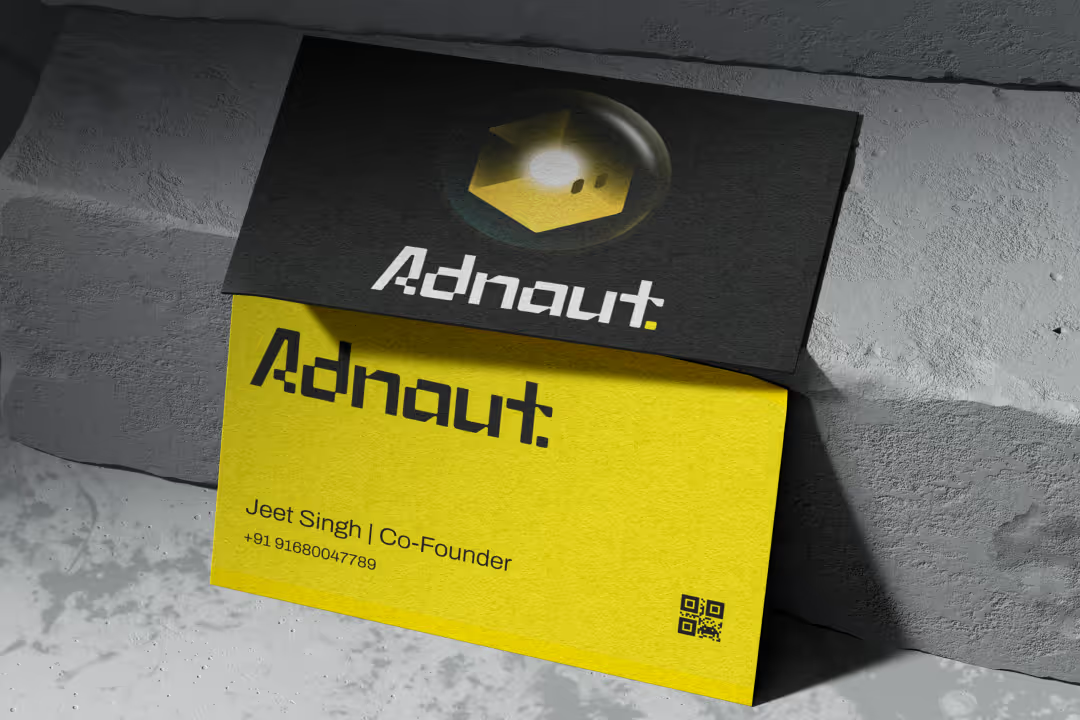
Adnaut
Rebrand and website design for Adnaut, a technology-driven digital media and ad tech consultancy
Motion Identity Design
Experts

Nanki Arora
Concepts | Illustrations | Stop Motion

Sreejith K
Mid Weight Motion Designer

Felix Hartley
Creative Director

Sanjana
Lead Designer