


Core Brand Elements
Core brand elements include logo, color palette, typography, imagery, tone of voice, and brand values. Together, these create a consistent identity that builds recognition, trust, and emotional connection with your audience.
Core brand elements include brand purpose, positioning statement, brand values, brand personality, visual identity system, messaging architecture, and brand voice. Together, these elements form a cohesive brand platform that guides all internal decisions and external communications. Each element serves a specific function: purpose inspires, positioning differentiates, values guide behavior, and identity creates recognition across touchpoints.
Core Brand Elements Explained in Detail
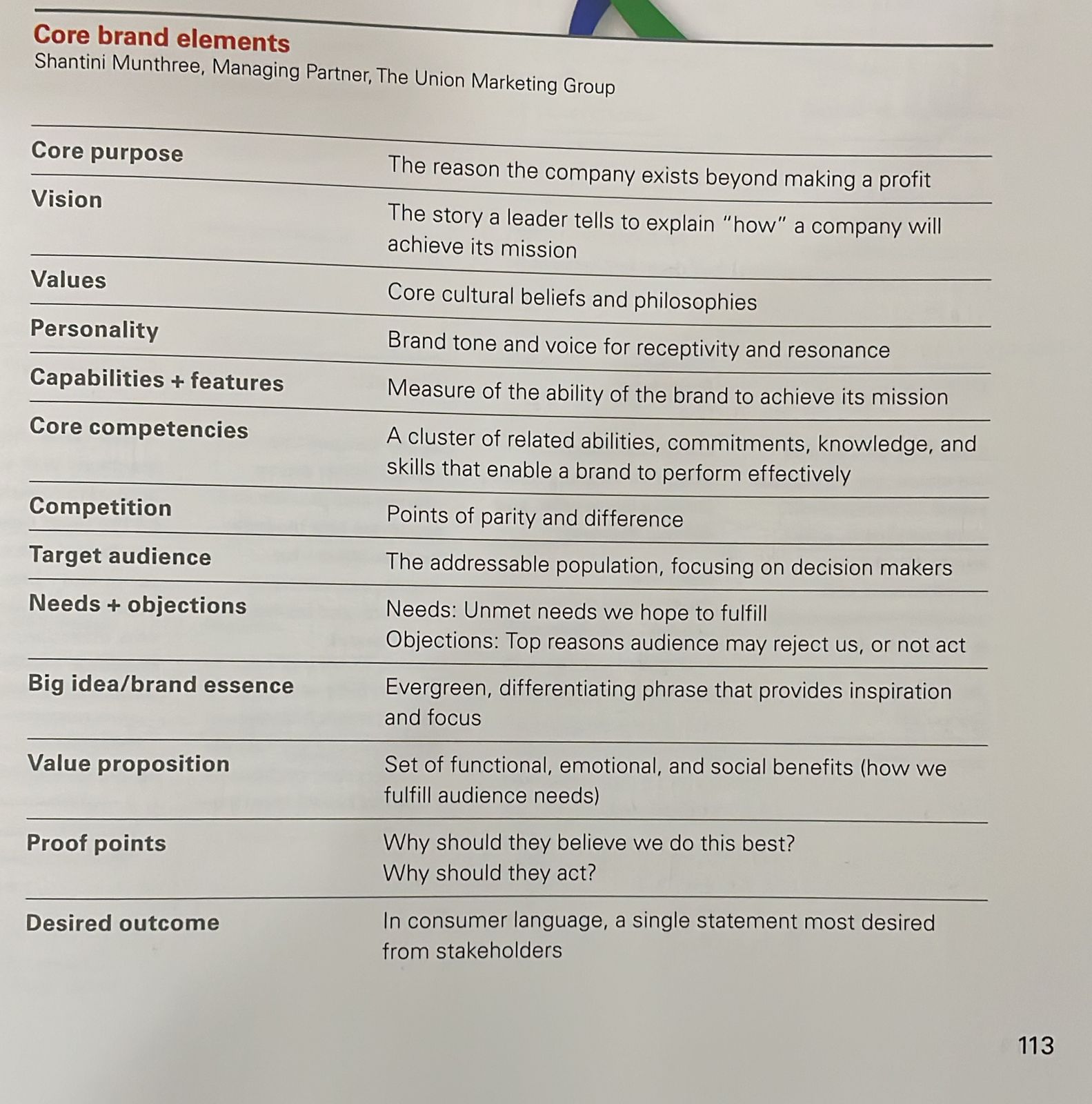
Core Purpose
The core purpose of a company transcends the mere aim of making a profit. It embodies the fundamental reason for the organization's existence, serving as a compass that guides all strategic decisions and actions. This purpose is deeply rooted in the company's mission, vision, and values, providing a sense of direction and meaning. It reflects the company’s commitment to making a positive impact on society, whether through innovation, sustainability, or community engagement. A well-defined core purpose inspires employees, attracts customers, and builds a strong brand identity that stands resilient in the face of market fluctuations and competitive pressures.
Vision
A company's vision is a compelling narrative that outlines how it intends to achieve its mission. This visionary statement articulates a future that the company aspires to create, providing a long-term direction and motivating stakeholders. It serves as a strategic framework that aligns the efforts of the organization towards a common goal. An effective vision statement is not just a lofty ideal but a practical roadmap that influences strategic planning and decision-making. It captures the essence of what the company aims to accomplish and inspires confidence and commitment from employees, customers, and partners.
Values
Core values represent the essential beliefs and principles that shape the organizational culture and guide behavior. These values are the foundation of the company's identity, influencing everything from daily operations to strategic decisions. They define what the company stands for and serve as a benchmark for ethical conduct and decision-making. By embodying these values, the company fosters a culture of integrity, respect, and excellence. Employees are encouraged to align their actions with these values, creating a cohesive and motivated workforce. Core values also enhance the brand’s reputation, building trust and loyalty among customers and stakeholders.
Personality
The personality of a brand is the unique tone and voice it uses to communicate with its audience. This personality ensures that the brand’s messages resonate and are relatable, fostering a connection with the target audience. It encompasses the brand's style, attitude, and character, which are consistently reflected in all forms of communication, from marketing materials to customer interactions. A well-defined brand personality differentiates the company from competitors and builds emotional connections with customers. It humanizes the brand, making it more relatable and memorable, and enhances brand loyalty by creating a distinct and recognizable identity.
Capabilities + Features
Capabilities and features refer to the brand’s ability to deliver on its promises and achieve its mission. These include both tangible assets, such as technology and products, and intangible assets, like expertise and innovation. They highlight the brand’s strengths and the unique attributes that set it apart in the marketplace. By showcasing its capabilities and features, the brand demonstrates its competence and reliability to customers. This element also involves continuously improving and adapting to meet evolving market demands and customer expectations, ensuring the brand remains relevant and competitive.
Core Competencies
Core competencies are the collective skills, knowledge, and expertise that distinguish a brand and enable it to perform effectively. These competencies are central to the brand’s ability to deliver value and sustain competitive advantage. They encompass a range of capabilities, from operational efficiency to innovation and customer service. Identifying and leveraging core competencies allows the brand to focus on areas where it excels, providing superior products and services. It also helps in building a strong brand reputation and fostering customer loyalty, as the brand consistently meets or exceeds expectations.
Competition
Understanding competition involves identifying points of parity and points of difference relative to competitors. Points of parity are aspects where the brand matches the competition, ensuring it meets basic customer expectations. Points of difference highlight the unique attributes that set the brand apart and provide a competitive edge. Analyzing competition helps the brand to strategically position itself in the market, capitalize on its strengths, and address areas for improvement. It also involves staying attuned to industry trends and competitor moves, enabling the brand to anticipate and respond to changes effectively.
Target Audience
The target audience is the specific group of people the brand aims to reach and engage. This group is identified based on various factors such as demographics, psychographics, and behavioral patterns. Understanding the target audience is crucial for developing effective marketing strategies and tailored messages that resonate with their needs and preferences. By focusing on the target audience, the brand can optimize its resources and efforts, ensuring maximum impact and engagement. It also helps in building meaningful relationships with customers, enhancing satisfaction, and fostering loyalty.
Needs + Objections
This element involves identifying the unmet needs that the brand aims to fulfill and the common objections that might prevent the audience from engaging with the brand. Addressing these needs and objections is critical for creating a compelling value proposition. By understanding and addressing the pain points and concerns of the target audience, the brand can develop solutions that truly resonate and provide significant value. This approach not only enhances customer satisfaction but also builds trust and credibility, as the brand demonstrates a deep understanding of its audience's challenges and aspirations.
Big Idea/Brand Essence
The big idea or brand essence is an overarching theme that encapsulates the brand’s unique value proposition and core message. It is a differentiating phrase that provides inspiration and focus, guiding all brand communications and marketing efforts. This big idea should be evergreen, resonating with the audience over time and across various contexts. It serves as the emotional and conceptual foundation of the brand, helping to create a strong, consistent, and compelling brand narrative. By clearly articulating this essence, the brand can build a cohesive and recognizable identity that stands out in the marketplace.
Value Proposition
The value proposition is a statement that outlines the functional, emotional, and social benefits that the brand offers to fulfill the needs of its audience. It explains why customers should choose the brand over competitors, highlighting the unique benefits and advantages. A strong value proposition is clear, compelling, and directly addresses the pain points and desires of the target audience. It serves as a powerful tool for attracting and retaining customers, as it communicates the brand’s commitment to delivering exceptional value and meeting customer needs effectively.
Proof Points
Proof points are concrete evidence that supports the brand’s claims and value proposition. They answer the questions of why the audience should believe the brand does something best and why they should act on it. These proof points can include customer testimonials, case studies, industry awards, and performance metrics. By providing tangible evidence of the brand’s capabilities and achievements, proof points build credibility and trust. They reassure customers that the brand can deliver on its promises and provide the desired outcomes, thereby encouraging engagement and loyalty.
Desired Outcome
The desired outcome is a clear and concise statement that defines what the brand aims to achieve in terms of impact and success. It reflects the most desired result from stakeholders, expressed in consumer language. This outcome serves as a benchmark for measuring the brand’s performance and success. It helps to align the efforts of the organization towards a common goal, ensuring that all strategies and actions are focused on achieving this desired result. By clearly articulating the desired outcome, the brand can inspire and motivate its team, foster customer engagement, and drive long-term success.
The Expression Layers: How the Brand Actually Shows Up
Everything above is the strategic layer - what the brand is. None of it is visible to a buyer. Strategy only becomes a brand when it is expressed, and expression happens across four layers. Most B2B companies build two of them and stop.
Verbal identity - how the brand speaks
The vocabulary, the sentence rhythm, the words the brand uses and the words it refuses. Whether it says "hello" or "hi". Whether it explains or asserts. Verbal identity is where messaging architecture becomes an actual voice, and it is the layer most companies leave to whoever happens to be writing that day.
Visual identity - how the brand looks
Logo, colour palette, typography, illustration, iconography, photography, layout. The most-built layer, and the one most people mean when they say "branding". The system matters more than any single artefact: a logo without rules is decoration, not identity. See brand design elements and distinctive brand assets.
Motion identity - how the brand behaves
How the logo resolves. How a page transitions. How data animates into view. Whether the brand moves with weight or with lightness, sharply or with ease. As B2B moves into product-led interfaces and scroll-driven websites, motion has become a real identity layer rather than a decorative one - which is why we treat motion identity as a system with its own guidelines, not a set of one-off animations.
Sonic identity - how the brand sounds
The layer almost no B2B brand builds, and the only one that works when nobody is looking at the screen.
The principles mirror the visual layer more closely than people expect. Restriction creates identity: there are twelve notes available to every brand, and using all of them produces nothing recognisable - reducing them creates a signature, exactly as reducing hex codes creates a palette. The system precedes the asset: a sonic logo is a derivative of an audio strategy, not a standalone deliverable, in the same way a logo is derived from a design system. And not every moment deserves a sound - "payment confirmed" is a message worth scoring; "the app has opened" is not.
The B2B touchpoints already exist, whether or not anyone designed them: payment and transaction confirmation, point-of-sale hardware, product UI states, explainer videos, event stings, and IVR hold music - often the longest continuous exposure a customer has to a brand. If your product makes a sound today, you already have a sonic identity. You just didn't choose it.
We go deeper on how sonic assets are built, and why they fail, in distinctive brand assets.
Why the layers have to be governed together
A brand that sounds warm, looks cold, moves aggressively and writes formally is not four brands. It is one incoherent one. Each layer is a claim about the same personality, and buyers reconcile them whether you intend it or not.
That is the entire argument for a brand book - one document that governs all four layers, so the rules for how the brand sounds sit beside the rules for how it looks. And it is why all four layers ultimately serve the same job: building mental availability, so the brand is easier to notice, remember, and choose.

Prenitha Xavier
Writes extensively on topics related to B2B marketing, branding, web design, SaaS positioning, and more.