


Website Revamp
A website revamp that starts with "let's pick a new design direction" is a redesign, not a revamp. The point of a revamp is to fix what's actually broken — the homepage that doesn't sell, the messaging that's drifted from the business, the structure that doesn't match how buyers shop now — without throwing away the rankings, the equity, or the working parts of the current site.
Get your Website Revamp with Everything Design
Connect with Website Revamp Agency
Reasons why a brand considers a Website Revamp or building a new website with a website redesign agency?
- Outdated Design and Aesthetics: Over time, design trends change, and a website that looked fresh and modern a few years ago may appear outdated today. To remain visually appealing and competitive, brands often redesign their websites to align with current design standards, ensuring they maintain a strong first impression with visitors.
- Content Refresh and Updates: As companies evolve, their product and service offerings, business strategies, or value propositions often change. A website redesign allows brands to update their content to reflect new products, services, partnerships, or messaging, ensuring that the site remains relevant and accurate.
- Filling Content Gaps: Some websites lack essential information, such as detailed use cases, case studies, or product documentation. Redesigning the website offers the opportunity to fill these content gaps, helping potential customers better understand the brand's offerings and their real-world applications.
- Improving Brand Alignment: When a company undergoes a rebranding effort or if its parent company is refreshing its branding, the website needs to reflect these updates. A redesign ensures visual consistency across all platforms and touchpoints, reinforcing the brand's new identity or refined messaging.
- Fixing Technical Issues: Websites with technical problems—such as broken links, slow load times, poor mobile responsiveness, or outdated CMS setups—can frustrate users and harm SEO performance. A redesign can address these issues, ensuring smoother functionality, better user experience, and improved search engine rankings.
- Repositioning for a New Market: When entering a new geographical or industry-specific market, brands need to adjust their website’s positioning, messaging, and design. A redesign allows them to target a new audience with tailored content and design that resonates with the specific needs and preferences of the new market.
- Improved Messaging and Value Proposition: A redesign offers the opportunity to clarify and simplify the website’s messaging. This helps brands better articulate their value proposition, distinguishing themselves from competitors and making it easier for visitors to understand what makes the brand unique.
- Appealing to Specific Audiences: Brands may want to appeal to a particular demographic or industry. A website redesign can incorporate the specific design, tone, and content necessary to engage the target audience effectively, whether they are consumers, businesses, or a specific professional community.
- Talent Attraction: In addition to showcasing products and services, many brands use their websites to attract the right talent. A website redesign can emphasize the company’s culture, values, and job opportunities, making it a key resource for recruiting top talent in a competitive marketplace.
- Showcasing Innovation and Capabilities: A static, brochure-like website might not effectively demonstrate a brand's capabilities or innovative products. Through creative design, interactive elements, and dynamic content, a redesign can help a brand showcase its platform or services more engagingly, providing a better understanding of its offerings to potential customers.
- User Experience Overhaul: Clunky navigation, a cluttered interface, or a lack of user-friendly features can drive visitors away. Redesigning a website with a focus on usability and streamlined navigation can significantly enhance the user experience, making it easier for visitors to find the information they need and interact with the brand.
- Increasing Conversion Rates and Lead Generation: Websites that fail to convert visitors into customers or leads may need a redesign to optimize their sales funnels, calls-to-action, and overall user journey. By focusing on improving conversion points, a brand can increase its lead generation and overall business growth.
- Integrating Advanced Features and Interactivity: Modern websites are expected to offer more than just static information. By integrating features like animations, 3D models, interactive elements, or data visualizations, brands can create a more engaging experience that better communicates complex offerings, keeping visitors interested and informed.
- Highlighting Case Studies and Testimonials: Case studies, customer testimonials, and success stories are critical in building credibility and trust. A website redesign provides an opportunity to showcase these elements prominently, particularly if the brand is targeting a new audience or entering a new market.
- Building a Professional Corporate Image: For companies operating across multiple divisions or industries, having a cohesive corporate website is important. A redesign can ensure that the website reflects a professional image, serves as a central hub for all divisions, and projects a unified brand presence to the outside world.
- Optimizing for SEO and Visibility: A website redesign often involves improving search engine optimization (SEO) strategies to increase organic traffic. This may include faster load times, mobile responsiveness, better use of keywords, and more optimized content, all of which contribute to better visibility on search engines.
- Scaling and Future-Proofing the Website: As a brand grows, so do its website needs. Older websites may lack the scalability required for future expansion. A redesign can ensure the platform is flexible and able to accommodate new content, features, and design changes as the business evolves.
- Addressing CMS and Content Management Challenges: Some websites suffer from poor CMS setups, making it difficult for teams to update and manage content. A redesign can involve reconfiguring the CMS to streamline workflows, making it easier for marketing and content teams to maintain the site without technical hurdles.
- Projecting Innovation Through Design: Brands often want their website to reflect their forward-thinking approach and technological expertise. Through creative layouts, interactive features, and cutting-edge design techniques, a website redesign can help project a company’s innovation and sophistication to the market.
- Evolving with Business Growth and Go-to-Market Strategies: As businesses expand, their websites must evolve to align with new market strategies. A redesign allows the site to reflect the company’s growth, positioning, and development goals, ensuring that it serves as a key tool for business development and customer engagement.
- Catering to Different Customer Segments: When a brand serves diverse audiences, the website needs to clearly communicate how it provides value to each segment. A redesign can create separate sections or content tailored to different industries or customer types, ensuring relevance for all visitors.
- Competitive Differentiation: In a competitive landscape, brands may need to differentiate themselves with a high-quality, visually impressive website. A redesign that focuses on the brand’s unique selling points, industry expertise, and innovation can set them apart from competitors who may still rely on more outdated or less polished websites.
- Creating a More Interactive and Engaging Experience: A brand’s website should engage visitors from the moment they land on the homepage. By incorporating interactive content, such as videos, animations, and user-driven experiences, brands can create a more immersive and memorable experience that keeps visitors coming back.
- Focusing on Business Objectives: Whether it’s generating leads, increasing sales, or building partnerships, a website needs to support the brand’s primary business objectives. Redesigning the site allows brands to tailor their online presence to better achieve specific goals, such as improving lead quality or boosting customer engagement.
- Customer Validation and Sales Support: For new products or services that are still in the validation stage, the website can be a critical tool to test market reception and drive pilot programs. A redesign ensures the website effectively communicates the brand’s value proposition, helping with sales and customer validation.
Website Revamp Service by Everything Design
At Everything Design, we understand that your website is more than just a digital presence—it's the face of your brand, your business' first impression, and a key driver of growth. That's why we don't just redesign websites; we transform them into powerful, user-centric tools that engage your audience and deliver measurable results.
Why Revamp your Website with Everything Design?
- Strategic Design for Impact
Our approach starts with understanding your goals. Whether you're looking to improve user experience, increase conversions, or elevate your brand’s online presence, we design with purpose. We blend creativity and strategy to deliver a website that not only looks great but works harder for your business. - Mobile-First & Responsive Design
In today’s world, users expect seamless experiences across devices. We ensure your website is fully responsive, meaning it’s optimized for both desktop and mobile. Every element is designed to adapt flawlessly, providing an intuitive experience no matter the device. - SEO-Optimized for Better Visibility
What good is a great website if no one can find it? Our redesign process integrates SEO best practices to boost your site’s visibility in search engine results. From optimized page structures to keyword-focused content, we ensure your site ranks and drives traffic. - User-Centered Experience
Great design is about more than aesthetics. It’s about how your users interact with your site. We prioritize UX/UI design to make your site easy to navigate, ensuring users can find exactly what they need quickly and efficiently. - Fast, Scalable, and Secure
A well-designed website needs to perform flawlessly. We build with speed, scalability, and security in mind, ensuring that your site grows with your business and stays protected against emerging threats. - End-to-End Service
From initial consultation to launch, we handle every aspect of the redesign process. This includes strategy, design, development, content creation, and post-launch optimization. With Everything Design, you get a full-service approach that keeps your project on track and aligned with your objectives.
Our Website Revamp Process
- Discovery & Strategy
We kick off by learning about your business, audience, and goals. This research phase allows us to define the vision for your website, ensuring the redesign aligns with your brand’s values and objectives. - Design & Prototyping
With a solid strategy in place, our team crafts wireframes and design concepts that visually represent your brand while prioritizing user experience. We create interactive prototypes to fine-tune the look and feel before moving to development. - Development & Optimization
After finalizing the designs, we begin the development process, ensuring your website is built on a robust platform with optimized code. We also ensure your site is optimized for SEO and performance. - Launch & Support
Once your site is ready, we ensure a smooth launch and monitor performance. Post-launch, we offer support and updates to keep your website running at its best.
Why Choose Everything Design for Website Revamp?
With 400+ successful projects under our belt, Everything Design has the experience and expertise to transform your website into a powerful business tool. We specialize in working with B2B businesses, ensuring our solutions are tailored to your unique needs and goals.
Let’s work together to create a website that not only reflects your brand’s identity but also drives real results. Ready to elevate your digital presence? Contact us today to get started.
If everyone sounds the same, no one gets heard.
68% of B2B buyers say all vendors sound alike. That’s up from 60% just two years ago.
Despite best intentions, most brands are slowly spiraling into a sameness trap — saying more, but meaning less.
Marketers think they’re being distinct. Buyers don’t.
According to Dentsu and Gartner:
- 71% of marketers believe their messaging is unique
- 68% of buyers say it all blends together
- 64% can’t tell one digital experience from another
Here’s the catch: most companies don’t test their homepage messaging with real buyers.
Not for clarity. Not for impact. Not for distinctiveness.
What does sameness cost you in b2b website revamp?
In a market where everyone claims the same benefits, buyers default to the safe bet — the market leader.
- 86% of enterprise buyers choose the leader if all vendors feel the same (TrustRadius 2024)
- 64% buy on price when they see no difference (HBR)
- Deal cycles stretch 54 days longer as buyers search for any reason to choose (Dentsu)
Add the generational shift to this — with 71% of B2B buyers now being Millennials or Gen Z — and the challenge intensifies.
They’re used to comparing options side-by-side. And half of them think vendor content is generic and irrelevant (Demand Gen 2024).
Testing helps. But testing alone doesn’t build a brand.
Yes, testing homepage messaging with your actual buyers is critical. So is tracking what triggers interest, what feels differentiated, and what changes perception. These are foundational. You can’t fix what you don’t test.
But here’s the deeper truth:
You don’t win by mirroring what buyers want to hear. You win by showing who you really are.
Because when everyone is A/B testing the same value props, refining the same phrasing, and borrowing the same UX patterns — you end up in a highly optimized echo chamber.
- The irony? Over-optimization leads to under-differentiation.
- And brand stories become product lists wearing a smile.
Real distinction comes from bold decisions, not safe consensus.
It’s what makes your homepage feel like you, not a slightly better version of your competitor.
So what really helps in b2b website revamp?
In branding and websites, distinctiveness isn’t decoration — it’s demand generation.
Here’s what that means in practice:
- Don’t just optimize for clarity. Optimize for character.
- Build language that reflects your beliefs, not just your features.
- Embrace messaging that some people may not like — because indifference is worse than friction.
- Design a homepage that couldn’t be confused with anyone else’s — not because it looks flashy, but because it’s unmistakably yours.
Your homepage is your front door. It should be memorable, meaningful, and unapologetically different.
Because in a sea of brands chasing relevance, the ones that choose resonance stand out.
And in the end, B2B buyers don’t just pick the best solution.
They pick the clearest signal in a market full of noise.
The question isn’t just: Are you testing your homepage messaging with real buyers?
The real question is: Are you bold enough to sound like yourself when everyone else is trying to sound right?
Conclusion:
A website redesign is often driven by multiple factors, ranging from the need for a fresh, modern look to improving user experience, attracting talent, enhancing lead generation, and supporting overall business growth. By focusing on better communication, technical functionality, and audience engagement, a website redesign can be a vital part of a company’s digital strategy and market success.
How do you know if your B2B website needs a revamp or a full redesign?
Everything Design runs revamps as diagnosis-first engagements. We audit the current site against your category, your buyer, and your sales funnel. The output is a tight written brief on what to fix, what to keep, and what to leave alone. Then copy, then design, then Webflow build. The order matters — and it's the reason our revamp sites earn the click instead of just looking better.






Website Revamp Agency Projects

AnkerCloud
Brand and website design for AnkerCloud, a cloud consulting firm offering digital transformation solutions
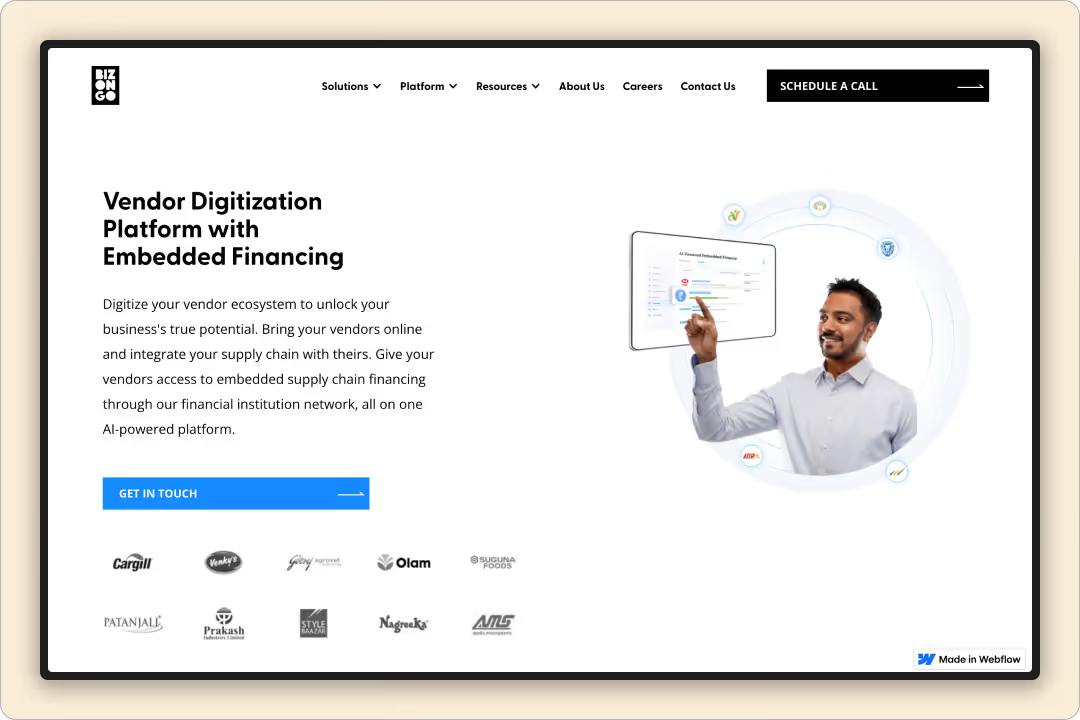
Bizongo
Brand and website design for Bizongo, an AI-powered supply chain and vendor digitization platform

Chimes Aviation Academy
Brand and website design for Chimes Aviation Academy, India's leading flying training organisation in South Asia
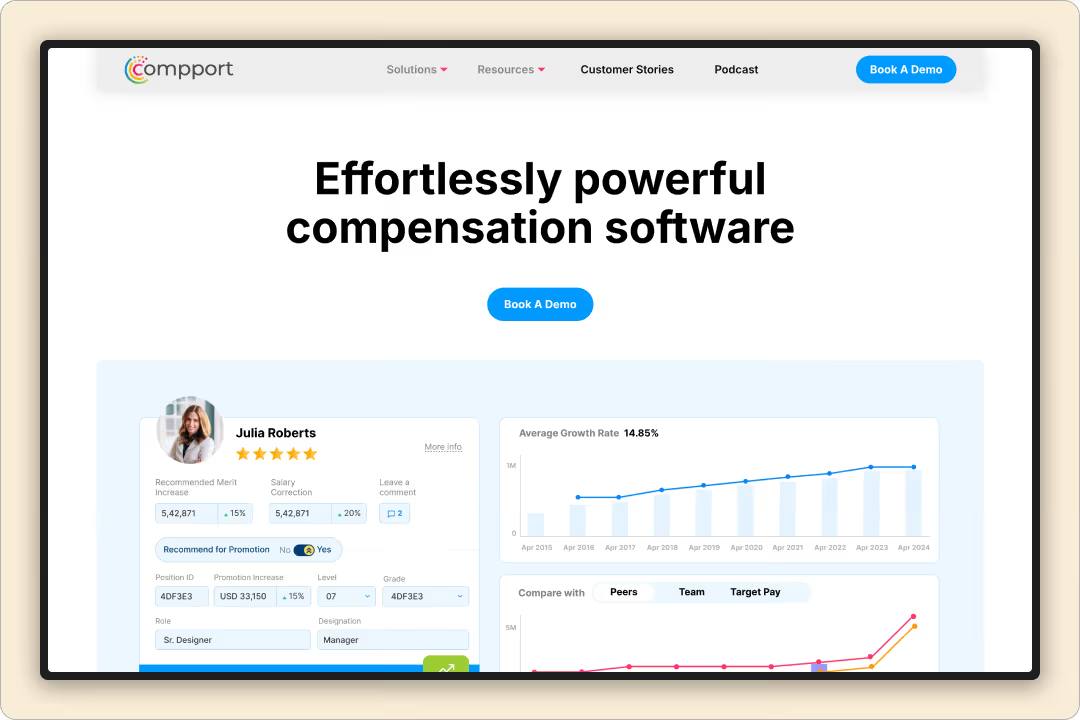
Compport
Brand and website design for Compport, an AI-powered compensation management platform for equitable and transparent pay decisions

Botim
Website strategy and design for Botim, an ultra platform offering international money transfers, voice and video calls, government services, and e-commerce through a single app
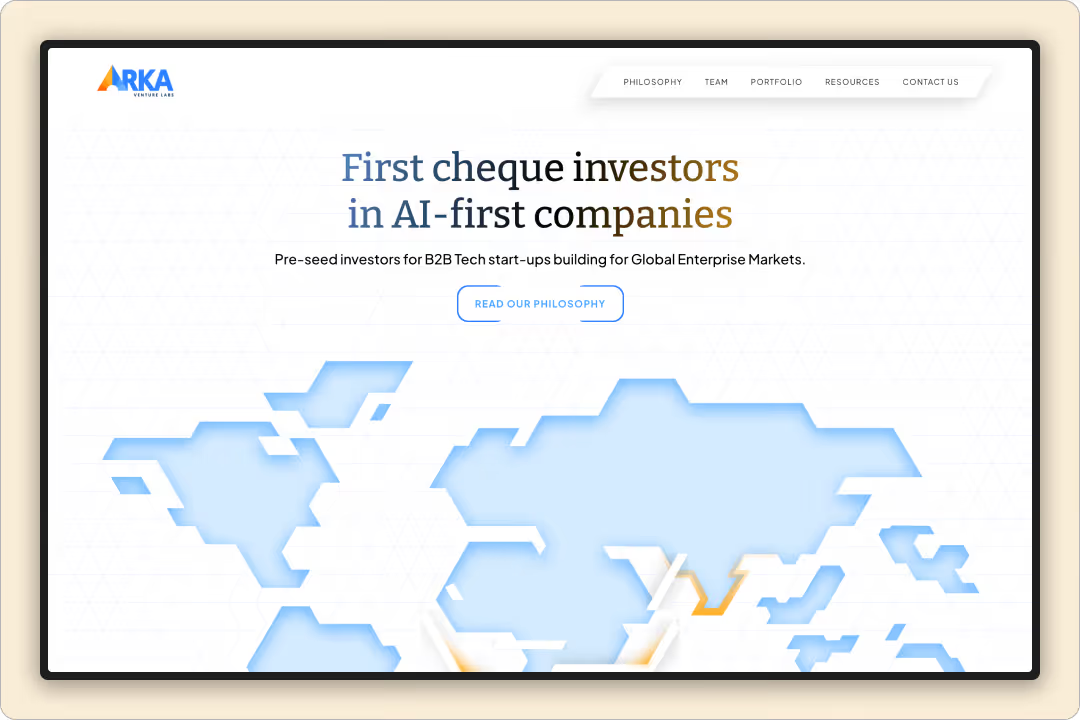

Nimble Edge
Brand and website design for NimbleEdge, an on-device machine learning platform for real-time mobile personalization
SimpliContract
Brand and website design for SimpliContract, an AI-powered contract lifecycle management platform

Ajax Engineering
Brand identity and website design for Ajax Engineering, a leading manufacturer of concrete batching and construction equipment

Solytics Partners
Brand and website design for Solytics Partners, a risk management and data analytics consultancy for financial institutions

TurboTech
Brand and website design for TurboTech, a precision engineering and automotive turbocharger solutions company

Lakshmigraha
Rebrand and website design for Lakshmigraha, a trusted manufacturing and warehousing name since 1984
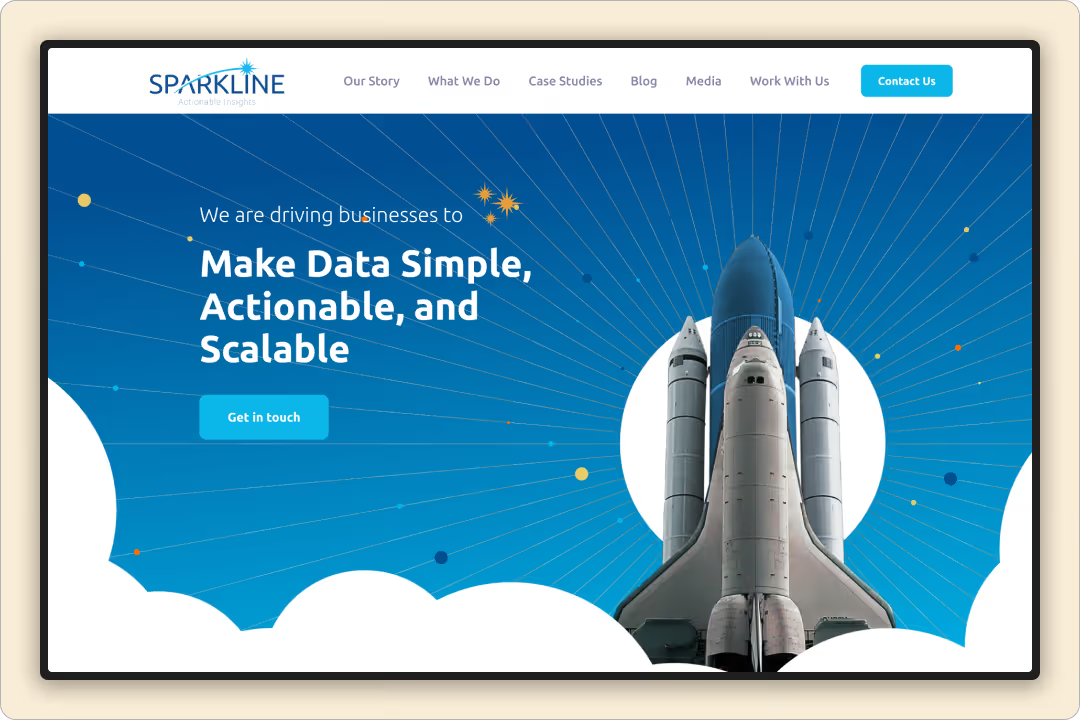

Website Revamp
Experts

Ahamed Sabahir
Webflow Developer

Jiyash A K
Sr. Webflow Developer

Saurabh Chakradhari
Head of Development