Web Design Agency SaaS Product
A web design agency for SaaS products creates user-centric websites that translate technical features into clear benefits, reduce friction in the buyer journey, and drive qualified demo requests and sign-ups.
What does a SaaS product website need to accomplish?
Three things: explain the product clearly, build enough trust to start a trial or demo, and rank for the terms your buyers are searching. SaaS websites need to balance product storytelling with conversion optimization — pricing pages, feature comparisons, integrations, and social proof all play critical roles. Everything Design builds SaaS product websites that are designed around the self-serve buyer journey, with clear CTAs, fast load times, and messaging that converts.
Why Does SaaS Product Web Design Require a Specialized Approach?
SaaS product websites need to do more than look good — they must communicate complex value quickly, drive trial sign-ups, and reduce time-to-conversion. Everything Design builds SaaS websites that align product positioning with user journey design, turning visitors into active users.
FAQs
The most effective B2B SaaS social proof is specific, quantifiable, and comes from recognizable companies in your target market. Generic testimonials from unknown customers provide minimal credibility; specific customer quotes tied to measurable business outcomes, accompanied by recognizable logos and customer titles, drive significantly higher conversion. The strongest social proof demonstrates that companies similar to prospects have achieved concrete business results using your solution, making the customer journey feel lower-risk and more achievable.
Customer Logos and Brand Association
Recognizable customer logos signal market validation and reduce perceived risk for prospects. However, logos alone lack context: prospects want to know why these companies chose you, what problems you solved, and what they achieved. The most effective logo display pairs recognizable customers with brief outcome statements: "Acme Corp reduced sales cycle by 40%" or "TechCo saved $2M annually on infrastructure costs." This combination conveys both market credibility and concrete value. Avoid displaying logos from early-stage customers or your own investor companies; prospects recognize false associations and credibility decreases.
Detailed Case Studies and Specific Metrics
In-depth case studies dramatically outperform generic testimonials in converting B2B prospects. Prospects want to understand the customer's initial situation, implementation approach, challenges encountered, and measured outcomes. Include specific metrics: revenue impact, time savings, customer retention improvements, or operational efficiency gains. Attribute case studies to named customers with verifiable job titles; this specificity builds trust. Case studies should address realistic implementation timelines and dependencies to set accurate expectations. The ideal case study demonstrates that a company similar to the prospect achieved meaningful results, making success feel achievable and credible.
Customer Testimonials with Specificity and Authority
Powerful customer quotes combine three elements: specific praise for what worked, measurable business impact, and attribution to recognizable positions in target industries. "The software is good" provides minimal value; "The automation eliminated 12 hours of manual reporting weekly for our finance team, allowing us to redirect resources to strategic analysis" demonstrates concrete impact. Include customer name, title, and company. Video testimonials carry additional credibility, but only when customers speak genuinely and specifically about results—staged or vague video testimonials undermine credibility more than text-based quotes.
Third-Party Validation and Analyst Recognition
G2, Capterra, and industry analyst recognition (Gartner, Forrester) provide independent credibility that customer-generated social proof cannot match. Display relevant analyst rankings, G2 ratings, and industry certifications prominently. These third-party validations reduce prospect skepticism because they're not self-reported. Include links to full analyst reports or third-party review pages so interested prospects can verify claims independently. This social proof works especially well for prospects in early evaluation stages who need broad market validation before entering detailed conversations.
Related: Review how we've built compelling case studies and social proof for SaaS clients, or optimize your social proof strategy with conversion-focused design.
Great B2B SaaS website design balances technical sophistication with clear value communication. Prospects need to understand your solution's benefits within seconds, explore implementation details efficiently, and envision integration into their workflows. Effective design combines strategic information architecture, conversion optimization, and professional aesthetics demonstrating product quality.
Value Proposition and Clarity
Your homepage headline must immediately communicate who you serve and the specific problem solved. Avoid generic "cloud solutions" messaging; state concrete benefits with specificity. Include visual hierarchy guiding prospects from headline through value statements to conversion actions. Use clear language; technical jargon may impress developers but alienates procurement teams evaluating business impact. Subheadings and benefit statements should reinforce core value before asking for engagement.
Product Demonstration and Feature Clarity
SaaS websites must show product capabilities without requiring login. Include product screenshots, interactive demos, or short videos demonstrating core workflows. Organize features by customer role or use case to help buyers envision implementation. Include technical specifications where relevant but prioritize business outcomes. Professional product showcase design accelerates understanding and shortens evaluation timelines.
Trust Building Through Social Proof and Credentials
Include client logos, detailed case studies showing ROI, customer testimonials, and implementation metrics. Prospects evaluate SaaS solutions based on other customers' success; showcase recognizable client names and quantifiable results. Include security certifications, compliance badges, and uptime guarantees. Create detailed case studies showing implementation challenges, solution specifics, and measurable business outcomes.
Conversion-Optimized Pathways and CTAs
Design conversion funnels guiding prospects toward appropriate next steps: free trials, demos, consultations. Differentiate CTAs by audience: developers might prefer free trial access, while enterprise buyers need technical consultation. Include clear pricing when relevant. Balance conversion urgency with information completeness; prospects researching thoroughly shouldn't feel pressured prematurely.
B2B SaaS websites should receive continuous updates and iterative improvements rather than major overhauls on fixed schedules. Rather than thinking "annually" or "quarterly," consider your website as a living business tool requiring regular attention, testing, and refinement. High-performing SaaS websites undergo monthly updates addressing performance optimization, user feedback, conversion rate improvements, and refreshed case studies or testimonial content. Meanwhile, significant strategic redesigns typically happen every 2-3 years as markets shift and your company evolves.
Continuous Optimization Over Major Redesigns
Modern web development emphasizes continuous improvement over scheduled redesigns. Your analytics reveal what's working and what isn't. A/B testing identifies messaging variations that convert better. User feedback highlights friction points in navigation or forms. Rather than waiting for an annual update, successful companies make small changes monthly—optimizing conversion flows, updating case studies, improving page load speeds, and testing new messaging approaches. Compounded, these continuous improvements dramatically outperform occasional major redesigns.
Content and Messaging Updates
Your website messaging should reflect current market positioning, customer language, and competitive landscape. As you win new customer types or adjust positioning strategy, your website should evolve alongside. Fresh case studies demonstrating recent wins build credibility and social proof. Updated testimonials showing quantified customer results drive conversions. Blog content addressing emerging industry challenges keeps your website relevant and aids search visibility. Content updates happen monthly, not on fixed cycles.
Technical Updates and Security
Website infrastructure, SSL certificates, third-party integrations, and CMS updates require regular maintenance. Webflow handles many updates automatically, but core elements need periodic review. Security audits, performance optimization, and broken link identification happen quarterly. As you integrate new tools—updated analytics, new CRM systems, or additional automation—your website requires updates to maintain functionality.
Strategic Redesigns and Evolution
While continuous optimization matters monthly, significant strategic redesigns align with major business evolution. New product launches, major positioning shifts, or significant brand evolution warrant comprehensive redesigns. Most B2B SaaS companies benefit from substantial redesigns every 2-3 years. However, companies practicing continuous optimization discover that comprehensive redesigns feel less urgent because their websites are already performing and evolving.
The most successful SaaS websites receive consistent attention and improvement. Explore our ongoing optimization and maintenance services, review websites we've evolved over time, or discuss how to approach your website updates strategically.
Webflow has become the leading platform for B2B SaaS website development, offering designers and developers the flexibility to build sophisticated, custom websites without relying on generic templates or limiting WordPress plugins. Webflow excels for SaaS companies needing dynamic content, personalization features, integration with tools like HubSpot or Salesforce, and complete design control. However, the best platform depends on your specific needs, timeline, technical capabilities, and budget.
Why Webflow Leads for B2B SaaS
Webflow provides visual development environment combining designer-friendly interface with enterprise-grade capabilities. No coding required for basic sites, but full custom development available for complex functionality. You own your data and design code. Webflow hosts reliably with excellent performance and security. The platform scales as your business grows—from initial launch through sophisticated personalization and integrations. Most importantly, your website remains yours; you're not locked into vendor dependencies.
Alternative Platforms and Trade-offs
WordPress offers flexibility and extensive plugin ecosystem but requires technical expertise for security, updates, and performance optimization. Statically generated site builders like Next.js or Gatsby provide excellent performance but demand development resources. CMS platforms like Contentful or Sanity offer headless flexibility for complex organizations but add architectural complexity. Each platform represents different trade-offs between ease of use, customization capability, and technical requirements.
Evaluating for Your Specific Situation
Consider your team's technical capabilities—does your organization have developers who can manage infrastructure? Evaluate integration needs—what tools must your website connect with? Assess customization requirements—do you need sophisticated personalization or complex functionality? Determine timeline and budget constraints. For most B2B SaaS companies, Webflow balances these considerations optimally, enabling sophisticated design without requiring dedicated DevOps resources.
Platform Selection as Strategic Decision
Your platform choice impacts not just initial development but long-term maintenance, scalability, and cost. Platforms enabling designer-driven updates reduce ongoing development costs. Platforms with robust performance and security require less operational overhead. The best choice supports your company's trajectory and technical capabilities.
We specialize in Webflow development for B2B SaaS companies. Learn our development approach, explore SaaS website examples built with Webflow, or discuss platform strategy for your project.
Building a B2B SaaS website typically requires 3-6 months, depending on complexity, feature requirements, and discovery depth. A straightforward marketing website might take 6-8 weeks, while a comprehensive platform requiring integrations could extend to 6-9 months. The critical factor isn't speed—it's building a website that generates qualified leads and supports your sales process.
Project Scope and Complexity Factors
Your timeline depends on several variables: whether you're building from scratch or redesigning, how many integrations with existing tools (CRM, analytics, payment systems) are required, and how sophisticated your content strategy is. B2B SaaS websites often need personalization features, detailed product documentation, customer testimonial sections, and resources like case studies and whitepapers. Each of these increases development time but directly impacts conversion capability.
Discovery and Strategy Phase
The most valuable websites invest time upfront in discovery—understanding your target customers, competitive positioning, and conversion goals. This phase typically requires 2-4 weeks and should never be rushed. Skipping discovery leads to websites that look beautiful but fail to communicate your value proposition effectively. Your website should answer specific questions your prospects ask during their buying journey.
Design, Development, and Optimization
After discovery, design typically takes 3-4 weeks, development 4-8 weeks depending on custom functionality, and launch preparation 1-2 weeks. Many companies underestimate testing and optimization—a properly launched website includes comprehensive QA testing, performance optimization, SEO configuration, and analytics setup. This ensures your site works flawlessly and provides actionable data for continuous improvement.
The real value question: would you rather have a generic site in 6 weeks or a strategically designed conversion machine in 3 months? Most successful B2B SaaS companies view their website as a core business asset.
Ready to plan your SaaS website project? Explore our B2B website development approach, review SaaS website case studies, or schedule a consultation to discuss your timeline.
B2B SaaS website costs typically range from $15,000 to $75,000+, depending on complexity, custom functionality, and design sophistication. A basic brochure site starts around $10,000–$20,000, while enterprise-grade platforms with integrations, animations, and custom development can exceed $100,000. Most mid-market SaaS companies invest $25,000–$50,000 for professional, conversion-focused design that supports their growth trajectory.
What Impacts SaaS Website Pricing
Several factors shape the final investment: design customization (template vs. bespoke), CMS requirements, third-party integrations (payment gateways, analytics, marketing automation), interactive elements, and the depth of UX research. A site that drives qualified leads requires strategic positioning, clear value messaging, and optimized conversion paths—elements that add professional value. Whether you need basic marketing presence or a high-performance sales tool makes a significant difference.
Budget Allocation Strategy
We recommend allocating budget across strategy (20%), design (30%), development (35%), and testing/optimization (15%). This ensures your investment addresses not just aesthetics, but messaging clarity, technical reliability, and revenue impact. Our website design process emphasizes ROI-focused development that aligns with your customer acquisition goals.
Long-Term Value Perspective
The real question is ROI: a $40,000 site that generates $200,000 in annual revenue beats a $10,000 template site that generates nothing. Professional SaaS sites function as dedicated sales tools. For detailed pricing and portfolio examples, speak with our team.
SaaS Product Websites

SimpliContract
Brand and website design for SimpliContract, an AI-powered contract lifecycle management platform

Tunnel
Brand and website design for Tunnel, a payment automation platform built for equipment manufacturers

Entropik
Brand identity and website design for Entropik, an AI-powered integrated market research platform for agile and accurate consumer insights
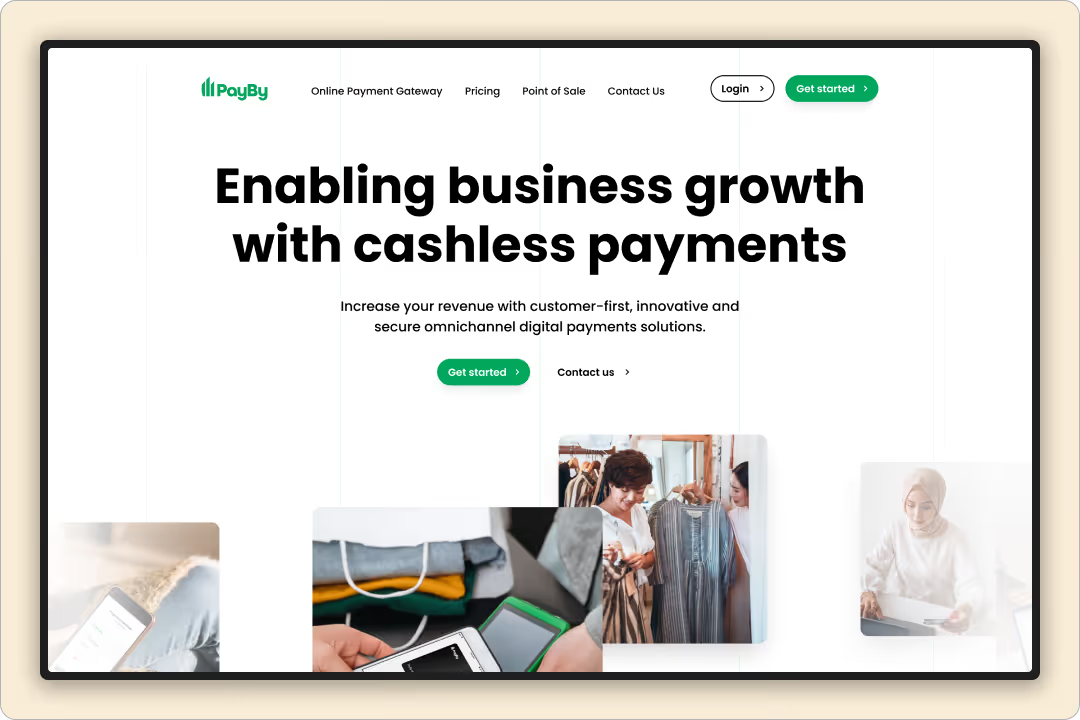
Payby
Brand strategy and website design for PayBy, a mobile payments and digital wallet platform in the EMEA region
SaaS Product Website
Experts

Swathi Mohan
Content Strategist

Athira Krishnan
Lead Designer | Content Strategist

Saurabh Chakradhari
Head of Webflow Department