Animation Video Agency
Animation unlocks storytelling possibilities that live-action can't match. For B2B companies, animated videos can visualize abstract concepts, simplify complex workflows, and create distinctive brand experiences that stand out in a market saturated with talking-head content.
Explainer videos often carry a bit of baggage in the marketing world—but not because they’re inherently bad. The problem lies in the term itself. “Explainer video” has become a catch-all for “animated videos,” creating confusion and blurring the purpose these videos are meant to serve.
Let’s clear that up: explainer videos and animated videos are not the same thing.
An explainer video is just one objective an animated video can fulfill. Each type of video serves a distinct purpose:
- Explainer Video
- Objective: Simplify and explain a concept, product, or service.
- Example: A video breaking down how your software streamlines complex processes.
- Sales Video
- Objective: Persuade viewers to take action, like signing up or making a purchase.
- Example: A promo video highlighting benefits and driving conversions.
- Announcement Video
- Objective: Share updates like a product launch or new feature.
- Example: A visually engaging video introducing your app’s latest upgrade.
- And so on…
Each type of video plays a unique role in the customer journey and requires tailored distribution strategies to maximize impact.
The Common Pitfall
The real issue arises when businesses create one type of video—often a sales or promo video—but distribute it as an explainer. This mismatch leads to poor results because the video doesn’t align with the viewer’s expectations or needs at that point in their journey.
Why does this happen?
It’s understandable. Businesses want to explain their product or service but can’t resist sneaking in the sales pitch. It comes from a good place—they’re excited about their offering.
But here’s the key:
If a user is already on your site and chooses to watch your video, they’re at least somewhat interested.
Don’t oversell. Instead, focus on delivering the information they came for.
An explainer video is about clarity and education—not persuasion. Let your product speak for itself, and when paired with the right call-to-action elsewhere on the page, you’ll see better results.
By staying true to the video’s purpose and respecting where the user is in their journey, you’ll build trust and achieve the outcomes you’re aiming for.
Animated video isn’t a standalone asset
In fact, no b2b marketing asset stands alone.
Every piece of content should work together to form a cohesive web of touchpoints, creating opportunities for potential customers to engage and guiding them, step by step, toward making a purchase.
As for animated videos, there’s no universal rule for where they belong in your ideal customer journey. Their placement depends entirely on the objectives of the video and your business goals.
When planning how an animated video fits into the journey, I focus on:
- Identifying knowledge gaps: What critical information might the viewer be missing?
- Considering previous touchpoints: What interactions have they already had with your brand?
- Understanding their mindset: What do they want to learn or achieve at this stage?
- Shaping outcomes: What key takeaways or actions do you want to inspire?
By addressing these questions, you can ensure the video aligns with your broader strategy, delivering value and creating meaningful connections—not standing in isolation.
When should a B2B company choose animation over live-action video?
Choose animation when you need to explain something that can't be filmed — software interfaces, data flows, abstract concepts, or future-state scenarios. Animation is also ideal when you want complete creative control over visual style, need to update content frequently without reshooting, or want to create a distinctive visual language that becomes synonymous with your brand.
Animation Video Projects
Explainer Video Expent
Explainer video for Expent, an AI-powered expense management and automation platform
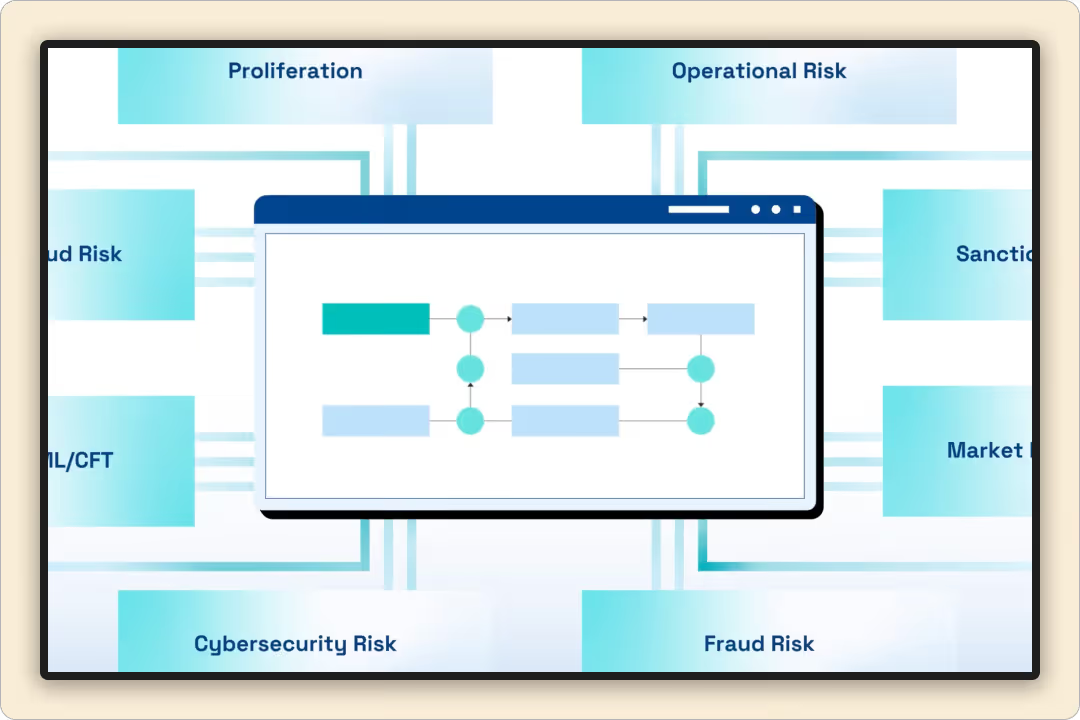
Solytics RA Vault | Explainer Video
Explainer video for Solytics Partners' RA Vault, a regulatory compliance and risk analytics platform
FAQs
Explainer videos work across virtually every industry, but they deliver exceptional ROI in B2B sectors where communication complexity is high and decision cycles are long. SaaS companies, financial services, healthcare technology, enterprise software, consulting, and manufacturing all benefit tremendously from videos that break down complex concepts. These industries share a common challenge: explaining sophisticated products or services to busy decision-makers. Explainer videos solve this by communicating value in engaging, digestible formats that outperform static content in driving engagement and conversions.
SaaS and Software Solutions
Software companies generate tremendous value from explainer videos because product functionality isn't immediately obvious. A 90-second animated walkthrough communicates features, benefits, and use cases more effectively than feature lists. Explainer videos reduce friction in the evaluation process—prospects understand value proposition quickly, improving sales conversations. SaaS companies using explainer videos consistently report higher conversion rates on landing pages and reduced sales cycle length.
Financial Services and FinTech
Finance, insurance, and investment products require clear explanation of complex concepts. Explainer videos help demystify financial products, building trust and confidence. Whether explaining cryptocurrency, insurance policies, or investment strategies, video makes abstract concepts tangible. Regulatory compliance considerations make clear communication crucial, and professional explainer videos help services explain offerings while building credibility.
Healthcare and Medical Technology
Medical devices, diagnostic tools, pharmaceutical services, and healthcare platforms benefit enormously from explainer videos that translate technical information into patient and provider-friendly language. Video helps complex medical information feel approachable, improving patient understanding and treatment compliance. Healthcare marketing particularly values video's ability to build trust and address patient concerns before consultations.
B2B Services and Enterprise Solutions
Consulting, staffing, logistics, manufacturing, and other B2B service providers use explainer videos to communicate value propositions to enterprise prospects. These videos help prospects understand how services solve specific challenges. Professional explainer video production positions your service for enterprise audiences, supporting longer sales cycles and complex decision-making processes. Combined with strong website design and brand strategy, explainer videos significantly improve lead generation and conversion. Let's discuss your video production strategy to maximize impact in your industry.
Explainer video costs vary significantly based on animation style, production complexity, and video length—typically ranging from ₹50,000 to ₹5,00,000+ depending on your requirements. Simple 2D animated videos cost less than photorealistic 3D animation or live-action production. The value comes from how effectively videos communicate complex concepts, drive engagement, and generate leads. Smart investment in video production often delivers strong ROI when videos are strategically distributed and aligned with your target audience's needs.
Animation Style and Complexity
Motion graphics and simple 2D animation offer cost-effective solutions for explaining processes and concepts. These typically start at ₹50,000-₹1,50,000 for quality production. Whiteboard animation and basic character animation provide personality while maintaining reasonable costs. 3D animation costs more—₹1,50,000-₹3,00,000—because rendering and modeling require specialized expertise and longer production timelines. Photorealistic 3D animation and complex visual effects push costs higher. The right style depends on your audience, message complexity, and budget constraints.
Production Timeline and Revisions
Extended timelines usually lower costs because production teams can optimize workflows. Rush projects cost more. The revision process significantly impacts pricing—build in realistic rounds for feedback and changes. Clear creative briefs and approved scripts minimize revision cycles, keeping costs predictable. Most agencies offer revision limits in packages, so understand what's included before committing. Transparent communication about expectations prevents scope creep and unexpected costs.
Distribution and Performance
The real ROI comes from strategic video placement. Explainer videos generate highest value when placed on landing pages, website homepages, and in email campaigns targeting key decision-makers. Budget should include video optimization for different platforms—YouTube, LinkedIn, Instagram, and your website each have different requirements. Professional video production ensures quality that justifies the investment, but strategic distribution amplifies that investment's impact.
Maximizing Your Video Investment
Connect video production with broader marketing strategy to maximize ROI. B2B companies typically see strongest results from explainer videos that support lead generation. Website design that features your video prominently increases views and engagement. Strategic brand positioning ensures your video message aligns with core narrative. Let's discuss your video production goals and develop a budget-appropriate solution that drives measurable results.
Optimal explainer video length typically ranges from 60 to 120 seconds for most contexts. The key principle: make videos as short as possible while adequately explaining your concept. Shorter videos (60-90 seconds) maintain attention and work well on landing pages and social media. Longer videos (2-3 minutes) suit detailed product walkthroughs or complex concept explanation. Duration should match audience attention span and platform. LinkedIn and website videos tolerate longer formats; social media feeds demand brevity. Test different lengths with your audience to understand what drives engagement and conversions for your specific business.
Landing Page and Conversion Context
Landing page explainer videos should typically be 60-90 seconds. Busy B2B professionals evaluate your offering quickly—longer videos risk viewers clicking away before finishing. A focused 90-second video communicates key benefits and value proposition clearly, then prompts action. Studies show engagement drops significantly after 90 seconds on landing pages. These shorter videos should focus on the primary problem you solve and primary benefit you deliver. Additional context belongs in supporting copy, not the video itself. Time your call-to-action to immediately follow your key message.
Product Walkthrough and Education
When demonstrating product features or explaining complex processes, 2-3 minutes provides adequate time for thorough explanation. Screen recordings and feature walkthroughs naturally require more time to show functionality and usage patterns. Longer videos work here because viewers actively seek detailed product information. Break longer videos into chapters so viewers can skip to relevant sections. Include clear chapter markers or timestamps so prospects can navigate to features most relevant to their needs.
Platform-Specific Considerations
YouTube audiences accept longer videos and often seek detailed information. LinkedIn's professional audience shows strong engagement with videos under 2 minutes but tolerates longer thoughtful content. Instagram and TikTok demand brevity—15-60 seconds maximum. Email videos should be 60-90 seconds since many viewers watch silently. Facebook auto-plays with sound off, requiring strong visual storytelling in shorter durations. Optimize video length and messaging for each platform where your audience actually watches content.
Creating Effective Explainer Videos
The best video length emerges from clear message strategy, not arbitrary timing. Define your core message first, then determine how much time adequately explains it. Avoid padding videos with unnecessary information; every second should serve your message. Professional video production helps distill complex concepts into appropriately-timed, engaging content. Combined with strategically designed landing pages and clear brand messaging, explainer videos drive significant conversion improvements. Discuss your video strategy with our team to determine optimal length and messaging for your audience.
The best software for explainer videos depends on your animation style, timeline, budget, and in-house capabilities. Popular tools range from professional-grade software like Adobe After Effects to more approachable platforms like Vyond and Animaker, each suited to different production contexts and workflows.
Professional Motion Graphics: Adobe After Effects
Adobe After Effects remains the industry standard for custom animation and motion graphics. It offers unmatched creative flexibility, allowing designers to build entirely original animations from scratch. However, it has a steep learning curve and requires either in-house expertise or freelance motion designers—making it best for brands with dedicated video budgets and creative vision to justify the investment.
Rapid Production: Vyond and Animaker
Vyond and Animaker streamline explainer video creation with template-based animation, built-in characters, and drag-and-drop workflows. These tools excel when you need quick turnarounds and don't require fully custom animation. They're ideal for internal communications, SaaS product demos, and marketing videos where speed and consistency matter more than artistic uniqueness.
Hybrid Approaches and Team Considerations
Many brands combine tools: After Effects for hero brand videos with strategic importance, and Vyond for rapid iterations and employee-facing content. Consider your team's existing skills, content production frequency, and brand standards. Everything Design offers professional video production and motion design services if outsourcing is more efficient than building in-house capability.
Strategic Video for Business Growth
Talk to Everything Design about integrating video into your overall brand strategy and digital presence. See video projects we've created for clients and explore how motion design strengthens customer engagement and brand perception.
Foundational Animation Principles and Business Applications
The 12 principles of animation—developed by Disney animators and documented extensively—extend far beyond filmmaking into business communication and user experience design. Squash and stretch brings life and personality to brand elements; a logo animation using subtle squash and stretch feels dynamic rather than rigid. Timing and spacing determine whether motion feels snappy or sluggish, affecting user perception of product quality and responsiveness. Anticipation prepares viewers for action, making transitions feel intentional rather than abrupt. In website design, anticipation might manifest as subtle hover states or loading animations that prepare users for what's coming next. These principles aren't decorative flourishes—they're fundamental tools for guiding attention, improving clarity, and creating emotional resonance with audiences.
Storytelling and Emotional Connection Through Motion
Animation excels at humanizing brands and making abstract concepts tangible. The principle of staging directs viewer attention through spatial emphasis and composition, helping explainer videos guide viewers through complex ideas sequentially. Arc and follow-through create a sense of weight and physicality, making animated characters feel present rather than puppet-like. Exaggeration emphasizes key points: a 200% scale animation draws far more attention than a 20% scale, useful for highlighting product features or benefits. Secondary action adds depth and richness to storytelling, making brand narratives feel complete and considered. When applied intentionally, these principles transform marketing animation from boring feature lists into compelling stories that resonate emotionally and stick in viewer memory.
User Experience and Conversion Impact
Animation principles directly impact conversion rates when applied to user interfaces. Proper use of timing makes applications feel responsive and snappy, building user confidence. Appeal—the principle of making characters and interactions likable and engaging—extends to UI design: buttons that feel friendly and approachable get more clicks than cold, harsh designs. Solid drawing (ensuring clear appeal and believability) in interface design means form follows function; every animation serves a purpose rather than existing as decoration. Studies show that applications using animation principles for feedback and guidance convert 15-20% better than static interfaces because motion provides reassurance and clarity about what just happened or what's happening next.
Strategic Deployment Across Business Communication
The most effective brands apply animation principles strategically across multiple touchpoints rather than using animation indiscriminately. Product demo videos apply staging and sequencing to guide prospects through feature understanding. Landing page interactions use timing, easing, and micro-animations to establish pacing and personality. Internal communication uses animation to clarify processes and procedures, making training materials more engaging and memorable. Brand guidelines incorporating animation principles ensure consistency across all marketing materials. Discuss how animation principles can strengthen your brand communication and improve user engagement across your digital presence.
Animated Video Agency
Experts

Vaishnavi Gupta
Junior Motion Designer

Varsha P
Motion Designer

Tejus Yakhob
Creative Director | Films

Sreejith K
Mid Weight Motion Designer

Felix Hartley
Head of Motion Design

Yugankita Aich
Associate Editor | Films

Sanjana
Lead Designer