


B2B Rebranding Strategy: 6 Signs It's Time (2026)
The 6 signs a B2B company actually needs a rebrand in 2026 — positioning drift, audience shift, M&A, pricing move. What changes vs what stays.
Introduction
Rebranding is a business decision. It is not a design project that happens to involve strategy. When a B2B company rebrands well, the result is sharper positioning, clearer messaging, and stronger credibility with the buyers, investors, and recruits who matter most.
When a B2B company rebrands poorly, the damage spreads across every go-to-market function for years. Forrester has noted that rebranding is one of the most consequential and long-lasting decisions a marketing leader can make, because messaging, positioning, and visual identity permeate nearly every touchpoint. Sales decks, website pages, investor materials, recruiting pitches, and customer communications all carry the brand forward.
The question is not whether your company will eventually need to rebrand. The question is whether the timing, reasoning, and process are right. This guide covers when to rebrand a B2B company, how to evaluate readiness, and what a strategy-first rebranding process looks like in practice.
What is rebranding?
Rebranding is a structured change to how a company positions itself, communicates its value, and presents itself to the market. It can involve changes to positioning, messaging, verbal identity, visual identity, naming, and brand architecture.
A rebrand is not just a new logo or color palette. In B2B, where sales cycles are long and buying committees are large, rebranding changes how prospects perceive, evaluate, and remember the company across months of engagement.
Rebranding vs brand refresh
A brand refresh updates the surface layer: visual design, typography, color, iconography, or website aesthetics. It works when the underlying positioning and messaging still hold but the expression feels dated or inconsistent.
A full rebrand goes deeper. It revisits who the company is for, what it stands for in the market, and how it communicates that story across every channel.
If your sales team can still articulate a clear, differentiated value proposition that resonates with your target buyer, you may only need a refresh. If they cannot, or if the market has shifted underneath you, a refresh will not solve the problem.
Rebranding vs repositioning
Repositioning is a strategic decision about where the company competes and how it differentiates. Rebranding is the broader market expression of that shift, including messaging, identity, and communications.
You can reposition without rebranding if the visual system still works and only the narrative needs to change. But most repositioning exercises in B2B eventually require some degree of rebranding, because the old messaging and identity were built to express the old strategy.
Think of repositioning as the strategic input and rebranding as the full output: positioning, narrative, identity, and rollout working together.
When should a B2B company rebrand?
Rebranding should be a response to business change, not internal restlessness. The strongest rebrands are triggered by a clear gap between where the company is headed and what the current brand can credibly communicate.
Common triggers for B2B rebranding
Mergers and acquisitions
Post-M&A integration is one of the most common triggers. Forrester observed that rebranding inquiry volume rose alongside elevated M&A activity, because combining companies creates immediate brand architecture questions.
Product expansion or category shift
A company that started as a single-product SaaS tool but now offers a platform needs a brand that can carry the broader story. The old brand may anchor perception to a capability the company has outgrown.
Audience shift
Moving upmarket from SMB to mid-market or enterprise often exposes a credibility gap. Enterprise buyers expect a different level of brand maturity, messaging clarity, and visual professionalism. The trust signals that move enterprise buying committees are structural — stakeholder-specific paths, compliance documentation, and outcome-anchored case studies, not surface badges.
Weak differentiation
When prospects cannot explain what makes you different from three or four similar companies, the brand is failing at its primary job.
Leadership or strategy change. New CEO, new board, new funding round with a mandate to scale. These transitions often surface the question of whether the current brand can carry the next phase.
Signs the current brand no longer fits
Your website copy could belong to any competitor in the category. Sales reps improvise their own messaging because the official story does not land. Enterprise prospects hesitate at the brand, not the product.
Recruiting is harder than it should be because candidates cannot tell what makes the company distinct. Investors ask clarifying questions about positioning that should be obvious from the website.
These are symptoms. The root cause is usually a gap between the company's actual capability and the brand's ability to communicate it.
Why B2B companies rebrand in crowded markets
B2B categories, especially in SaaS, tend to converge. Competitors adopt similar language, similar visual conventions, and similar positioning. When everyone claims to be the "leading" or "all-in-one" solution, nobody stands out.
B2B brand differentiation as a rebranding driver
Rebranding in a crowded market is about claiming a specific position with enough clarity and conviction that buyers remember it. Differentiation does not come from being louder. It comes from being more precise about who the company serves, what problem it solves better than anyone else, and what proof supports that claim.
A rebrand gives you the opportunity to rebuild the entire messaging and identity system around a sharper point of view. Companies that try to differentiate through visuals alone (a bolder color, a trendier typeface) miss the structural advantage of repositioning the story first.
How to differentiate in a crowded market
Narrowing is usually more effective than broadening. The instinct to appeal to everyone produces generic messaging. The companies that break out of crowded categories tend to do the opposite: they pick a specific audience segment, a specific problem, or a specific point of view and build the brand around it.
Practical levers include: tighter audience definition, a clearer category frame ("we are X for Y" rather than "we do everything"), stronger proof points, and a brand narrative that connects the company's origin to the buyer's problem.
Positioning work should happen before any identity work begins. A new visual system built on vague positioning will look good and say nothing.
The risks of rebranding without diagnosis
The most expensive B2B rebrands are the ones that skip diagnosis. Teams jump to identity exploration because it is more exciting than research, then discover months later that the new brand has the same strategic problems as the old one.
Common rebranding mistakes
No research phase
Skipping customer interviews, competitive analysis, and internal stakeholder input means the rebrand is built on assumptions. Those assumptions are usually wrong.
Stakeholder misalignment
The CEO wants aspirational. The VP of Sales wants practical. Product marketing wants technical. Without a structured process to reconcile these inputs, the rebrand becomes a political compromise rather than a strategic decision.
Destroying existing brand equity
Some elements of the current brand may be working. A name with strong recognition, a color with category association, a tagline that customers actually remember. Changing everything without auditing what to preserve is wasteful.
Rollout confusion
Launching a new brand without a clear plan for retiring old assets, updating channel profiles, retraining sales, and coordinating with partners creates months of inconsistency.
When not to rebrand
Sometimes the problem is not the brand. If your messaging is unclear but your positioning is sound, you may need a messaging overhaul, not a rebrand. If your website is underperforming but the story is right, you may need a better website, not a new identity.
If your paid acquisition is not converting, the issue may be targeting, offer structure, or landing page execution. Rebranding is not a fix for channel-level performance problems.
Rebranding is the right move when the gap is strategic: the company has changed, the market has changed, or the brand can no longer credibly represent where the business is going.
How to evaluate whether rebranding is the right move
Before committing to a rebrand, run a structured evaluation. A brand audit gives you evidence to make a decision, rather than relying on instinct or internal fatigue.
What to audit before rebranding
A useful brand audit covers six areas. Bynder's framework outlines a practical sequence: understand the current brand, assess external marketing, review website and social presence, examine brand perception, analyze brand performance, and conduct competitor analysis.
For B2B companies, I'd add a specific focus on sales enablement. Are your sales materials consistent with the website? Can reps explain the value proposition in one sentence? Do enterprise prospects perceive the brand as credible enough to shortlist?
The audit should produce a clear picture of where the brand is strong, where it is breaking down, and whether the gaps are cosmetic or structural.
Questions leadership should answer first
Before engaging an agency or assembling a project team, leadership should be able to answer:
- What business goal does this rebrand serve? (Growth, M&A integration, upmarket move, category expansion)
- Has our audience changed? If so, how?
- What do we want to be known for in 18 months?
- What does the current brand do well that we should preserve?
- Who owns the final decision, and how will disagreements be resolved?
If leadership cannot answer these questions with reasonable specificity, the company is not ready to rebrand. It is ready for a strategy conversation.
A strategy-first B2B rebranding process
A rebrand that starts with design and works backward toward strategy almost always produces weaker results. The sequence matters: diagnosis, positioning, messaging, identity, rollout.
1. Diagnose the problem
Identify what is broken, what has changed, and what brand equity exists that should be preserved. This means customer research, competitive analysis, internal stakeholder interviews, and a review of existing brand materials.
The diagnosis should produce a clear brief: "We are rebranding because [specific business reason], and the rebrand needs to solve [specific problem] for [specific audience]."
2. Clarify brand positioning
Brand positioning defines the audience, the category, the differentiation, and the company's right to win. Without a positioning decision, every subsequent choice (name, tagline, messaging, visual direction) is arbitrary.
Positioning should be specific enough that it excludes some buyers and some use cases. If the positioning statement could apply to three competitors without modification, it is not sharp enough.
3. Build the brand narrative and brand story
A brand narrative translates positioning into a coherent story that works across the website, sales conversations, investor decks, and recruiting. The narrative should connect the company's origin to the buyer's problem and make the value proposition feel inevitable rather than arbitrary.
Brand story is the human version of the narrative: why the company exists, what it believes, and why that belief matters to the people it serves. Both narrative and story should be testable with real buyers before they inform identity decisions.
4. Decide what changes in the identity system
Identity decisions include naming, verbal identity (voice, tone, messaging architecture), visual identity (logo, color, typography, illustration, photography), and brand architecture (how products, services, and sub-brands relate).
Not everything needs to change. A strong diagnosis will tell you whether the name still works, whether the visual system is the problem, or whether the messaging layer is the real gap. Changing everything when only the messaging is broken is expensive and risky.
5. Use brand archetypes carefully
Brand archetypes (the Hero, the Sage, the Creator, etc.) can be useful as a personality calibration tool. They help teams agree on tone and emotional register. They are not a substitute for positioning or narrative.
I've seen companies spend weeks debating whether they are "the Explorer" or "the Magician" while their positioning remains undefined. Use archetypes to fine-tune personality after the strategic foundation is set, not as the starting point.
6. Align stakeholders across the business
Rebranding affects marketing, sales, product marketing, customer success, recruiting, and leadership communications. Every function that uses the brand needs to be involved, not in every decision, but in the rollout and adoption plan.
Sales teams are often the most important stakeholder group because they are the first to feel the impact of unclear or unconvincing messaging. If the new brand does not give sales a better story, something went wrong in the process.
7. Plan rollout and governance
Rollout is where many rebrands fall apart. Coordinated launch timing, centralized asset management, and planned retirement of outdated materials are operational requirements, not nice-to-haves.
Build a rollout plan that covers: website launch date, sales material updates, email and social profile changes, partner and co-marketing notifications, customer communications, and internal enablement sessions. Assign clear owners for each.
Archive old materials systematically. Stale logos and outdated pitch decks circulating six months after a rebrand erode credibility faster than the rebrand can build it.
Rebranding timeline: how long does a B2B rebrand take?
Most B2B rebrands take 3 to 9 months from kickoff to public launch, depending on scope and organizational complexity. A SaaS company with a single product and a small team can move faster. An enterprise company with multiple products, global offices, and regulatory considerations will take longer.
Typical phases in a rebranding timeline
- Audit and diagnosis: 2 to 4 weeks. Customer research, competitive review, internal interviews, brand audit.
- Strategy and positioning: 3 to 6 weeks. Positioning framework, messaging architecture, narrative development.
- Identity development: 4 to 8 weeks. Visual concepts, verbal identity, design system, and iteration.
- Rollout preparation: 3 to 6 weeks. Website build, sales material updates, asset production, stakeholder training.
- Launch and enablement: 1 to 2 weeks for initial launch, then 4 to 8 weeks for full adoption across channels.
What slows rebranding projects down
Unclear decision-making authority is the most common delay. When three executives each believe they have final approval, every review cycle adds weeks.
Weak inputs slow things down too. If the diagnosis phase is rushed, the strategy phase turns into a second round of research. Multi-product companies face additional complexity in brand architecture decisions that single-product companies can skip entirely.
Launch coordination across regions, partners, and channels requires dedicated project management. Companies that treat rollout as an afterthought typically experience 2 to 3 months of brand inconsistency after launch.
How positioning, narrative, and identity shape rebranding success
These three layers work together, and they need to be built in sequence. Identity without positioning is decoration. Positioning without narrative is a framework nobody uses. Narrative without identity has no visible expression.
Brand positioning strategy
Positioning is the foundation. It defines how the company wants to be perceived relative to alternatives. A strong B2B positioning strategy answers: who is the buyer, what category does the company compete in, what is the specific differentiation, and what proof supports it.
Positioning should inform every downstream decision. If the positioning says "we serve enterprise security teams," the visual identity, website structure, messaging tone, and case study selection should all reflect that.
Brand narrative and brand story
The narrative turns positioning into a story that humans can follow, repeat, and believe. It creates coherence across the website, sales conversations, conference talks, recruiting pages, and investor materials.
A brand story adds emotional context: why the founders started this company, what problem they saw that others missed, and why solving it matters. In B2B, the brand story is surprisingly important for recruiting and for differentiation in categories where product capabilities are similar.
Visual identity and expression
Visual identity is the visible outcome of strategic decisions already made. Color, typography, logo, illustration style, photography direction, and motion design should all express the positioning and personality defined in earlier phases.
When identity work happens before strategy, teams debate visual preferences without a framework for evaluating them. When identity work follows strategy, the creative brief is clear and the team can evaluate options against specific criteria.
Rebranding checklist for B2B teams
Strategy
- Business case for rebranding documented and approved by leadership
- Brand audit completed (positioning, messaging, website, perception, competitors)
- Target audience defined with enough specificity to exclude some buyers
- Positioning framework finalized
- Messaging architecture built and tested with real buyers
- Brand narrative and story written
Identity
- Naming decision made (keep, evolve, or change)
- Brand architecture clarified (especially for multi-product companies)
- Visual identity system designed (logo, color, type, imagery)
- Verbal identity defined (voice, tone, terminology)
- Brand guidelines documented
Alignment
- Leadership approved the final brand strategy and identity
- Sales team briefed and trained on new messaging
- Product marketing updated all positioning documents
- Customer success prepared for client communications
- Recruiting team updated employer brand materials
Rollout
- Website redesigned or updated to reflect new brand
- Sales decks, one-pagers, and proposals updated
- Email signatures, social profiles, and directory listings updated
- Partner and co-marketing materials updated
- Old assets archived and removed from circulation
- Launch date coordinated across all channels
Measurement
- Success metrics defined before launch (message clarity, sales confidence, pipeline quality, brand recall)
- Post-launch review scheduled at 30, 90, and 180 days
Examples of when B2B companies rebrand
The most common B2B rebranding scenarios tend to follow recognizable patterns.
Moving upmarket
A SaaS company that grew through self-serve and SMB sales decides to pursue mid-market or enterprise accounts. The existing brand, built for speed and simplicity, lacks the credibility and depth that enterprise buyers expect. The rebrand repositions the company as a serious platform player with the messaging, case studies, and visual maturity to match.
Post-acquisition integration
Two companies merge and need a unified brand that reflects the combined capability. The challenge is deciding what to keep from each brand and building a new narrative that does not feel like a compromise.
Category expansion
A company known for one product launches a second or third product and needs a brand that can carry a broader portfolio. The old brand anchors perception to the original product; the rebrand creates a parent story that supports multiple offerings.
Founder transition
The brand was built around a founder's personal reputation, and the company needs an identity that can scale beyond any individual.
How Everything Design solved rebranding challenges for our clients
Everything Design works with B2B SaaS and enterprise companies on exactly these types of rebranding challenges. The process starts with diagnosis and positioning before any identity work begins, which is the approach outlined in this guide.
For examples of how this process plays out in practice, see Everything Design's client work and case studies that detail the progression from strategic diagnosis through identity and website execution. [Everything Design case study]
Internal links to related Everything Design content
- Brand strategy services for companies evaluating whether a rebrand is the right move
- Brand identity services for the visual and verbal identity phase
- Website design and development for the rollout phase where the new brand meets the market
- Communication strategy for messaging architecture and narrative development
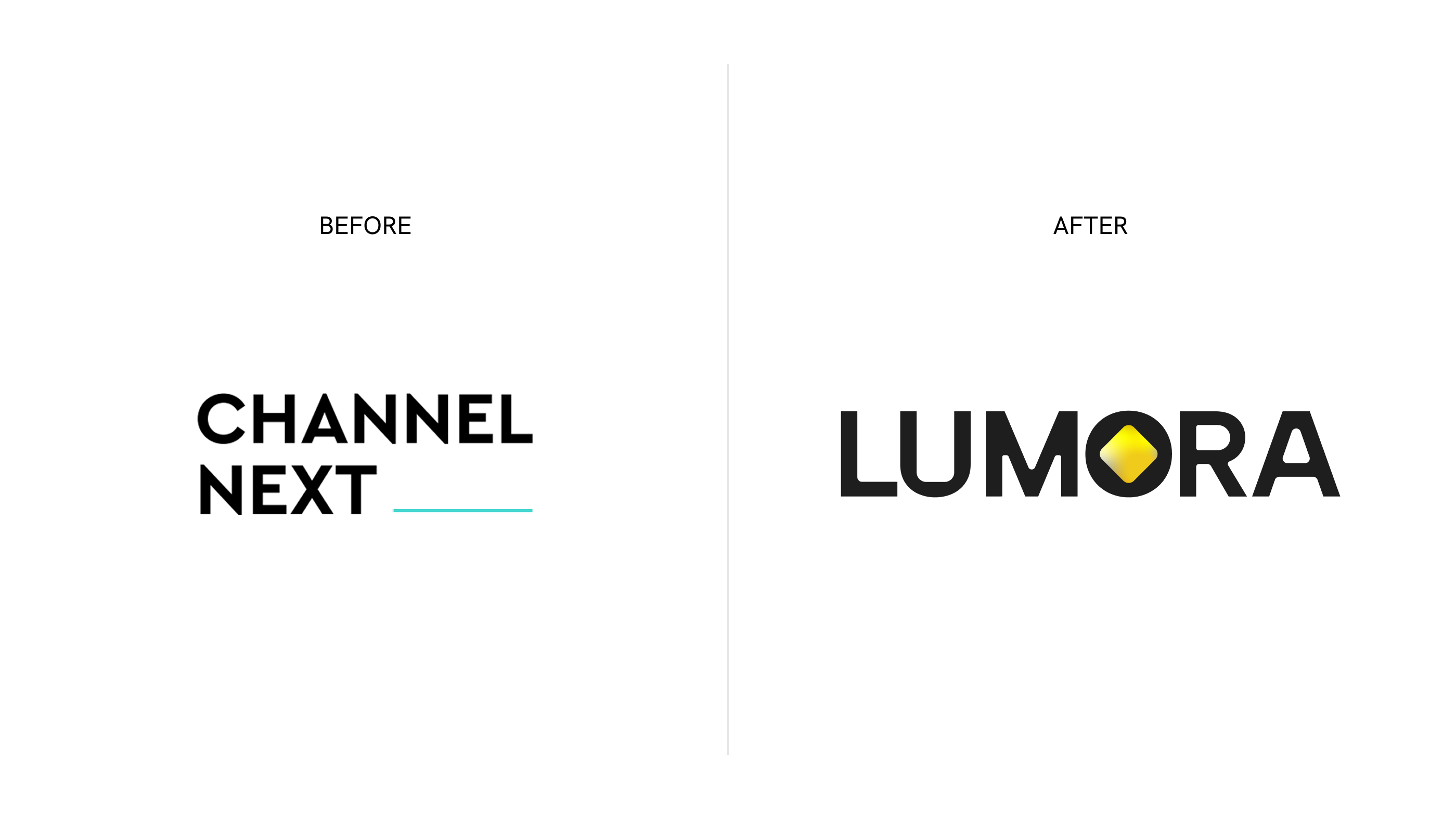
Lumora - Rebranding a cybersecurity company from the inside out
BEFORE
Channel Next was a Dubai-based managed security services provider with a name rooted in its channel distribution past. When the company pivoted to offering AI-powered threat detection and compliance services across the UAE, the name had become a liability — it anchored perception to a function the business had moved beyond. The brief was a visual rebrand.
AFTER
Everything Design pushed further and made the case for a name change, which the client accepted. The lack of clarity regarding the security posture in a growing business results in confusion and constant firefighting on the team's part. Without a reliable expert who can help navigate the landscape in the right context for the business with all its complexities, these companies can get lost in the darkness. Lumora brings clarity to its clients by being an illuminating aura that shows them the right path for their business's posture. By combining luminosity to illuminate and aura, a reliable and trustworthy expert, Lumora now stands as an unwavering symbol of clarity. Channel Next became Lumora Security, a name buil around the company's direction, not its history.
The rebrand covered naming, logo design, full visual identity, website, and a founder video. The visual language was deliberately built around Lumora's three operating pillars — Detect, Deter, Defend — rather than leaning on the generic iconography common in cybersecurity. The website was structured to serve three distinct buyer types simultaneously: founders evaluating a first security partner, mid-market teams consolidating vendors, and enterprise buyers assessing compliance frameworks. The result is a brand that competes credibly in a crowded market rather than disappearing into it.

Adnaut - Renaming and repositioning a global ad-tech consultancy
BEFORE
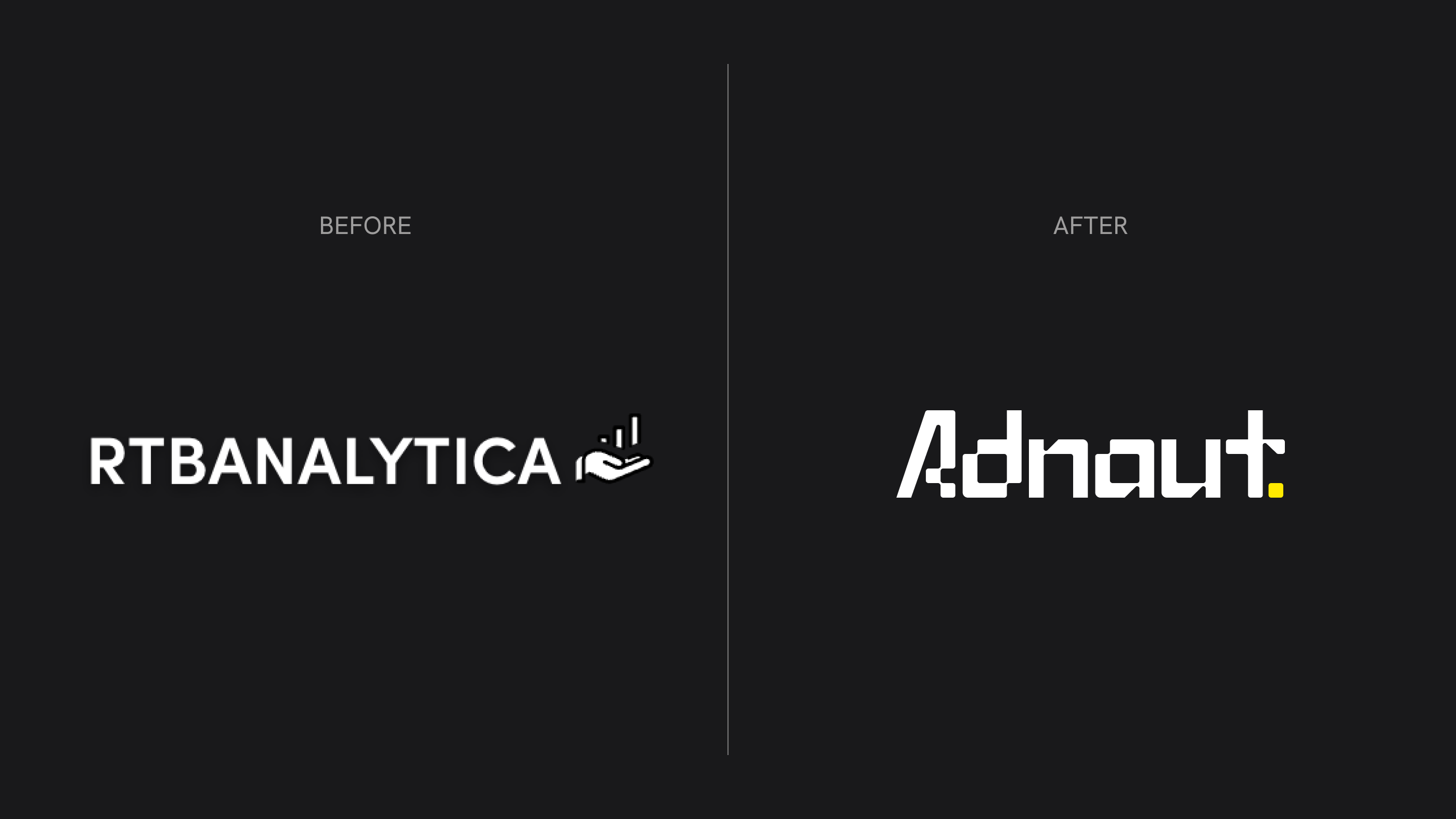
RTB Analytica was a name pulled directly from programmatic advertising jargon — accurate, but limiting. For a consultancy operating across New York, Manchester, Toronto, and Bengaluru, and offering services across programmatic, paid social, CTV, analytics, and measurement, the name described one capability when the business offered five.
AFTER
When Everything Design ran the brand strategy workshop, a name change was not on the brief. It became the first recommendation.
RTB Analytica became Adnaut — "your navigator in the ad-tech universe." Everything Design built a complete visual identity including a brand mascot that the company now uses consistently across all communications, a website structured around Adnaut's five-step methodology, and a brand launch video. The founders have since noted that the rebrand visibly changed how customers perceived the company in early sales conversations — the kind of shift that does not come from a new color palette alone, but from a name and story that actually fits.

TLH - Repositioning a law firm for national ambition
BEFORE
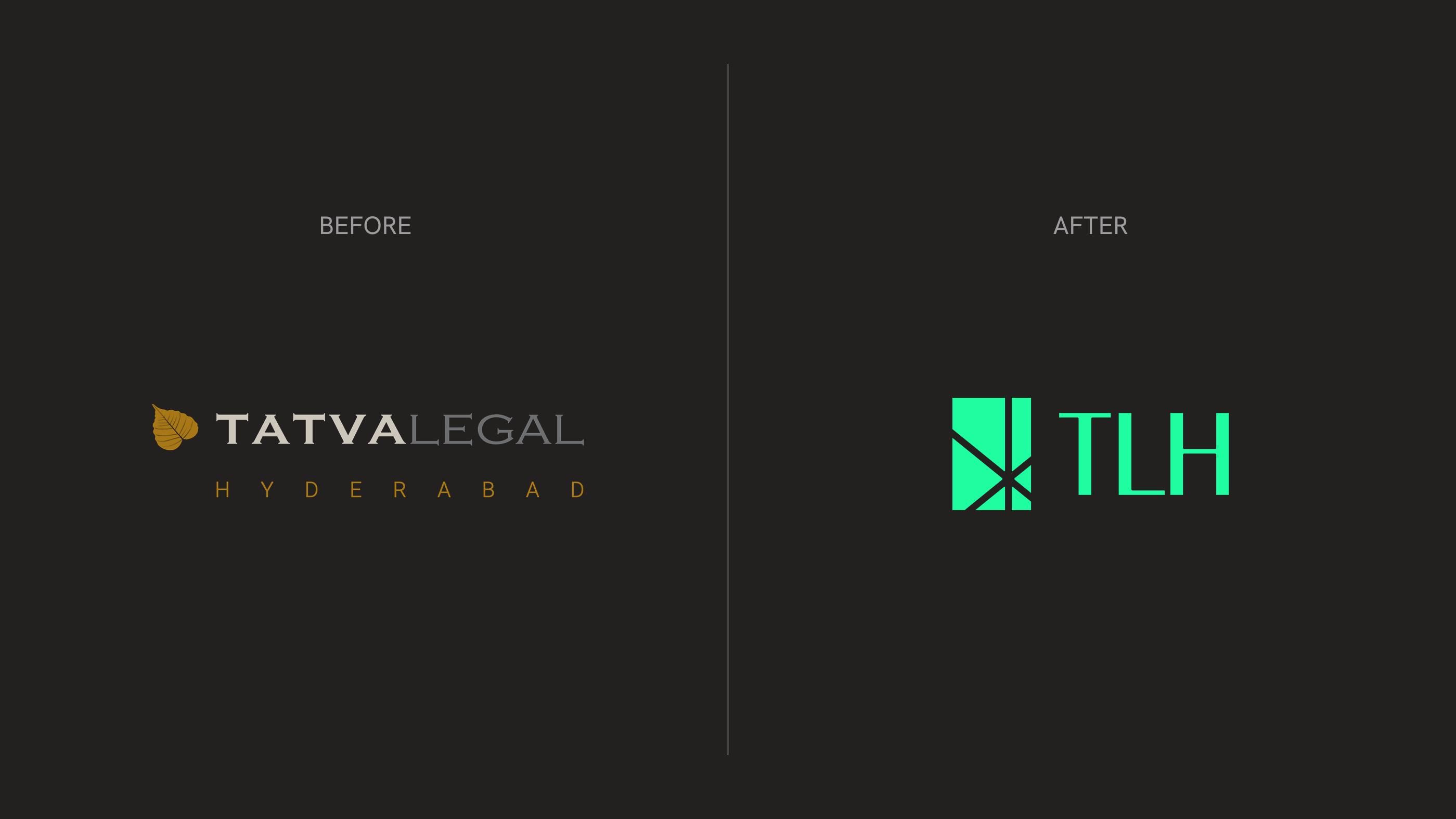
Tatva Legal Hyderabad had outgrown its name before it outgrew its offices. The firm had the practice areas, the talent, and the client base to compete at a national level, but its brand communicated a respected regional practice — not a serious contender in Indian commercial law. The rebrand was not cosmetic. It was a strategic decision tied directly to the firm's expansion plans, and Everything Design treated it as one.
AFTER
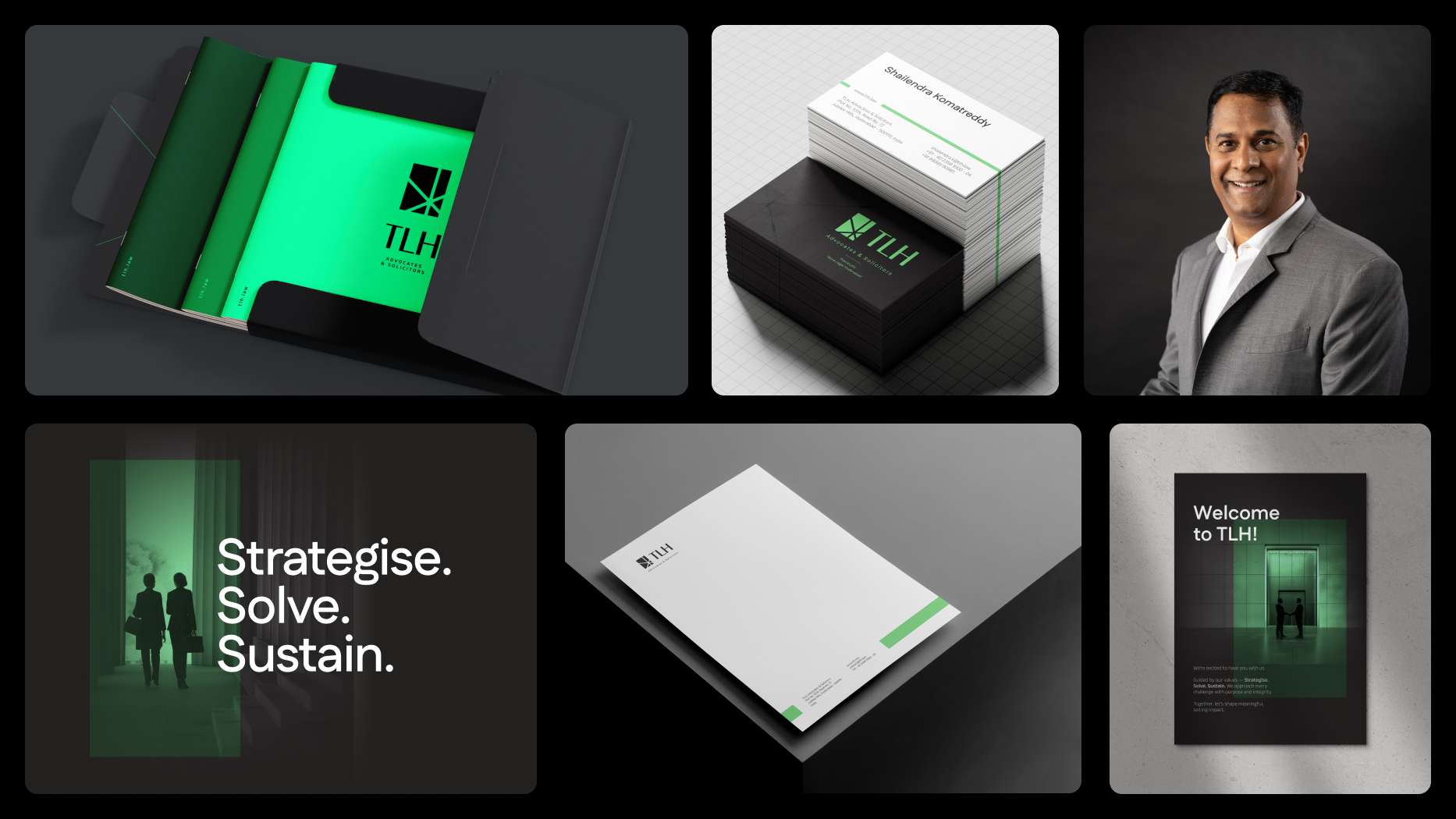
The engagement began with brand strategy and naming, arriving at TLH — Advocates & Solicitors — with the tagline "Strategise. Solve. Sustain." The visual identity was rebuilt from the logo up, with a design system that conveys authority without the stuffiness typical of legal branding. The website at tlh.law was designed to serve ten practice areas while maintaining a cohesive brand experience across domestic and international audiences. Since the rebrand, TLH has earned Band 1 rankings from Chambers and Partners, Regional Law Firm of the Year at the India Legal Awards 2025, and "Employer of Choice" from Asian Legal Business — signals that the market received the repositioning as intended.
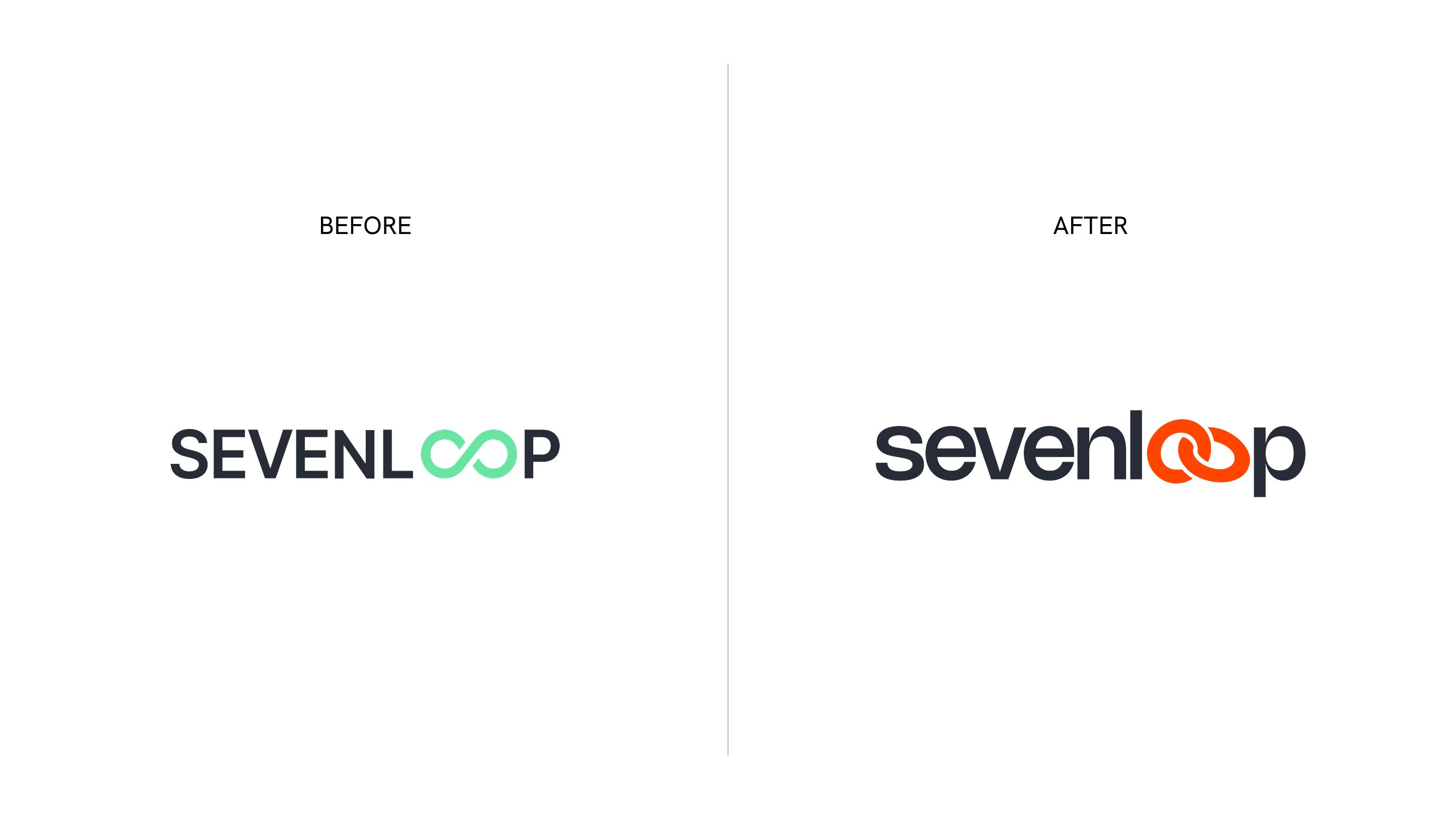
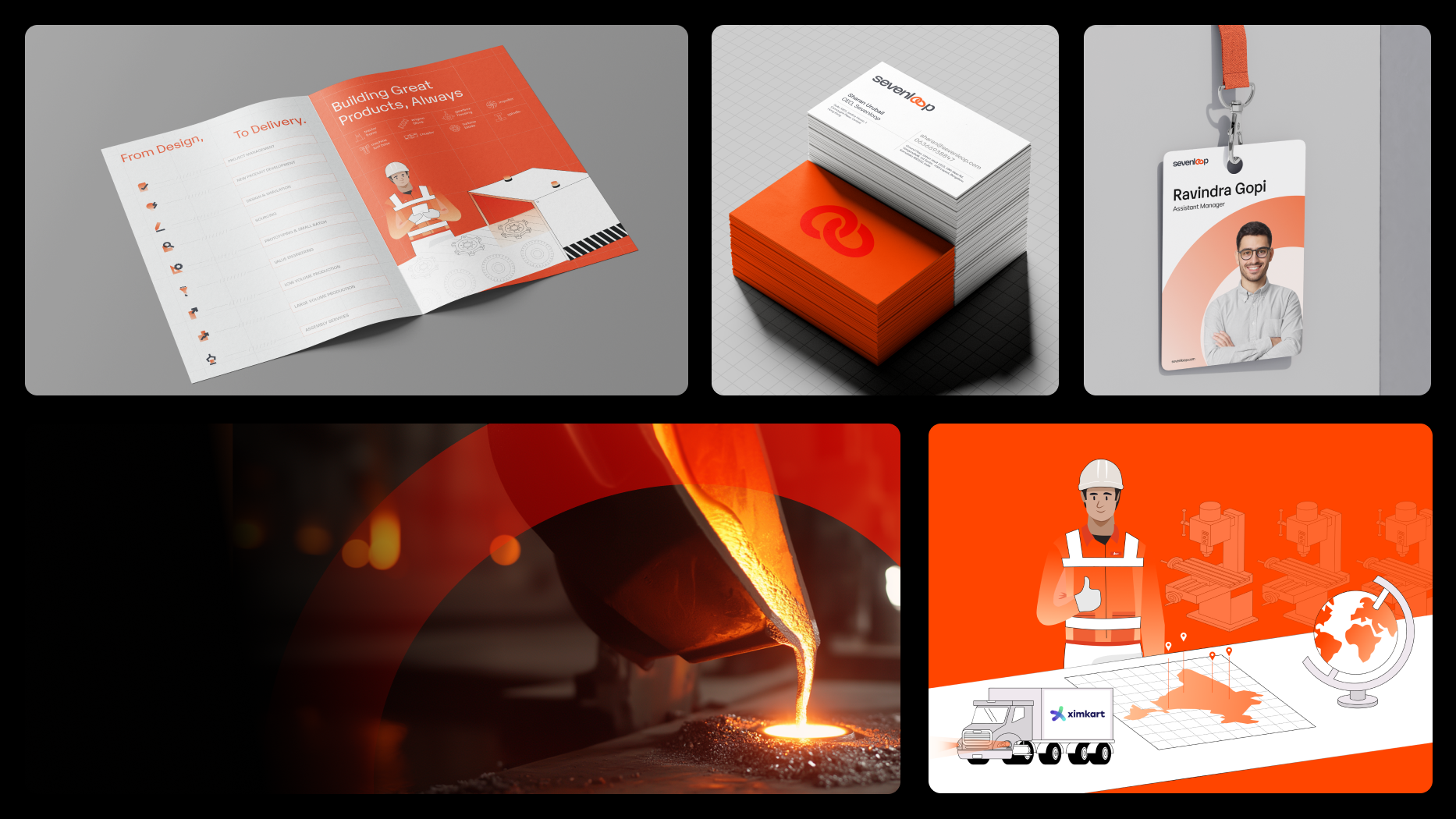
Sevenloop - Rebranding a business at the intersection of manufacturing and AI
BEFORE
Sevenloop needed a brand capable of doing two things at once: communicating technical credibility to procurement heads at global industrial companies, and signalling innovation to the engineering and logistics partners who would evaluate them as a platform. The company operates across aerospace, automotive, mining, and industrial machinery, with manufacturing partners across India, the US, Germany, Italy, the Netherlands, and the UK. A generic manufacturing brand would not hold that weight.
AFTER
Everything Design delivered brand strategy, logo, visual identity, website, a project brochure for enterprise sales, and a brand film. This was actually the third brand built in this founder's ecosystem — Everything Design had previously worked on Ximkart and Revind.ai — which meant the strategic context and brand understanding carried directly into the engagement. The brand film in particular reflected that depth: rather than a standard corporate explainer, it captured the manufacturing story with the kind of conviction that only comes from genuinely understanding what the company is building.
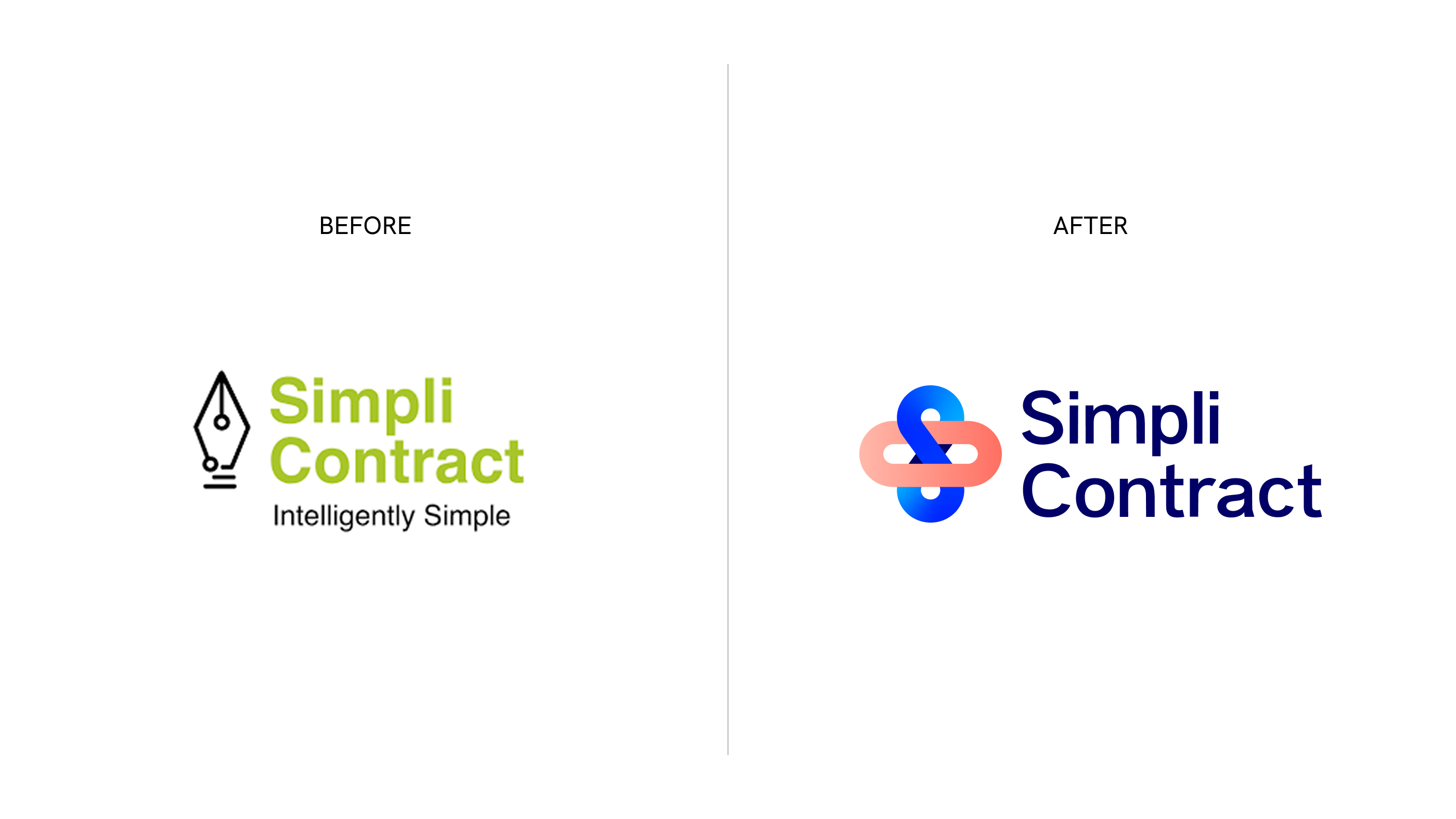
SimpliContract - From startup aesthetics to enterprise-grade credibility
BEFORE
SimpliContract came to Everything Design immediately after closing their Series A. The brief was a website. The existing brand, however, was not credible enough to support the positioning the new site needed to carry. When the team saw the initial visual routes Everything Design presented, they recognised the gap themselves. The scope expanded to include brand identity, logo refinement, messaging, visual design system, website, marketing collaterals, and a product explainer video with custom-built personas.
AFTER
The challenge was making a contract lifecycle management product — a space dominated by established players with years of market presence — feel both enterprise-grade and accessible, while speaking to legal, sales, procurement, and IT teams who each come with different priorities. Everything Design's approach was to build the brand foundation and the website as a single integrated exercise rather than treating design and content as separate workstreams. After delivery, the founder returned for a homepage revamp and went on to refer Everything Design to Arka Venture Labs (SimpliContract's own investor) and Expent, a Y Combinator-backed, vendor lifecycle management platform that was later acquired by Hyperproof.

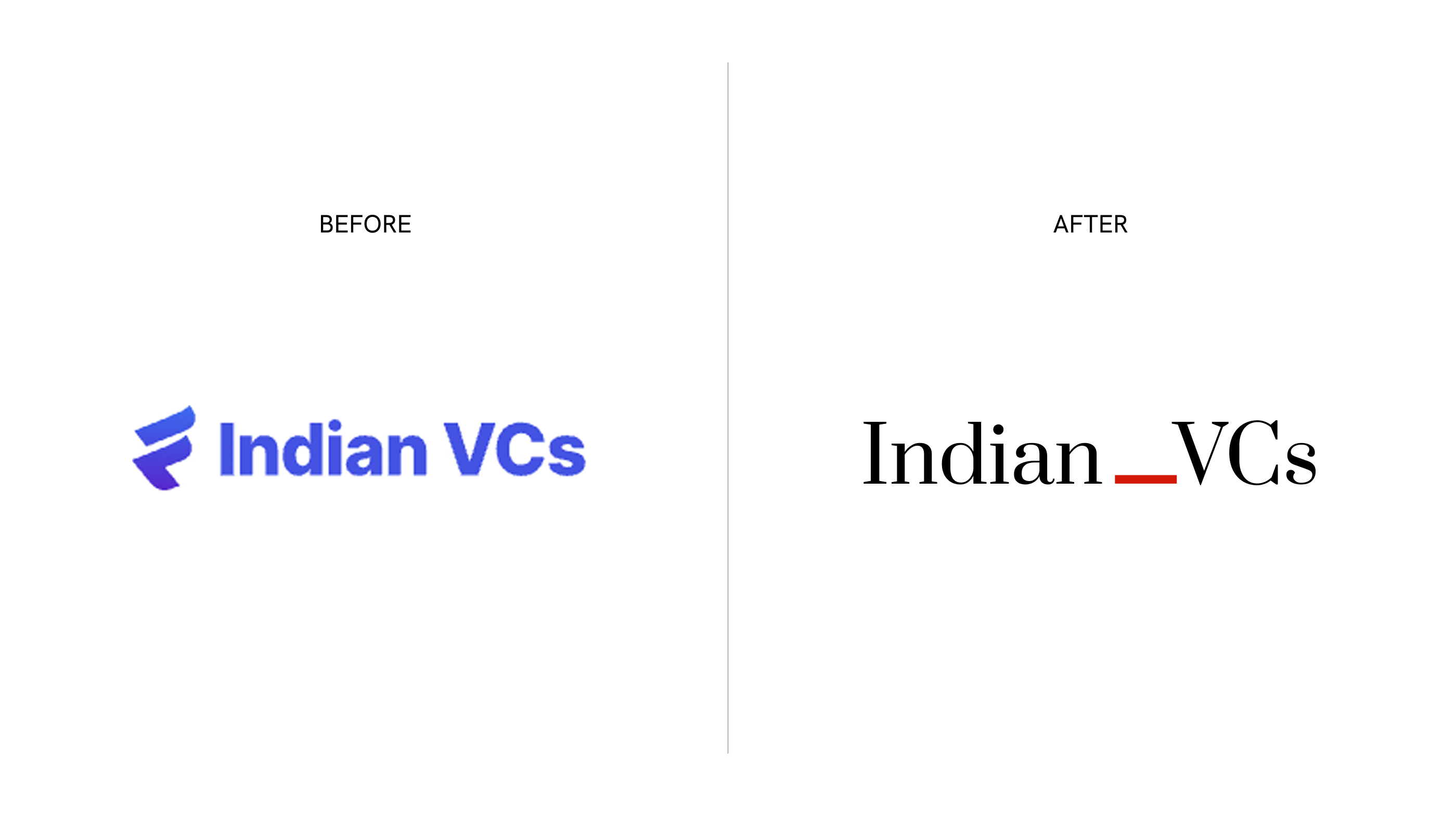
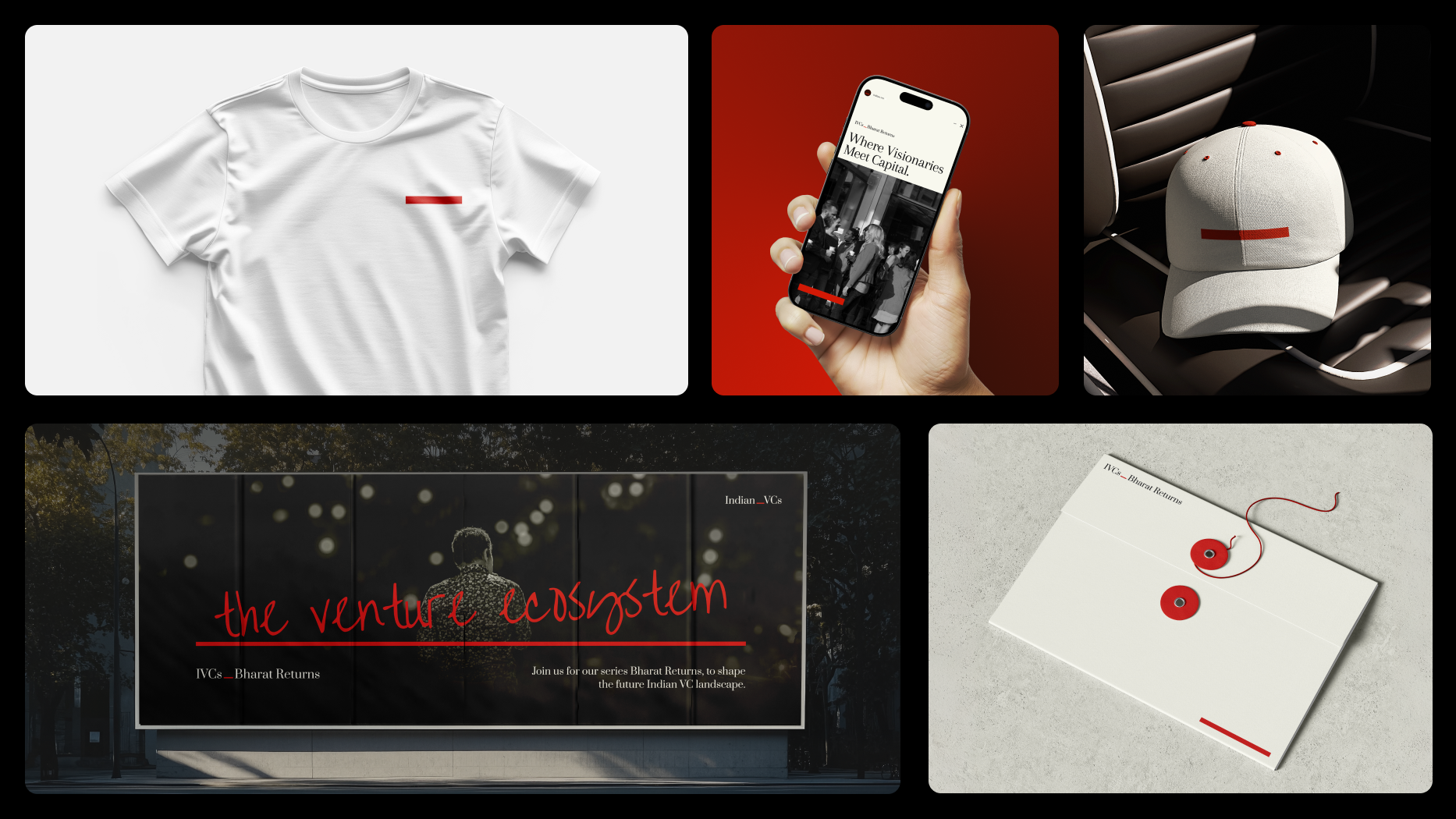
Indian VCs - Designing a brand for a working product, not a brochure
BEFORE
IndianVCs set out to build the definitive human-curated directory of India's venture capital ecosystem — a platform where VC firms submit verified data on investment focus, stage preferences, check sizes, and portfolio composition. The design challenge was that this was not a marketing site. It was a functional product that needed to feel credible to both founders seeking funding and VC professionals managing their own visibility. The brand had to be institutional without being static.
AFTER
Everything Design built the brand and digital platform together — logo, visual identity, a searchable and filterable website at indianvcs.com, motion identity, a brand launch video, and a website launch video to generate early traction. The product thinking informed every design decision: structure over decoration, clarity over personality, with enough visual character to stand apart from generic directory products. The partnership continues as an ongoing collaboration, with Everything Design regularly producing video and brand materials as the platform grows — and the IndianVCs team has since become an active referral source back into the Everything Design ecosystem.
How to know if a rebrand worked?
A rebrand is not measured by how much the team likes the new logo. It is measured by whether it solved the business problem it was designed to solve.
Message clarity
Can sales reps explain what the company does and why it is different in one sentence? Can prospects repeat it back?
Sales confidence
Is the sales team actively using the new materials? Are they closing deals faster or with less friction at the shortlisting stage?
Differentiation
Do prospects and analysts describe the company differently than competitors? Does the brand occupy a distinct position in the category?
Enterprise credibility
For companies moving upmarket, are enterprise buyers taking meetings more readily? Is the brand clearing the initial credibility check?
Internal adoption
Are all teams, not just marketing, using the new brand consistently? Are old materials fully retired?
Set a measurement cadence. Review at 30 days for rollout completeness, at 90 days for early adoption signals, and at 180 days for business impact.
Conclusion
Effective B2B rebranding starts with diagnosis, not design. The companies that get the best results treat rebranding as a strategic response to business change: a new market, a new audience, a merger, a credibility gap, or a differentiation problem that the current brand cannot solve.
The process should move from audit to positioning to narrative to identity to rollout, with each phase informing the next. Skipping the early stages is how companies end up with expensive visual systems that do not move the business forward.
If you are evaluating whether to rebrand, start with the audit. Understand what is broken, what has changed, and what the brand needs to do next. The answer may be a full rebrand, a repositioning exercise, or simply a sharper message. The diagnosis will tell you which.

Mejo Kuriachan
Branding and design insights from Mejo Kuriachan at Everything Design. Expert articles on strategy, web design, and more. See their work.