


B2B Mission Statements: Why Most Fail and How to Fix
Most B2B mission statements are vague or internally focused. How to write one that holds up in sales calls, hiring, and board decks.
B2B mission statements often fail because they're generic, internally-focused, or lack buyer relevance entirely. Effective statements articulate why your company exists beyond profit, addressing customer aspirations or industry challenges. A strong mission guides decision-making, attracts aligned talent, and resonates authentically with buyers. Explore B2B branding.
A brand mission statement is a concise, public declaration of how the company will pursue its purpose and create impact for the customers. It is not your purpose (why you exist). It is not your vision (what future you are building). A mission statement answers one fundamental question: what is the plan of action? The traces of it can be found everywhere-from how your business is positioned, messaging, product decisions, hiring to sales calls.
There's a moment we’ve witnessed in almost every B2B brand engagement that we’ve led. We're deep into a brand workshop, sleeves rolled up, markers squeaking across whiteboards, brains running at 100 mph, and we ask the leadership team: "So… why does your business exist ?"
The room goes quiet. One of the founders usually clears their throat to say something about "delivering value to clients.", or “ building trust”. The marketing head mentions "driving growth." The technology head references their proprietary process. And everyone nods, as if they've just said something truly profound and genuine.
We do these brand workshops quite so often to know that they haven’t. They’re just fooling themselves.
What they've described is “what” they do, not “why” they exist. And that distinction of two words, is the difference between night and day. This shift in perspective is why some brands are loved and have a cult-like following vs. some brands with whom people simply transact with.
Former U.S. Poet Laureate Robert Frost once wrote that "poetry is when an emotion has found its thought and the thought has found words." A great mission statement does exactly that for a business. It takes the emotion of why you show up every day, shapes it into thought, and boils it into a sharp enough message anchoring the weight of the future to lead.
Done right, it's not B2B poetry for poetry's sake but a compass that guides the entire business and its decisions. And in B2B, where buying cycles are long, relationships are everything, and trust is the real currency, you need that compass more than you think.
First, let's untangle the holy trinity
Before we talk about the mission, let's be clear about the framework, because we've watched too many brands conflate these three and wonder why none of them work.
Purpose is your why
Brand purpose defines the fundamental reason for your brand’s existence. It’s not what you do, it’s why you do it.
Vision is your what
Vision is the picture of the future you're working to create, not for your company, but for your customers, your industry, your world.
Mission is your how
Mission is the concise, actionable declaration of what you do every day to bring your purpose and vision into reality. Think of it as the job description for your entire company, written with the clarity of a strategist and the soul of a storyteller.
It lays down the code of conduct for the company as a whole, by explaining the specific operational and business actions you will take to realize your vision and purpose.
Think of it this way: purpose is your reason, vision is your destination, and mission is your route. Resilient brands have all the three, and you need them doing different things.
In B2B, these three get collapsed into one vague paragraph on an "About Us" page of a business and called a day. That's not a brand strategy. That's a missed opportunity.
What a mission statement actually does (especially in B2B)
All of mankind has wrestled with the same hollow dread: why are we here, and does any of it actually matter? Philosophers built careers on it. Religions were founded around it. Teenagers write poetry about it at 2am.
Turns out, companies aren't immune either.
All of us want purpose. We want to know what direction we're heading, what we're building, and why any of it is worth a dime.
Where companies go wrong is when they think a mission statement is a nice-to-have, something you write for the website and then file away. It isn't. It’s a governance tool. Here are some good examples of brand mission statements. An effective mission statement does three practical things for the brand:
It tells people what to prioritize.
Without a clear mission, efforts are scattered. Teams optimize for what's in front of them everyday, almost like a task, prioritising the urgent over the important, the visible over the valuable. A strong mission acts as an internal filter. When a B2B sales team is deciding whether to pursue a certain deal, or a product team is choosing which feature to build next, the mission should act as the tiebreaker.
It gives customers a reason to trust you.
In B2B, buyers aren't just purchasing a solution. They're staking their professional credibility on the vendor they choose. A clear, credible mission signals that your company knows who it is, and companies that know who they are tend to be safer bets.
It keeps strategy proactive.
Without a mission anchoring your long-term direction, strategy becomes a series of reactions to competition, to market conditions, to whatever the loudest client is asking for this quarter. The mission is what lets you say no to the things that distract you, and yes to the things that build.
What a good mission statement looks like: Three different approaches
Different brands approach the mission differently, and honestly, in B2B, there's no single right format. What matters is that it's strategic, it’s true, it's specific enough to guide action, and it is emotive (meaning, it leaves people with feeling something upon reading).
1. Microsoft keeps it focused to answer the “how” part- What do they, as a brand, actually enable.
"To empower every person and every organization on the planet to achieve more."

What makes this work is the verb: empower.
It's active, it's directional, and it puts the customer, not Microsoft, at the center.
For a B2B tech giant, that's a strategic choice. It says: we measure our success by your success. When Microsoft CEO Satya Nadella took over in 2014, one of the first things he did was rewrite the company's mission. The previous mission was about Microsoft dominating software. The new mission was about enabling human achievement. It centered on their core value of empowering users and organizations to “do more.” Their business followed their culture.
2. HubSpot merges purpose and mission together. The “why” and the “how” in one bowl:
"Help millions of organizations grow better”
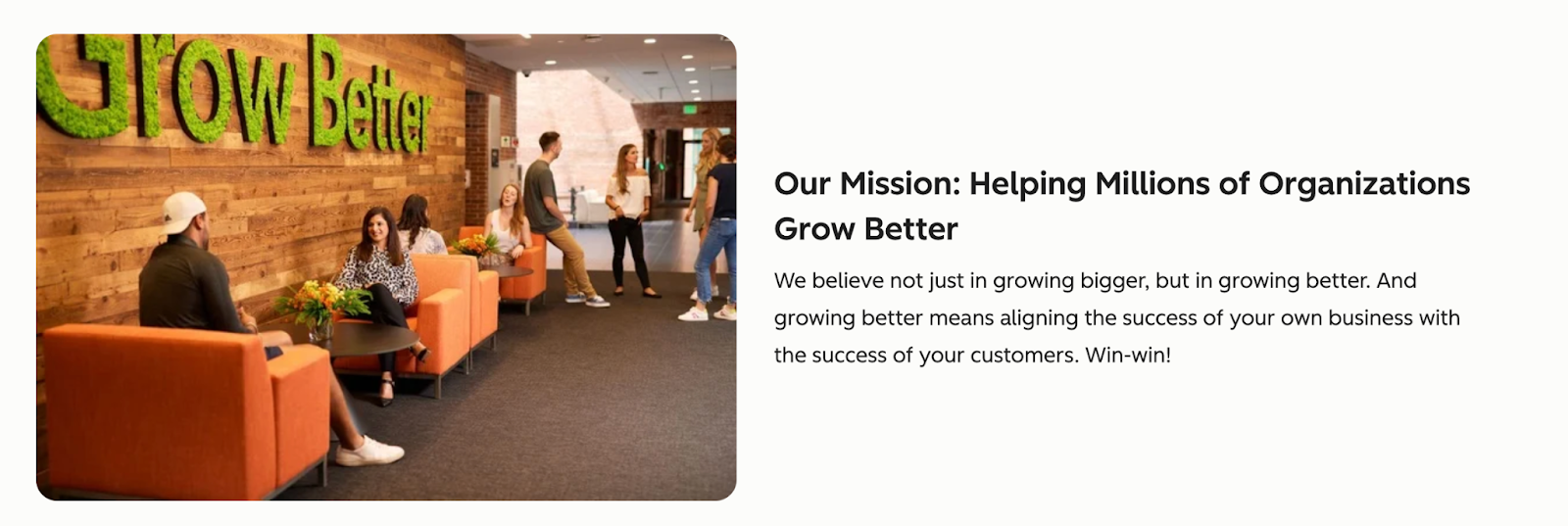
Yeah, yeah, it sounds too vague, too broad. But you know what? That’s a characteristic of a good mission statement.
Based on the stage of your business, the mission statement must be crafted in a manner that inspires everyone to act in a certain manner. The mission can not be short-sighted. It must encompass the future, the growth trajectory, the opportunities that may come tomorrow.
For the stage at which HubSpot as a brand is at, "Millions of organizations" is an accountability statement disguised as an aspiration. It's the kind of mission that makes a sales rep feel like they're doing something that matters beyond closing a deal.
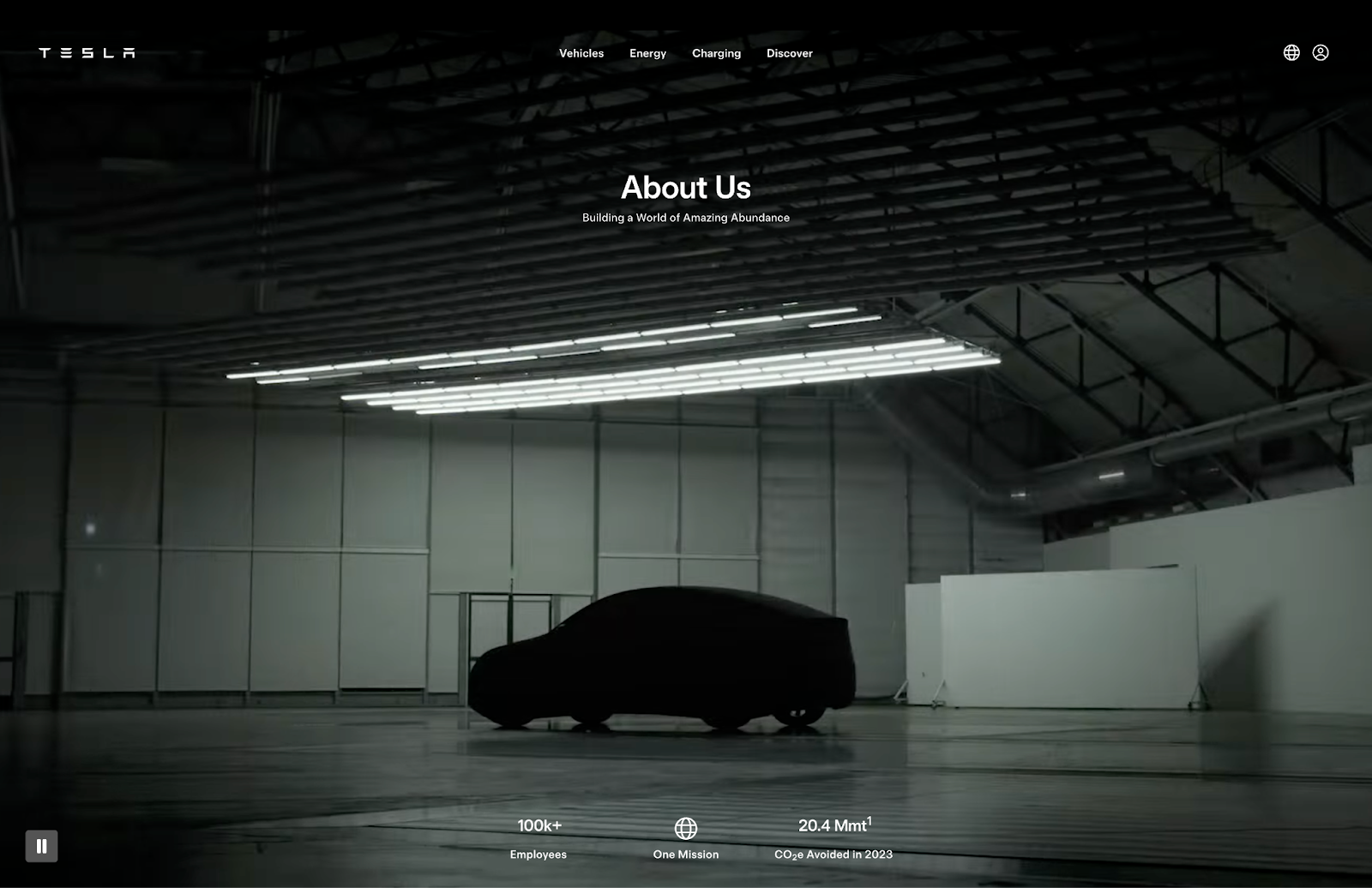
3. Tesla leads with purpose and allows for it to function as the mission:
"To accelerate the world's transition to sustainable energy."
Tesla built its entire business model to serve this statement. Every product decision, every manufacturing choice, every market entry flows from it. That's the gold standard, not just writing the mission, but architecting the business around it.
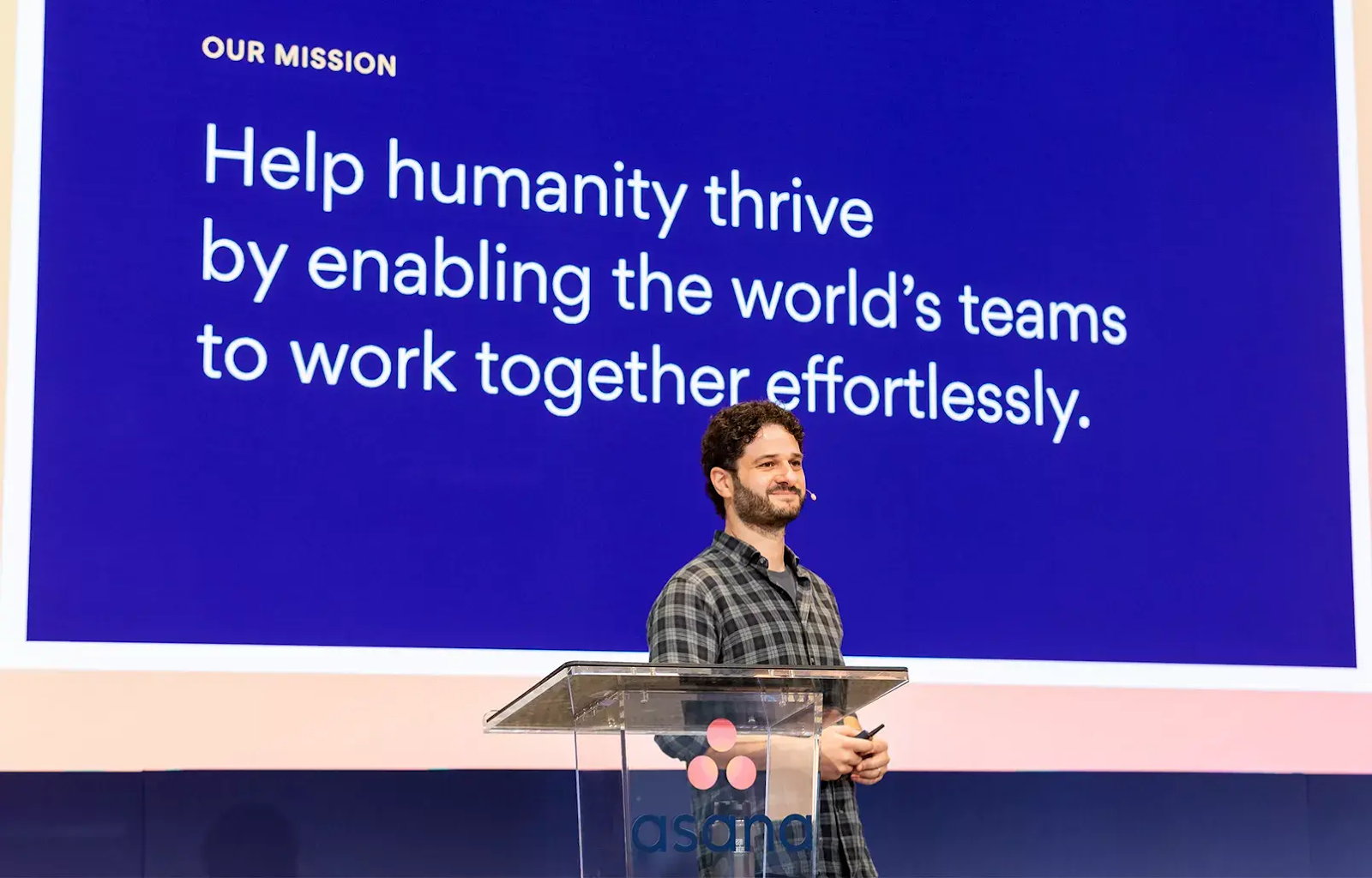
4. Asana is another brand worth studying. Their mission:
"To help humanity thrive by enabling the world's teams to work together effortlessly."
This is a mission that scales with ambition. Asana could have written something narrow, something about task management or project software. Instead, they went all the way up to humanity. And it works, because the logic holds. If teams work better, organisations move faster. If organisations move faster, the world's biggest problems get solved sooner. That chain of reasoning is what makes "helping humanity thrive" feel earned rather than grandiose. Notably, 72% of Asana employees say the mission is the main reason they stay. That's not a coincidence. That's what a well-written mission does internally.
Now, where a mission statement actually lives matters just as much as what it says.
Most of the time? It's buried deep in a deck. Accessed by the board at select occasions. A private document that never sees the light of day.
Sometimes, a brand is gutsy enough to put it front and centre, making it the tagline, giving it the kind of visibility and command that nothing else can match. Nike's "Just Do It" is a masterclass in this. The mission isn't stated, it's embodied. Every campaign, every product, every athlete partnership lives inside those three words.
Other times, brands publish it openly on their website, for customers, investors, potential hires, and anyone else who stumbles in from the whole wide internet.
OpenAI does this particularly well.
Their mission: "To ensure that artificial general intelligence benefits all of humanity."

What sets OpenAI apart is that they don't just publish the mission and move on. They have a dedicated page on their website called the Charter, which lays out the entire blueprint for how that mission will actually be achieved. The plan of action, publicly committed to, for the world to hold them accountable to. That takes a particular kind of conviction.
Why so many B2B mission statements fail
Here's what we see most often, and I'll be blunt about it.
They're written for the website, not the business.
The mission gets wordsmithed by marketing, approved by legal, posted online, and promptly forgotten by everyone inside the company. If your employees can't recite it roughly from memory, not word for word, but in spirit, it isn't working.
They're floating in the sky.
"To be the leading provider of innovative, client-centric solutions that drive transformational outcomes across the enterprise ecosystem" is not a mission statement. It's a word salad that could describe 40,000 B2B companies. Specificity is what makes a mission sticky. Vagueness is what makes it forgettable.
They're about the company, not the impact.
A mission focused on being "the best" or "most trusted" or "fastest-growing" is inward-facing. The best missions are outward-facing, they describe the change you want to make in the world, or more specifically, in your customer's world.
As branding expert Marty Neumeier writes in The Brand Gap: "A brand is not what you say it is. It's what they say it is." The mission has to speak to the outside world in language the outside world actually uses on a day to day basis.
How to write an effective mission statement?
When we work with B2B leadership teams, we push them through a few non-negotiable questions before a single word gets written.
What would your best customers say you changed for them? Not the features. Not the ROI metrics. The actual change. The thing they'd describe to a colleague over dinner. That's your mission territory.
What would you do even if it were hard? Purpose lives in the answer to that question. The mission is the execution of it. If your mission only holds when the market is good and the budget is flush, it isn't a mission. It's a strategy, and strategies change.
Could a competitor copy this word for word? If yes, rewrite it. Your mission should be specific enough to exclude as much as it includes. Patagonia's mission-"We're in business to save our home planet" is something no apparel competitor could credibly claim without restructuring their entire business. That's the bar.
Does it make people feel something?
Not manipulatively or performatively. A mission that doesn't create any emotional response, not even a small nod, won't inspire anyone to do anything. As the Purpose, Vision, Mission Workbook puts it, your purpose statement should give you "a chill, an involuntary dose of inspiration and excitement, mixed with a little bit of can-we-really-do-this? fear." That same test applies to your mission.
Tip: When you are unsure where to start, try starting with a verb. It almost always works, as verbs are essentially action words and give a good enough starting point to build off of.
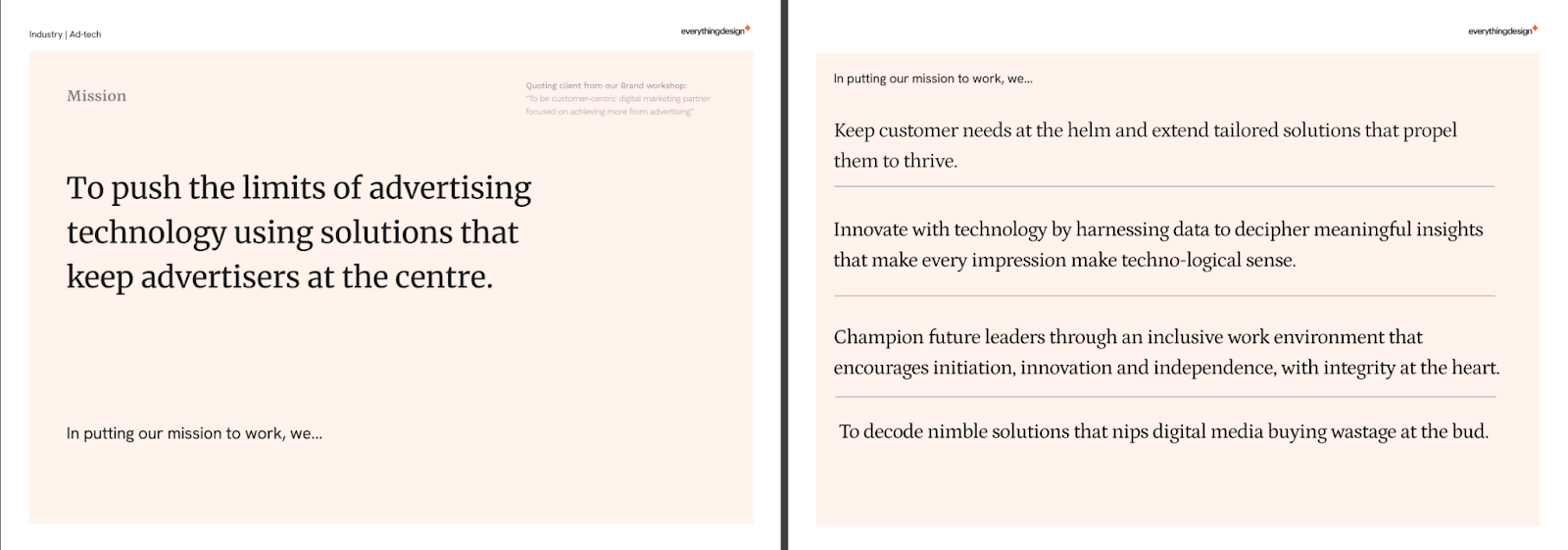
In one of our brand engagements with a client in the ad-tech space, we ran this exact process. Conducted a brand workshop, surfaced insights that had been sitting just below the surface for years, and crystallised them into a mission with a clear plan of action.
That mission became the cornerstone for all their communication, messaging, and business decision-making. Beyond being a line on a page, it is shaped into an operating framework. That's what a mission can do when it's built right and actually used.
The B2B case for getting this right, right now
Even in turbulent markets, maybe especially in turbulent markets, mission become a life-saver.
When budgets get cut and priorities get scrambled, companies with a clear mission are the ones that know which bets to double down on and which to walk away from. Companies without one tend to chase whatever looks safest, which is usually the thing that leads them further from differentiation.
A 2020 McKinsey study found that companies with a clear, embedded sense of purpose outperform their competitors with higher growth, stronger employee retention, and greater resilience through disruption. The companies that struggle to articulate “why they exist” are the same ones scrambling to explain their value when procurement comes knocking.
Your buyers are human, just like you. They're under pressure. They're making decisions with personal and professional consequences. They want to work with companies that know the realities of the market and know their place in it (who they are). A mission statement is how you signal that self awareness and confidence.
Who should be involved in strategising and writing a B2B mission statement?
There's no single right answer. Some companies involve all employees to build broad buy-in; others leave it to senior leadership who are ultimately responsible for rallying the company around it. What matters more than who writes it is who uses it. A mission co-written by 200 people but ignored by leadership has less impact than one written by five people who actually run decisions through it every week. So, involve the key players that’ll act upon this statement diligently.
The bottom line
A great mission statement won't fix a broken product or a misaligned team. But without one, even a great product can feel directionless to your customers, and the people working in your company, building and selling solutions every day.
Look, at the end of the day, we all want to know what direction we're heading. Wandering in the woods can be interesting for a while, but it's a calmer, more rewarding experience when you've got a compass in your pocket.
That compass? That's your mission.
So write it. Make it true. Make it specific. Make it feel like something. And actually use it.

Swathi Mohan
Swathi writes sharp, smart copy, sometimes poetic. Quick on her feet, she has a knack for making people feel heard.